For a studio flat, start by choosing a machine to suit the dimension that really limits where it can go: a slim top-loader helps when width is limited, a shallow front-loader takes up less space in front, and a compact model may work if its capacity suits your laundry needs. UFC-Que Choisir and the Institut national de la consommation stress the importance of checking the door clearance, connections and load limits too. A washer-dryer is most worthwhile if you also need to dry your laundry.
Who is this guide for?
People with a narrow passageway
If you want to keep the route through your home clear, work out whether width or depth is the main issue before comparing a top-loader with a shallow front-loader. UFC-Que Choisir explains the trade-offs involved when choosing appliances for small spaces.
Small households with regular laundry
You want an appliance that doesn’t take up much room without having to run extra cycles. Compare its capacity with your usual loads and the limits for the programmes you use. UFC-Que Choisir and the Institut national de la consommation point out that the stated capacity won’t necessarily apply to every cycle.
People without space to dry laundry
A washer-dryer may be a good option if you need drying built in. However, UFC-Que Choisir notes that many models have a lower drying capacity than washing capacity.
What to check before you buy
Compact front-loading washing machine
Consider this if: the available width and height rule out a standard front-loader, and your laundry needs match the model’s capacity.
Bear in mind: a smaller drum may mean running extra cycles. Small dimensions don’t necessarily mean that an appliance is designed to be built in.
Slim top-loading washing machine
Consider this if: width is your main constraint and there’s enough clear space above to open the lid.
Bear in mind: a narrow machine isn’t necessarily shallow, and the lid must be able to open without obstruction.
Shallow front-loading washing machine
Consider this if: a front-loader will fit the available width, but you want it to take up less space in the passageway.
Bear in mind: the installed depth must allow for the connections and the door opening.
Washer-dryer
Consider this if: you genuinely need drying built in and the appliance will fit in the available space.
Bear in mind: the drying load may be smaller than the washing load. Check the figures for the combined wash-and-dry cycle too.
UFC-Que Choisir and the Institut national de la consommation highlight the trade-offs between size, clearance and capacity. The table summarises what to check, depending on your priorities.
| What matters |
What to check before buying |
Who should take note? |
| Width and door clearance |
Measure the recess and check the manual for the space needed to open the lid or door fully. |
If width is the obstacle, also check that the door won’t block the passageway. Around 31% of consumers prioritise width and access to the drum. |
| Installed depth |
Compare the available depth with the appliance dimensions, connections and door clearance. |
If the passageway is in front of the appliance, consider how much room will be left once the machine is installed. Around 25% of consumers prioritise depth and ease of movement. |
| Capacity and cycles |
Compare your usual dry laundry loads with the stated capacity and the limits for the programmes you use. |
If you do laundry regularly, avoid choosing a drum that’s so small you’ll need to run extra cycles. Around 25% of consumers prioritise laundry volume and cycle frequency. |
| Built-in drying |
Check the washing and drying capacities separately, then look at the energy-use figures for the combined cycle. |
If there’s nowhere to dry laundry, compare the drying load with your needs. Around 19% of consumers prioritise built-in drying. |
Mistakes to avoid
-
Assuming a slim top-loader is also shallow
Width and depth are two different measurements. A narrow model can still take up space in the passageway.
Measure both dimensions and check how much room is needed to open the lid.
-
Looking only at the depth of the casing
The appliance dimensions alone don’t show how much space you’ll need once the connections are in place and the door is open.
Check the installed depth and door clearance before choosing a model.
-
Assuming the drying capacity matches the washing capacity
The Haier HWD50-BP12307U1 has a stated washing capacity of 5 kg and a drying capacity of 2.5 kg.
For a continuous wash-and-dry cycle, base the load on the drying capacity and compare the energy figures for the combined cycle separately.
-
Choosing the smallest drum without considering your usual laundry
A drum that’s too small may mean running extra cycles. Some programmes also have a lower load limit than the stated capacity.
Think about your usual loads and check the limits for the programmes you actually use.
Brands to consider for different sizes
These examples show specific sizes and capacities. The dimensions and features listed are those supplied by the manufacturers; you’ll still need to check that your chosen model can be installed in your space.
Haier
The Mini Drum range includes a compact front-loading washing machine and a compact washer-dryer.
- The HW50-BP12307U1 is listed at 510 × 492 × 700 mm with a 5 kg capacity. The HWD50-BP12307U1 measures 510 × 488 × 700 mm, with a 5 kg washing capacity and 2.5 kg drying capacity.
- These dimensions don’t confirm how much room is needed for the connections or to open the door. The washer-dryer has a lower drying capacity than washing capacity.
Electrolux
The EW6T5625AF top-loader is worth considering if width is a constraint.
- The manufacturer’s specifications give dimensions of 890 × 400 × 600 mm, in height × width × depth order, and a capacity of 6 kg.
- A narrower machine isn’t necessarily shallow. Also check the clearance needed above it when the lid is open.
Candy
The ProWash 550 BP 48SBL6-S front-loader offers one example of balancing washing capacity with stated depth.
- The manufacturer lists an 8 kg capacity and dimensions of 595 × 488 × 880 mm, in width × depth × height order.
- You’ll still need to allow for its width in a narrow recess. Also check the space needed for connections behind the machine and to open the door.
Whirlpool
The TDLR 62667 FR top-loader is another useful point of comparison for top-loading models.
- The French product sheet lists a width of 40 cm, a depth of 60 cm and a capacity of 6 kg.
- Check the depth and lid clearance against the space available. These dimensions don’t apply to the whole range.
Joybuy products related to this topic
This selection includes small-capacity portable washing machines for smaller loads, as well as a washer-dryer. Check that the appliance type and capacity suit your usual laundry needs.
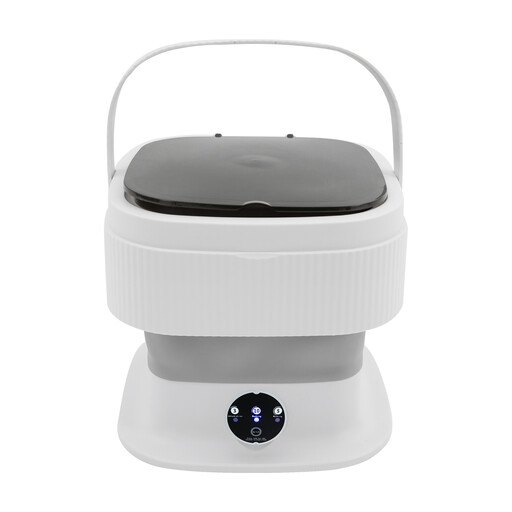 Image unavailable
10 L foldable portable washing machine, grey
For small loads of delicate items, socks or baby clothes when space is limited.
Stated capacity: 10 L. Features a dual-rotation wheel and stated wash times of 2, 5 or 10 minutes.
View on Joybuy
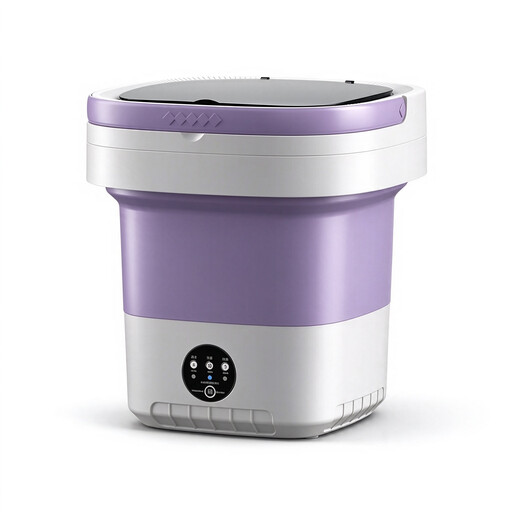 Image unavailable
12 L foldable portable washing machine with spin basket, purple
For small loads and smaller clothes when storage space matters.
Stated capacity: 12 L. The product title lists three wash modes and a spin basket.
View on Joybuy
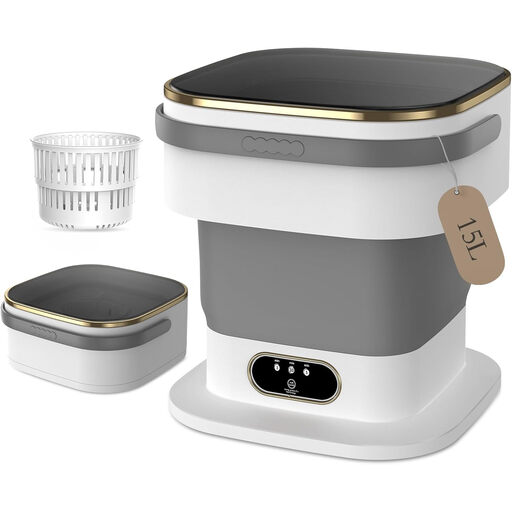 Image unavailable
15 L foldable portable washing machine with spin basket, grey and white
For washing small items such as socks or baby clothes when space is limited.
Stated capacity: 15 L. The product title lists three wash modes and a spin basket.
View on Joybuy
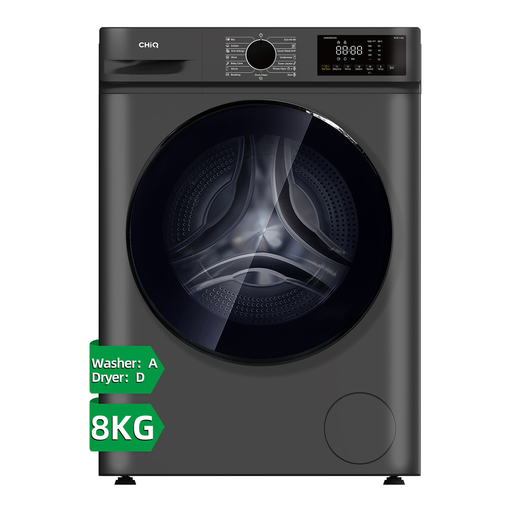 Image unavailable
CHiQ JW85882HG washer-dryer, 8 kg/5 kg, dark grey
Worth considering if you need built-in drying and the stated width suits your space.
The title lists a width of 465 mm, an 8 kg washing capacity and a 5 kg drying capacity. The drying load is smaller than the washing load.
View on Joybuy
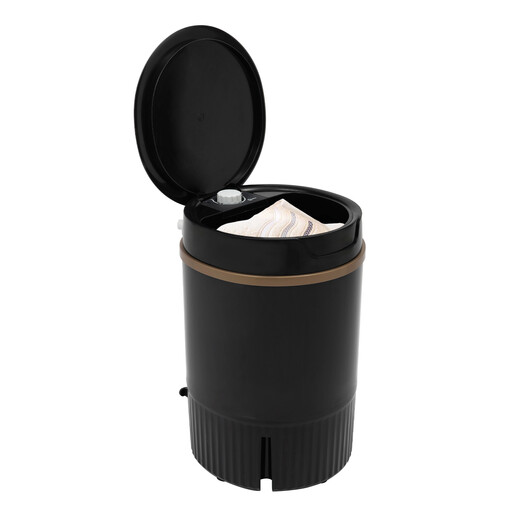 Image unavailable
4.5 L semi-automatic portable washing machine
For very small loads of lightweight items, rather than as a replacement for a machine used for your regular laundry.
Stated power: 260 W. Stated maximum load: 0.8 kg. The product description recommends using it for small items only.
View on Joybuy
Frequently asked questions
How can I tell if the washing machine will fit and still be usable?
Measure the width, depth and height separately, as well as the remaining passageway, then check the model’s manual for door clearance and connections. UFC-Que Choisir points out that the dimensions of the appliance with the door shut aren’t enough to confirm it will fit.
Can you install a top-loader under a worktop?
Not if the worktop stops you opening the lid and loading the machine from above. The Institut national de la consommation recommends checking the layout and the clearance needed for the model you’re considering.
Does the stated capacity apply to every programme?
No. Some programmes or fabrics have a lower load limit than the stated capacity. Check the manual and compare its limits with the laundry you plan to wash.
How do you compare the energy use of a washer-dryer?
Compare the figures for washing alone and for the combined wash-and-dry cycle separately, taking each mode’s capacity into account. The European Commission’s label for washer-dryers includes energy use per 100 cycles and water use per cycle.
What statutory guarantee applies to a new washing machine bought in France?
For a new product sold by a business to an individual, the statutory guarantee of conformity applies for two years. The consumer doesn’t have to prove that the fault existed at the time of sale. The French Ministry of the Economy distinguishes this guarantee from a commercial guarantee.


