Which homes are they suitable for?

Single person or couple with limited depth

You have around 60 cm of width available, but a hallway, kitchenette or shower room cannot accommodate the depth of a standard front-loading machine. A 4 to 6 kg slim model could be a good option if the door remains unobstructed. Que Choisir states that slim models reduce depth to around 33 to 45 cm.

Occupant of a very narrow alcove

When width is the main constraint, a top-loading washing machine around 40 cm wide may be suitable. However, you must leave enough space above it for loading and check that its depth is compatible with the room.

Tenant or student without a standard installation space

If no standard appliance can be installed and your loads are small, a mini washing machine can be a useful stopgap. You will need to accept its limitations when it comes to spinning and bulky items.

What to check before buying

Slim front-loading machine

Consider it: if depth is limited, the available width is close to 60 cm and the door can still be opened comfortably.

Good to know: the main saving is in depth; capacity is often lower than with a standard front-loading machine.

Top-loading washing machine

Consider it: if the access route is too narrow for a standard-width appliance or a front door would obstruct movement.

Good to know: it saves width, but its lid requires clear space above and its depth may still be close to 60 cm.

Mini washing machine for occasional use

Consider it: only when a standard washing machine genuinely cannot be installed and your loads are small.

Good to know: its limited capacity makes it unsuitable for washing sheets, blankets and other bulky textiles.

Priority What to check Your needs
Compatible footprint Measure the width, height and unpackaged depth. Check the type of opening, hoses, levelling requirements and clearances specified in the model’s instructions. I want the appliance to fit into the alcove without blocking a passage or making it impossible to open.
Usable capacity Compare the rated capacity with your usual laundry volume. A 2 to 3 kg mini washing machine will generally not accommodate sheets or bulky loads. For regular washing for one or two people, I want a drum large enough to avoid unnecessarily splitting loads.
Washing and spinning Where available, compare washing, rinsing and spinning tests for models in the same format. Also consider noise levels and ease of use. I do not want to choose based solely on dimensions if laundry remains damp, poorly rinsed or the spin cycle disrupts life at home.
Comparable consumption Compare the energy class, kWh/100 cycles and litres/cycle between appliances with similar capacities and formats. Check the repairability index where it is displayed. I want to compare water and electricity use on a consistent basis, rather than relying on a single energy class or a quick programme.

Mistakes to avoid

  • Choosing the smallest drum without considering how often you wash

    A drum that is too small can mean running more cycles, while an appliance with very little capacity is not necessarily practical for everyday laundry. Que Choisir generally puts the needs of one to two people at between 5 and 7 kg.

    For regular use, look first at 5 to 7 kg slim or top-loading models. Keep a 2 to 3 kg mini washing machine for occasional use.

  • Confusing reduced width with reduced depth

    A top-loading model may be around 40 cm wide while still being nearly 60 cm deep. Conversely, a slim front-loading machine generally remains close to 60 cm wide but reduces depth more significantly.

    Before filtering models, note the width, depth, height, door-opening direction and available space in front of or above the appliance separately.

  • Choosing a mini washing machine as your only solution without checking the textiles

    Mini models are designed for small loads and may have limited spin performance. Blankets and other bulky items are generally not suitable for this format.

    Use it for small loads and arrange another solution for household linen or bulky items.

  • Comparing technical specifications only

    Washing, rinsing, spinning, noise and ergonomics can vary from one model to another. In a shower room, the installation position and connections must also be suitable for the space.

    Compare label data and test results on a like-for-like basis, then check the installation instructions. Have the electrical circuit checked by a qualified professional if the appliance is to be installed in a shower room.

Brand guide for compact formats

Electrolux

A useful reference for a slim front-loading machine when depth is the main constraint: the EW6S1064NA is a 6 kg front-loading washing machine with a stated depth of 411 mm.

  • Electrolux’s product sheet states that this model has an A energy class, 42 kWh/100 cycles and 42 L/cycle.
  • These specifications apply to this specific model: check the dimensions and instructions for the appliance you choose.

AEG

A useful reference for a high-capacity top-loading machine in a reduced width: the LTR8C7331A is rated at 7 kg and measures 903 × 397 × 599 mm.

  • AEG’s product sheet lists an A energy class, 45 kWh/100 cycles and 44 L/cycle for this model.
  • The top opening must remain unobstructed, and its depth of close to 60 cm will not solve a depth constraint.

Whirlpool

The TDLR6253BFR is a format reference for a narrow 6 kg top-loading machine, listed as 40 cm wide, 90 cm high and 60 cm deep.

  • The manufacturer states a 6 kg capacity and a spin speed of 1 200 rpm for this reference.
  • This reference is no longer in the manufacturer’s catalogue, so it does not indicate current availability.

Joybuy product selection

Joybuy options suited to the needs of a studio flat or narrow apartment, including top-loading models for width restrictions and front-loading machines for regular use.

Haier T Series 7 THASN276TM6-S top-loading washing machine

Haier T Series 7 THASN276TM6-S, 7 kg top-loading

Worth considering for a narrow alcove and regular laundry.

7 kg capacity, stated spin speed of 1 200 rpm and A energy class.

Its stated depth of 600 mm will not solve a depth constraint; also check the clearance required above the lid.

Joybuy

Candy TCA464TM4-S ProWash 500 top-loading washing machine

Candy TCA464TM4-S ProWash 500, 6 kg top-loading

A top-loading format to consider if width is more restrictive than depth.

6 kg capacity, stated spin speed of 1 400 rpm, B energy class and 17 programmes.

The stated depth of 60 cm and the clearance required above it must be compatible with the room.

Joybuy
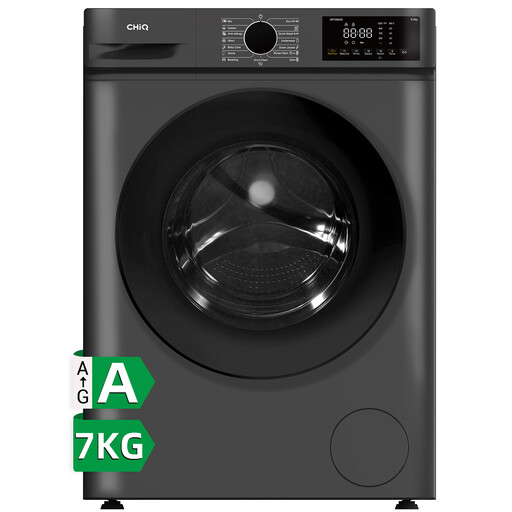
CHiQ JW75883G 7 kg front-loading washing machine

CHiQ JW75883G, 7 kg front-loading

Worth considering for regular use when the depth of a front-loading machine is the main constraint.

7 kg capacity, stated spin speed of 1 200 rpm and 16 programmes.

Before installation, check the width, height, door swing and clearances specified in the instructions.

Joybuy
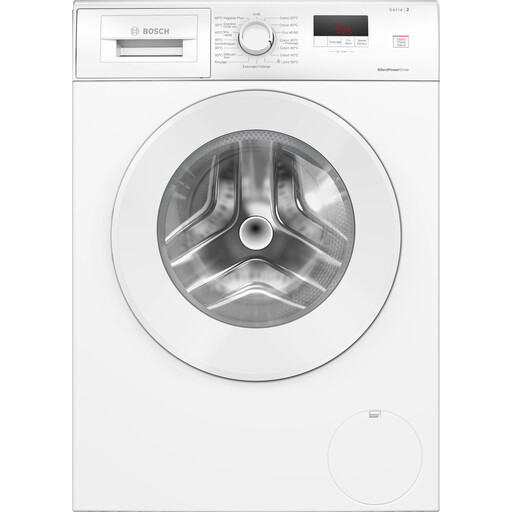
Bosch WGE02407FR 7 kg front-loading washing machine

Bosch WGE02407FR, 7 kg front-loading

A 7 kg main washing machine to choose only if the installation space is sufficiently clear.

A energy class, stated spin speed of 1 400 rpm, 15 programmes, 40 kWh/100 cycles and 44 L/cycle.

This model is not slim: its stated width of 59.8 cm and total depth including the door of 63.2 cm may obstruct a narrow passage.

Joybuy

Frequently asked questions

What measurements should I take before buying a washing machine for a studio flat?

Measure the width, height and depth of the alcove or access route, then allow for the spaces specified in the instructions for opening the door, hoses, connections and levelling. As a guide, a slim front-loading machine is often around 60 cm wide but may reduce depth to 33 to 45 cm; a top-loading model is around 40 cm wide but must be able to open from above.

Does a top-loading washing machine always take up less space than a slim front-loading model?

No. A top-loading model mainly saves width: machines in this category are commonly around 40 cm wide but may still be nearly 60 cm deep. A slim front-loading machine generally remains close to 60 cm wide while reducing depth more significantly.

Can a mini washing machine replace the main machine in a studio flat?

Generally, no, not for regular and varied laundry. Mini washing machines weighing 2 to 3 kg are better suited to small back-up loads; they are limited when it comes to spinning and washing bulky items.

Can you install a washing machine in a bathroom in France?

The location and electrical circuit must comply with the requirements applicable to a bathroom. Have the installation and connections checked by a qualified professional, particularly in a small shower room or during renovation work.

Which figures should I compare for water and electricity use?

Compare the energy class, kWh/100 cycles and litres/cycle between appliances with comparable capacities and categories. For everyday use, also consider available test results for washing, rinsing, spinning, programme duration, noise and ease of use.