What should you check before choosing?
First measure the space and the clearances you’ll need, then compare the labels of models that will actually fit there.
| Criterion | What to check | Your needs |
|---|
| Spin-cycle noise |
Compare the noise emissions in dB and the noise class for the exact model. The European label provides these details; its figures refer to the Eco 40-60 programme declared by the supplier. |
I want to compare the declared noise levels of several machines, without treating a “quiet” claim as a measurement that will apply in my flat. |
| Vibration and installation |
Check the instructions for suitable flooring, removal of transport bolts and adjustment of the feet. Miele recommends checking that all four feet are level; Whirlpool notes that a single heavy item can unbalance the drum. |
If my floor is likely to transmit vibration, I want to know whether the machine can be installed in line with its instructions and how to avoid heavily unbalanced loads. |
| Space and loading style |
Check the exact model’s width, height and depth, as well as the space needed in front of a front-loader or above a top-loader. Also check access to the water supply and waste outlet. |
If space is tight, I’ll consider a top-loader only if its lid can open fully. With a front-loader, I need to leave enough room in front of the door. |
| Spin-drying, energy use and durability |
Compare the spin-drying efficiency class, capacity and energy-use figures on the label. In France, the Directorate-General for Competition Policy, Consumer Affairs and Fraud Control states that the durability index has applied to front-loading and top-loading washing machines since 8 April 2025. |
I dry my laundry indoors and want to consider spin-drying performance without overlooking energy use or whether the machine can be kept in service or repaired. |
Washing machines available on Joybuy
These front-loading and top-loading models let you explore options for different spaces. Before choosing, compare each one’s dimensions, label and instructions with the requirements of your flat.
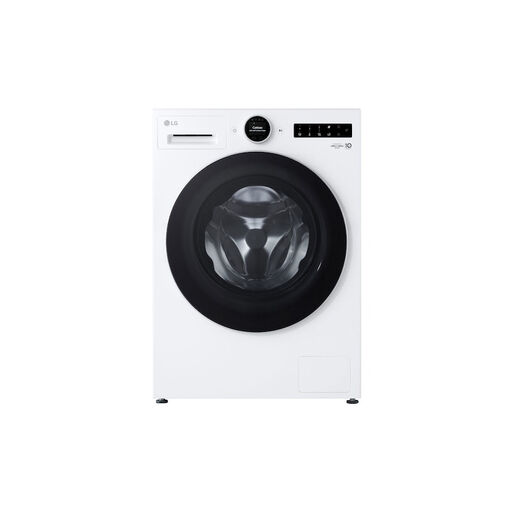 Image unavailable
LG F4WX851Y front-loading washing machine, 11 kg, class A
If you’re considering this front-loading model for a flat, allow room for the door to open and check the dimensions of the space. The product title lists an 11 kg capacity and class A; check the label for the exact model to compare spin-cycle noise.
View on Joybuy
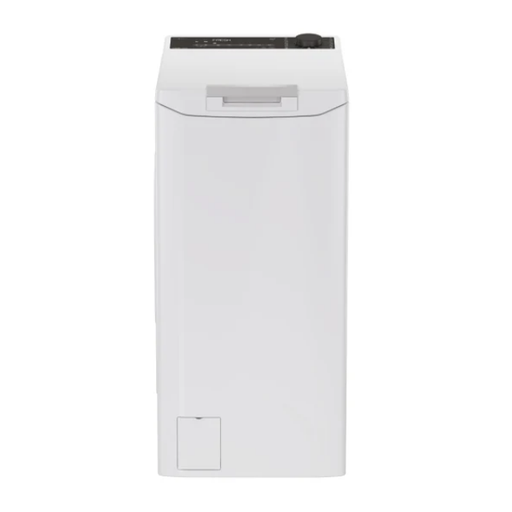 Image unavailable
Haier T Series 7 THASN276TM6-S top-loading washing machine, 7 kg
A top-loader may be worth considering if space in front of the machine is limited, provided there’s enough clearance above it. The product title lists a 7 kg capacity, 1,200 rpm and class A; measure the space and compare the noise information for the exact model.
View on Joybuy
 Image unavailable
Electrolux EW7FI259160V front-loading washing machine, 9 kg
This front-loading model needs clear space for the door to open. The product title lists a 9 kg capacity and 1,600 rpm; this speed doesn’t replace the need to check the spin-drying efficiency class and declared noise level on the label.
View on Joybuy
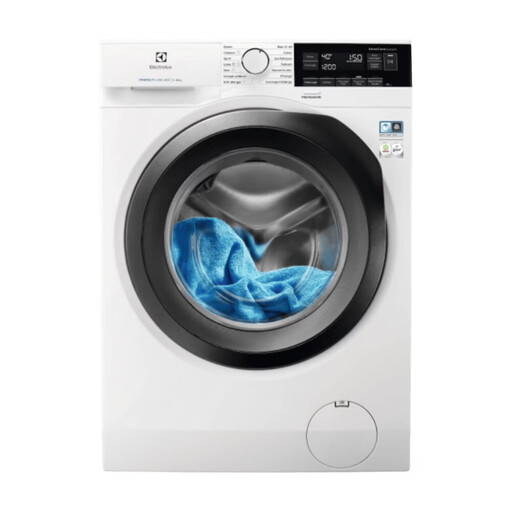 Image unavailable
Electrolux EW6F3811RC front-loading washing machine, 8 kg, class C
If you’re considering this front-loading model, check the space needed in front of the door and the installation requirements in its instructions. The product title lists an 8 kg capacity, 1,400 rpm and class C; check the noise level and spin-drying efficiency separately on the label.
View on Joybuy
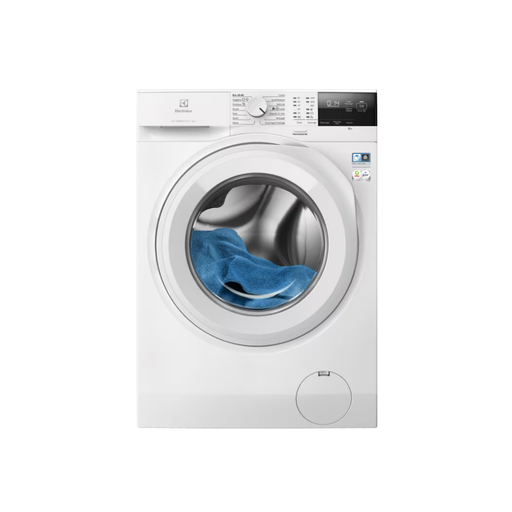 Image unavailable
Electrolux EW6FI4805AW front-loading washing machine, 8 kg
This front-loader is worth considering if the door can open without blocking the way. The product title lists an 8 kg capacity and 1,400 rpm; if your floor is sensitive to vibration, also check its noise label and installation instructions.
View on Joybuy
Frequently asked questions
What should I compare on the energy label to reduce noise disturbance?
Compare the declared spin-cycle noise in dB and the noise class for the exact models. Then check the capacity, energy use and spin-drying efficiency class. Under European energy-labelling rules, washing-machine figures refer to the Eco 40-60 programme declared by the supplier; they aren’t a guarantee of performance across all programmes.
Is an anti-vibration mat enough if the machine moves?
No. First check which flooring is permitted in the instructions, make sure the transport bolts have been removed, check that the machine is level on all four feet and ensure the laundry is evenly distributed. Miele recommends checking the level with a spirit level, while Whirlpool notes that a single heavy item can cause vibration. An accessory can’t replace these checks.
Is a top-loading washing machine always better for a small flat?
No. A top-loader may suit a narrow space if there’s enough room to open the lid; a front-loader may work if there’s enough space in front of the door. Measure the space and compare the noise information for each model rather than assuming its format determines how noisy it will be.
Why check the spin-drying efficiency class?
It helps you compare spin-drying performance separately from the stated spin speed. The French Agency for Ecological Transition (ADEME) recommends choosing class A for spin-drying when you dry laundry indoors or in a tumble dryer. Consider it alongside the noise level and other details on the model’s label.
Does the durability index apply to washing machines in France?
Yes. According to the Directorate-General for Competition Policy, Consumer Affairs and Fraud Control, it has applied in France to front-loading and top-loading washing machines since 8 April 2025. It adds information about durability, including reliability and repairability, to your comparison of noise and energy use.


