First, measure the space available, including room to open the machine, then choose a capacity based on the dry laundry loads you usually wash. A top-loading model is better suited to a lack of width, while a slim front-loader can help when depth is limited. A larger capacity is mainly worthwhile if you regularly wash large loads. A mini washing machine is a back-up option when it’s not possible to install a standard appliance.
Who is this guide for?
People living in a studio flat or a narrow bathroom
If space is limited, check the appliance’s width and depth, as well as the clearance needed to open the door or lid. UFC-Que Choisir highlights the difference between shallower front-loaders and narrower top-loading models.
Households with laundry baskets that are often full
If sheets, towels or bulky fabrics regularly feature in your washing, compare their volume with the capacity available on the programmes you usually use. A larger drum is less useful if your loads are generally small.
Buyers who still need to prepare the installation
Before choosing a format, check the space, the route to the room, the water supply, the waste-water outlet and the electrical supply. A mini washing machine can be used as a back-up when a standard model can’t be installed, although it won’t necessarily cover all the same needs.
What should you check before buying?
Start by checking any constraints that could prevent you from installing or opening the appliance. Then compare the loads you actually wash: according to UFC-Que Choisir, the stated capacity refers to the weight of dry laundry and can vary by programme.
| Criteria |
What to check |
Consumers concerned |
| Space required |
Measure the width, depth and height, as well as the clearance needed to open the appliance; also check the route to its final position. |
In a narrow room, I want to install the machine without blocking the way or preventing it from opening. Around 36% of consumers would prioritise the space it takes up. |
| Capacity |
Compare your regular loads with the capacity allowed by the programmes you use, rather than relying solely on the maximum figure shown. |
When laundry baskets regularly overflow, I want to avoid splitting every large load without choosing a drum that’s too big for the rest of the time. Capacity would be the priority for around 29% of consumers. |
| Access to the drum |
Allow enough room to load a front-loader or lift the lid of a top-loader, with your laundry basket close by. |
If a piece of furniture gets in the way of the door, or a top-loading machine would be awkward to use in that spot, I need to choose an opening that works for me every day. Access would come first for around 21% of consumers. |
| Installation |
Check that the water supply, waste-water outlet and electrical supply are suitable for the model; ask a professional to assess any uncertain installation requirements. |
Without a suitable space and connections, I need to sort out the installation before relying on the machine for my regular washing. Around 14% of consumers would put installation suitability first. |
Mistakes to avoid
-
Confusing a narrow appliance with a shallow one
According to UFC-Que Choisir, the slim front-loaders it features are still around 60 cm wide, despite their reduced depth. A top-loader is better suited to a lack of width, but its lid needs clearance above it.
Measure all three dimensions of the space and check how far the door or lid needs to open before choosing a format.
-
Choosing a large drum when most of your loads are small
A high capacity is useful for regular large loads, but can lead to unnecessary consumption if the drum is rarely full. The maximum load may also be lower on some programmes.
Start with the loads you wash most often and separately check the bulky items you actually wash at home.
-
Expecting a mini washing machine to do the job of your main appliance
UFC-Que Choisir describes the mini washing machines featured, with capacities of 2 to 3 kg, as back-up appliances. They may not accommodate large items, and you may need to run more cycles.
Choose this option only when a standard model can’t be installed, then check its specific water, drainage and electricity requirements.
-
Arranging delivery without preparing the connections
An appliance that fits into the room can’t necessarily be connected there. Electrolux’s pre-installation guide states that its installers don’t carry out carpentry, plumbing or electrical work.
Before delivery, check the access route, the space and the connections required in the model’s instructions.
If any work is needed, it must be arranged separately from the installation service described by Electrolux.
Brands to consider
Electrolux
A range of top-loading washing machines to consider if a top-loading design suits the layout of your room.
- Electrolux’s French range includes 6 and 7 kg models.
- Check the capacity and features on the product page for your chosen model; this range won’t automatically meet the needs of very large loads.
Whirlpool
A top-loading model to consider if width is your main constraint.
- Whirlpool’s product page for the TW 621CS SENSE WASH FR lists a width of 40 cm and a capacity of 6 kg.
- These dimensions and this capacity apply to this specific model; remember to allow space above for the lid to open.
Miele
A front-loader to consider if 9 kg suits your laundry loads and your space can accommodate its dimensions.
- Miele’s product page for the WCG660 WCS lists a capacity of 9 kg.
- The same page gives a width of 596 mm and a depth of 636 mm: check the available space and clearance for the door.
Washing machines for these needs on Joybuy
These models cater to two different needs: front-loaders for larger loads, and top-loaders when width or access to a front door is a problem. Compare their full dimensions and connection requirements with your home before settling on a capacity.
 Image unavailable
Haier X Series 11 HW100-BD14397PGU1, 10 kg
Worth considering if you regularly wash large loads and have room for a front-loader. The product name lists a capacity of 10 kg and a spin speed of 1,400 rpm; check the clearance needed for the door, and avoid choosing this capacity if your loads are usually small.
View on Joybuy
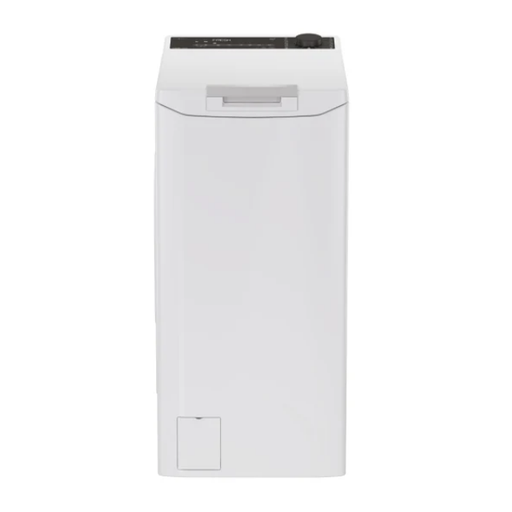 Image unavailable
Haier T Series 7 THASN276TM6-S top-loading, 7 kg
A top-loader is worth considering if a front door would get in the way and your loads are moderate in size. The product name lists a capacity of 7 kg and a spin speed of 1,200 rpm; check the machine’s width and make sure there’s enough room above the lid.
View on Joybuy
 Image unavailable
Candy TCA464TM4-S ProWash 500 top-loading, 6 kg
This top-loading format may suit you if access to the front of the machine is restricted and your usual loads are modest. The product name lists a capacity of 6 kg and a spin speed of 1,400 rpm; check that the lid can open fully, and bear in mind that you may need extra cycles for frequent large loads.
View on Joybuy
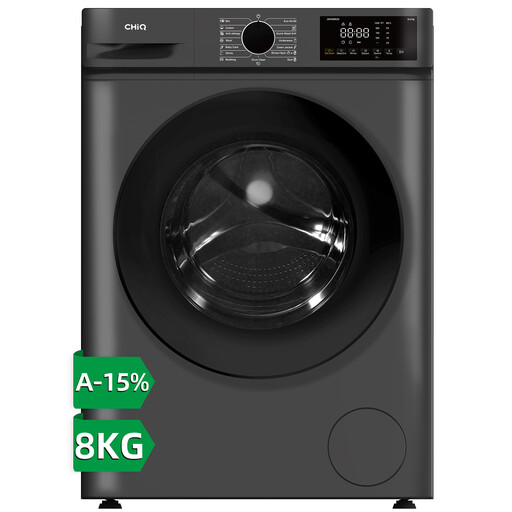 Image unavailable
CHiQ JW85883G front-loading, 8 kg, dark grey
Worth considering if an 8 kg capacity suits your laundry loads and you have access to the front of the machine. The product name lists a spin speed of 1,400 rpm and 16 programmes; check the exact external dimensions before planning to fit it into a shallow alcove.
View on Joybuy
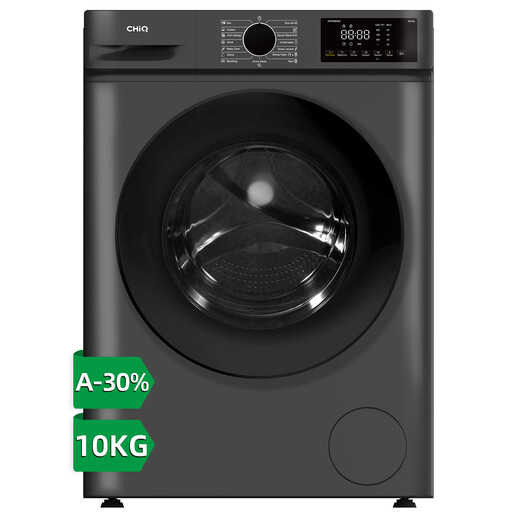 Image unavailable
CHiQ JW105883G front-loading, 10 kg, dark grey
An option to compare if you regularly wash bulky items, rather than for small everyday loads. The product name lists a capacity of 10 kg, a spin speed of 1,400 rpm and 16 programmes; check the external dimensions and the space needed in front of the door.
View on Joybuy
Frequently asked questions
Is a slim washing machine suitable for every small room?
No. It’s mainly designed for spaces with limited depth. The slim front-loaders described by UFC-Que Choisir are 33 to 45 cm deep, but remain around 60 cm wide and need space in front for the door to open.
When should you consider a capacity of 10 kg or more?
Consider it if you regularly wash large loads or bulky items, rather than simply basing your choice on household size. UFC-Que Choisir says that 8 to 9 kg is generally enough for a household of 3 to 4 people; also check the load limits of the programmes you use.
Can a mini washing machine be the only machine in a studio flat?
It can be used as a back-up if a standard appliance can’t be installed, but it won’t necessarily replace one. The 2 to 3 kg models described by UFC-Que Choisir aren’t well suited to large items; also check their connection and drainage requirements.
What should you check before delivery and installation?
Check that the appliance can be brought to its intended position and that the connections specified in its instructions are ready. Electrolux’s pre-installation guide states that its installers don’t carry out the carpentry, plumbing or electrical work needed to prepare your home.


