What should you check before choosing?
First, measure the alcove and allow enough room to load the laundry. For models that fit, compare the capacity for each programme, then check the spin noise if the machine will be near rooms you use regularly.
| Criteria |
What to check |
Consumers concerned |
| Width and opening |
Measure the overall width. For a top-loader, allow enough room above the appliance to open the lid. |
When the machine needs to fit into a narrow alcove, I prioritise access to the laundry that remains practical once the appliance is in place. Around 30% of consumers would make this width restriction their priority. |
| Depth |
Compare the overall depth and the clearances specified in the manual, remembering to allow space in front of a porthole. |
If the space in front of the machine needs to stay clear, I look for a shallower front-loader without compromising on being able to open the door. Around 30% of consumers would have this priority. |
| Capacity and stacking |
Check the load limits for your usual programmes. For a stacked set-up, check the model numbers of the appliances and kit. |
To handle the household’s usual laundry loads or make room for a tumble dryer too, I want a useful capacity and a compatible installation. Nearly 30% of consumers would put this need first. |
| Spin noise |
Compare the stated spin noise, in dB, across models that fit your space. |
In an occupied home, I want to minimise disruption during the spin cycle without assuming that one format is always quieter than another. This would be the main concern for around 10% of consumers. |
Brands to consider by format
These ranges and models are examples to help you compare formats; their features won’t apply to every appliance from the same brand.
Whirlpool
The TW6522FRESHCAREFR top-loader is worth considering when the width of your alcove is the deciding factor.
- Whirlpool lists this model as 40 cm wide, with a capacity of 6,5 kg.
- Its stated depth of 60 cm and top-opening lid still need to be checked against your space. The stated spin noise for this model is 76 dB.
Electrolux
The brand’s slim front-loaders are worth considering if depth is the issue rather than width.
- Electrolux says its compact models are generally between 33 and 45 cm deep; the EW6S1064NA specification lists a depth of 411 mm and a capacity of 6 kg.
- A slim front-loader is generally still around 60 cm wide. Also check the load limits for the programmes you’ll use.
Bosch
Bosch’s stacking-kit documentation is useful when you’re planning a stacked set-up with a standard-size front-loader.
- Bosch says its WTZ2741C kit is designed for use with a washing machine more than 55 cm deep.
- This measurement alone doesn’t establish compatibility: Bosch advises checking the exact appliance model numbers or their manuals.
Washing machines available on Joybuy
These models let you compare front-loaders for different space constraints, as well as a top-loader for when width is limited. Before choosing, compare the dimensions and clearance requirements in each manual with your available space; the capacity shown on an appliance doesn’t apply to every programme.
 Image unavailable
Hisense WF5I8043BWF, 8 kg washing machine
Worth considering if you’re looking for a front-loader for a space with limited depth, provided you check its full dimensions.
Capacity shown in the product name: 8 kg; maximum spin speed: 1 400 rpm.
Check the manual for the space needed in front of the porthole and the required installation clearances.
View on Joybuy
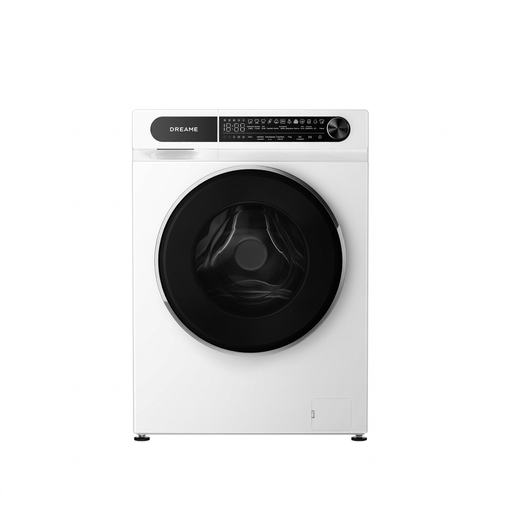 Image unavailable
Dreame DRWASHS8KG Washing Machine S, 8 kg
Compare it with other front-loaders if depth is your main constraint.
Capacity shown in the product name: 8 kg.
Check the overall dimensions, the space needed in front of the porthole and the installation clearances specified in the manual.
View on Joybuy
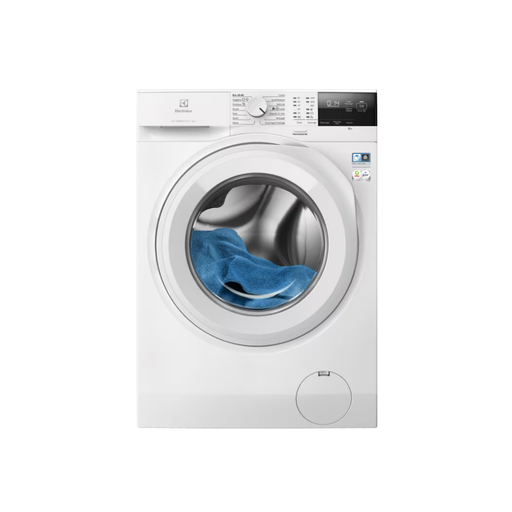 Image unavailable
Electrolux EW6FI4805AW, 8 kg front-loader
Consider it if your space can accommodate a standard front-loader and this capacity suits your usual cycles.
Capacity shown in the product name: 8 kg; maximum spin speed: 1 400 rpm.
Allow room to open the porthole and check the model’s dimensions and clearances in the manual.
View on Joybuy
 Image unavailable
Candy TCA464TM4-S ProWash 500, 6 kg top-loader
Top-loading is worth considering if width is limited and there’s enough clearance to open the lid fully.
Capacity shown in the product name: 6 kg; maximum spin speed: 1 400 rpm.
Check the depth, the clearance above the appliance and the load limits for your usual programmes.
View on Joybuy
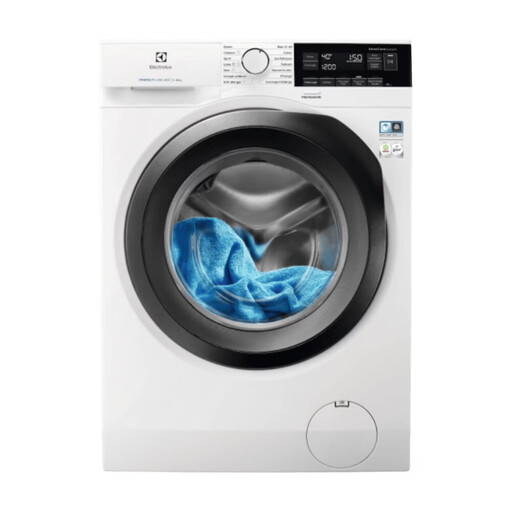 Image unavailable
Electrolux EW6F3811RC, 8 kg front-loader
Worth considering if you have room for a standard front-loader rather than a narrow or shallow appliance.
Capacity shown in the product name: 8 kg; maximum spin speed: 1 400 rpm.
Measure the space carefully and check the manual for the clearance needed in front of the porthole.
View on Joybuy
Frequently asked questions
What should I measure before choosing a top-loading or front-loading washing machine?
Measure the available width, depth and height, as well as the space needed to open and load the machine. A top-loader opens from above, while a front-loader needs room in front of its porthole. Then compare your measurements with the overall dimensions and the manual for the exact model.
Is a top-loading washing machine suitable for every small space?
No: its main advantage is its narrow width. The French National Consumer Institute says top-loaders are usually 40 to 45 cm wide, but you still need enough room to open the lid, and the depth must also suit your space.
Can you stack any tumble dryer on a front-loader?
No: compatibility depends on the model numbers of the appliances and the kit. For the WTZ2741C kit, Bosch requires a standard-size washing machine with a depth of more than 55 cm, and advises checking compatibility using the E-Nr model number or the manual.
Does the stated capacity in kg apply to every programme?
No. The French National Consumer Institute says the stated load is for dry cotton, while a synthetic programme takes around half that load. Check the limits for the cycles you use before choosing a capacity that’s just right for your needs.
Should you check the durability index for a washing machine sold in France?
Yes. When comparing appliances sold in France, check the durability index shown for the model you’re considering. It’s a useful extra point of comparison, but doesn’t replace checking the dimensions, programme load limits and installation requirements.


