People with a narrow alcove
You need to fit the machine into a limited width while keeping it easy to load. Que Choisir Ensemble notes that the space available and your preference for loading from the top can help determine which type to choose.


Start by choosing a format based on the dimension that’s the real constraint and the space needed to open the machine. A top-loading washing machine takes up less width, while a shallow front-loader or compact model suits a different layout. Next, check that the capacity matches your laundry needs, then make sure there’s enough clearance to open the machine. Check the stated noise level and the installation instructions for the exact model, too.
You need to fit the machine into a limited width while keeping it easy to load. Que Choisir Ensemble notes that the space available and your preference for loading from the top can help determine which type to choose.
You have enough width, but the depth of the alcove or clearance in front of the door may get in the way of moving around or loading the machine. Compare the measurements with the door closed and open, not just those of the machine body.
You want a capacity that suits your laundry needs without overlooking spin noise or everyday access to the drum. ADEME recommends choosing a capacity that suits your usual loads, so you don’t have to run extra cycles with an underfilled drum.
Worth considering: if width is your main constraint and there’s enough clear space above to open the lid.
Bear in mind: this format can still be deep, so check the clearance above the machine as well.
Worth considering: if there’s enough width and space in front of the door to open it and load the laundry.
Bear in mind: the overall depth increases when you include the door. Measure how far it opens in your room.
Worth considering: if one of the dimensions rules out a standard model and the capacity suits your loads.
Bear in mind: a smaller capacity may mean more cycles or make it harder to wash bulky items.
The priorities below suit different needs. Measure your space and think about your laundry loads to check each model carefully.
| Priority | What to check before buying | Who this matters most to |
|---|---|---|
| Width and top-opening lid | Measure the access route and alcove, then check the exact width and the space needed to open the lid. | I need to fit the machine into a narrow alcove without losing easy access for loading. Around 29% of consumers prioritise the width available. |
| Depth and door clearance | Check the depth with the door closed and open, as well as the space needed for connections. | I want to make sure the door won’t block the way or stop me taking out the laundry. Around 23% of consumers put depth or front-door clearance at the top of their list. |
| Capacity for everyday laundry | Compare the stated capacity with your usual loads and any bulky items you wash. | I want a drum that suits my laundry without having to run extra cycles. Nearly 18% of consumers make laundry capacity their top priority. |
| Spin noise | Compare the label and information for the exact model, and follow the levelling instructions during installation. | I plan to put the machine near a room that’s in use and want to minimise disturbance during the spin cycle. Around 18% of consumers put noise first. |
| Everyday access to the drum | Check there’s enough space to load and unload the laundry, and allow for the lid or door to open fully. | I want to access the drum without bumping into a worktop or struggling in a narrow passage. Around 12% of consumers prioritise ease of loading. |
The Bosch WAN2827FFR technical specifications give different depth measurements with the door excluded, included and open. So measuring the machine body alone won’t tell you whether there’s enough room in front of it.
Measure the space with the door closed and then open, and allow for connections as described in the model’s instructions.
According to its French product page, the Electrolux EW6T4613HA is 400 mm wide and 600 mm deep. A narrow format doesn’t necessarily mean a shallow one, and you’ll also need room to open the lid.
Work out whether your constraint is width, depth or clearance above the machine, then compare the full dimensions of the model.
A capacity that’s too small can mean more cycles and make it harder to wash bulky items. ADEME recommends choosing a capacity suited to your usual needs.
Compare the stated capacity in kilograms with the loads you actually wash, including bulky items.
The stated noise level and vibrations caused by installation are two different things. In its reader survey, Que Choisir Ensemble reports mixed views on noise during the spin cycle.
Compare the information available for the exact model, then follow its instructions to remove the transit bolts and adjust the feet. Bosch provides this advice in its washing machine support section.
The EW6T4613HA is one example of a top-loading washing machine for a narrow space, according to the brand’s French product page.
The WAN2827FFR is an example of a front-loading washing machine for a layout with enough width and front access. The specifications below apply to this model.
The HW50-BP12307U1-S is one example of a compact front-loader for loads suited to its capacity, according to the brand’s information.
The ProWash 550 BP 48SBL6-S is an example of a front-loader described by the brand as shallow.
The LTR8C7331A is another example of a top-loading washing machine designed for a narrow space, according to the brand’s French product page.
The models below include both front-loading and top-loading washing machines. Check the installation dimensions and clearance needed for each model.
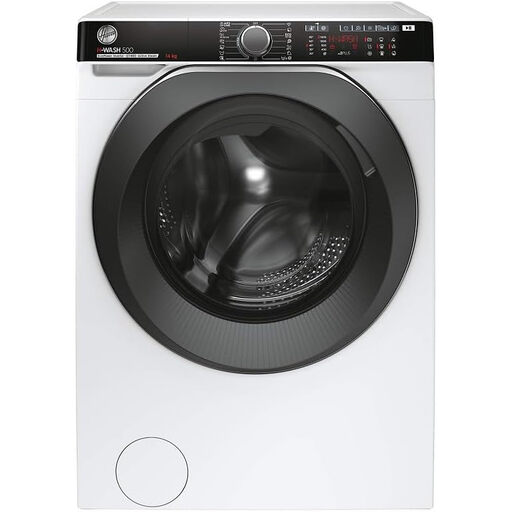 Image unavailable
Worth considering for large loads if you have enough space for front access.
Stated capacity: 14 kg; spin speed: 1 400 rpm; stainless steel drum; class B.
 Image unavailable
Worth considering if a top-loading machine suits your space and 6 kg is enough for your laundry.
Stated capacity: 6 kg; maximum spin speed: 1 400 rpm; class B; Inverter motor; Wi-Fi; 17 programmes.
The lid needs to open upwards, so a top-loading design doesn’t guarantee enough clearance beneath a worktop or shelf.
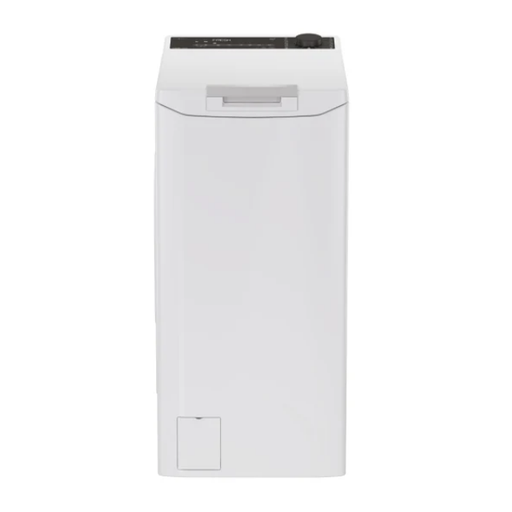 Image unavailable
Worth considering if a top-loader suits your room and its capacity matches your usual loads.
Stated capacity: 7 kg; maximum spin speed: 1 200 rpm; class A; steam function; Inverter motor; Wi-Fi.
Allow enough clearance to lift the lid and check the installation instructions.
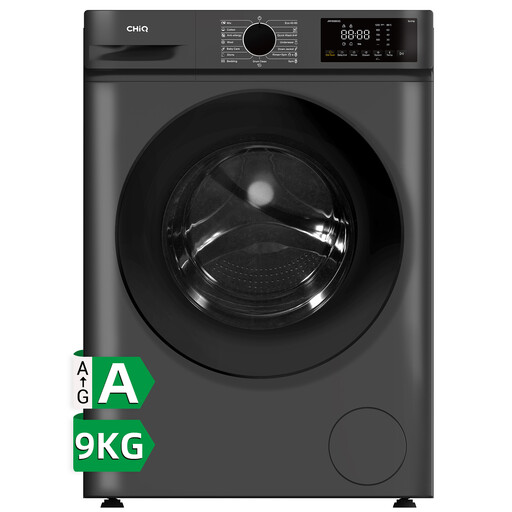 Image unavailable
Worth considering if you’re looking for a front-loader described as narrow and have enough space for the door to open.
Stated capacity: 9 kg; stated width: 465 mm; 530 mm drum; maximum spin speed: 1 400 rpm; steam wash; 15-minute quick wash.
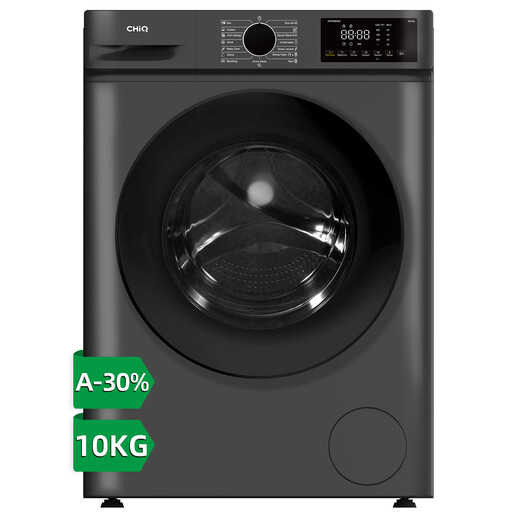 Image unavailable
Worth considering for large loads if the capacity and front access suit your home.
Stated capacity: 10 kg; 530 mm drum; maximum spin speed: 1 400 rpm; energy class A-30%; 16 programmes; steam function.
No. Its width doesn’t tell you whether the lid can open. Measure the overhead clearance and check the installation diagram for the exact model before choosing this spot.
Measure the depth with the door closed and open, and allow space for connections. The Bosch WAN2827FFR specifications give a depth of 590 mm without the door, 632 mm with the door and 1 049 mm with the door open. These measurements apply to this exact model.
Compare the stated capacity with the loads you wash regularly and any bulky items. ADEME says a 7 kg washing machine is usually enough to avoid running extra cycles with an underfilled drum. Use this as a guide and choose a capacity that suits your needs.
It helps you compare models, but it doesn’t measure the noise in your home. Check the information for the exact model and follow its installation instructions, including removing the transit bolts and levelling the machine.
Check the instructions to make sure the transit bolts have been removed and the feet have been adjusted and locked in place. Bosch recommends these checks in its washing machine support section. If the problem continues, follow the manufacturer’s advice for your model.