Plenty of width, but limited depth
If you have around 60 cm of width but the appliance could get in the way of a walkway, look at slim-depth front-loaders. Remember to leave room for the connections and for the door to open.


Choose a format based on what is really restricting the installation: depth and door clearance for a front-loader, width and clear space above for a top-loader, or a lack of room for two appliances if you also need to dry your laundry. No format guarantees that a model will fit your alcove: check its dimensions, connections and clearance for opening before you buy.
If you have around 60 cm of width but the appliance could get in the way of a walkway, look at slim-depth front-loaders. Remember to leave room for the connections and for the door to open.
If two units of furniture mainly restrict the width, a top-loader is worth considering. However, its lid needs room to open, so a fixed worktop above it may rule out this option.
If you need to dry laundry at home but cannot fit two appliances, a washer-dryer combines both functions. Choose a model based on the amount of laundry you want to dry, which may be less than the wash load.
First, identify the measurement that could prevent installation, then check the capacity and connection requirements of the model you are considering. A narrower appliance is not necessarily a shallower one.
Consider this when: there is enough width for a front-loader and depth is the main constraint.
Bear in mind: the door needs space in front of the appliance, even if its body is shallow.
Consider this when: width is limited and the space above the appliance can be kept clear.
Bear in mind: the lid needs room to open, and the model may still be quite deep.
Consider this when: you cannot install a separate tumble dryer but need to dry laundry at home.
Bear in mind: a full wash load may exceed the capacity available for drying.
| Consideration | What to check | Who is this for? |
|---|---|---|
| Depth and door clearance | Measure the usable depth, including connections, then check the door clearance in the manual for the front-loader you have chosen. | If an appliance might obstruct a walkway, I want to reduce how far it sticks out without losing access to the laundry. Around 31% of consumers with this need make it their top priority. |
| Width and lid clearance | Compare the appliance’s overall width with the available space and make sure nothing will block the lid from opening. | Between two units of furniture that are close together, I mainly need an appliance that fits the width, provided I can lift its lid. Around 31% of consumers with this need put it first. |
| Washing and drying in one appliance | Compare the washing and wash-and-dry capacities separately, then measure the space available for the single appliance. | With no room for a separate tumble dryer, I want to be able to wash and dry laundry, and am happy to dry a smaller load. Around 15% of consumers with this need prioritise this option. |
| Location and connections | Check the manual for the water supply, drain and electrical connection requirements. In a bathroom, also have the electrical installation assessed. | If the alcove is close to a shower or the connections are difficult to reach, I first need to know where the appliance can be installed. This is a priority for around 23% of consumers with this need. |
An appliance may fit in the measured space but still be difficult to load if its door or lid catches on a unit of furniture. Hoses, the plug socket and access to connections matter too.
Measure all three dimensions that affect the fit and compare them with the installation guidance for the exact model. Also check that the appliance can get through the delivery route.
The Whirlpool TDLR6247FR/N featured by Whirlpool France is 40 cm wide, but also 60 cm deep and 90 cm tall. Its narrow width will not necessarily solve a lack of depth.
Choose this format for spaces where width is the main constraint and there is enough clear space above to open the lid.
For the Bosch WNG24402FR, Bosch Electroménager France lists a 9 kg capacity for washing alone and 6 kg for a wash-and-dry cycle. A full wash load therefore exceeds the capacity of the complete cycle.
Choose a capacity based on how much laundry you plan to dry at a time, not just how much the appliance can wash.
If the appliance is close to a bath or shower, you also need to consider its location and electrical protection. Promotelec advises checking, among other things, the earthing, the 30 mA residual-current protection and the appliance’s position in relation to the bathroom zones. In a cupboard, the assessment takes account of the doors being open.
Before choosing this location, ask a qualified electrician to assess the existing installation and the specific cupboard or alcove.
Depending on the condition of the installation, electrical work or a different location may be needed.
Examples of slim-depth front-loaders and top-loaders, offering two ways to address a space constraint.
A top-loader that provides a useful reference point when available width is the main constraint.
A washer-dryer to consider when assessing the space taken up by an appliance that performs both functions.
These models cover two situations: choosing a top-loader when width is limited, or combining washing and drying when there is no room for a second appliance. In both cases, you will still need to check that the model fits your space.
 Image unavailable
Worth considering if width is your main constraint and the lid can open freely.
The model name indicates a 7 kg capacity and a spin speed of 1,200 rpm. Check the manual for the space needed to open the lid and connect the appliance.
 Image unavailable
A top-loading design can solve a width constraint, provided there is no worktop or furniture in the way of the lid.
The model name indicates a 6 kg capacity and a spin speed of 1,400 rpm. Check the depth and clearances in the manual before choosing where to put it.
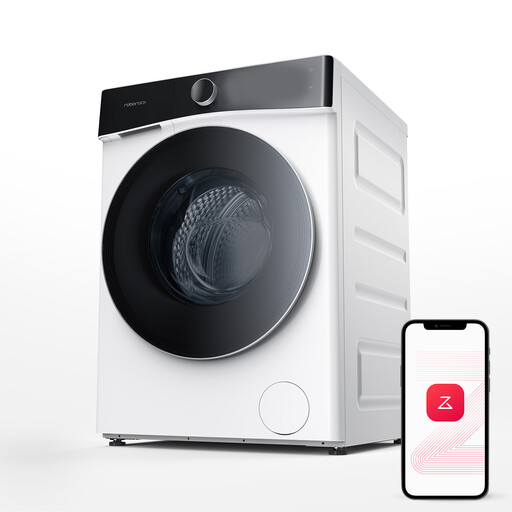 Image unavailable
Worth considering if you need to wash and dry laundry but do not have room for two appliances.
The model name indicates a 10 kg washing capacity and a 6 kg drying capacity, so a 10 kg wash load cannot be dried in one go at the stated capacity. Check its dimensions and installation clearances before choosing an alcove.
No: a top-loader can solve a lack of width without reducing the depth. The TDLR6247FR/N is 40 cm wide but 60 cm deep, according to Whirlpool France. You also need enough space above the appliance to open its lid.
Some models can be installed this way, provided the manual allows it and the height, clearances and connections are suitable. Also check that the door can open far enough for you to load the laundry.
Not necessarily: Bosch Electroménager France lists a 9 kg capacity for washing alone and 6 kg for a wash-and-dry cycle on the WNG24402FR. If you wash a load that exceeds the capacity of the complete cycle, you will need to remove some of it before drying.
Allow for the clearance specified in the installation manual for your chosen model, as well as its overall dimensions. Check the connections at the back, the door or lid opening and access to the connections. A measurement that works for another appliance is not enough.
Have the location and electrical installation checked before choosing an appliance. For a bathroom in France, Promotelec advises checking, among other things, the earthing, the 30 mA residual-current protection and the appliance’s position in relation to the room’s zones. If the appliance is in a cupboard, the assessment takes account of the doors being open. A qualified electrician can assess your specific setup.