People with a narrow alcove
Width matters, but so do depth, door clearance and the space needed for connections. A top-loader may suit a narrow space; with a front-loader, you’ll also need to check the room in front for the door to open.


When choosing a washing machine for a small home, first measure the space needed to install and load it, not just its dimensions with the door closed. A top-loader can work where width is limited, provided its lid can open; a front-loader, which may be less deep, needs space in front for the door to open. A washer-dryer can solve the problem of having no room for a separate tumble dryer, as long as its drying capacity is enough for your usual loads. Then compare washing, rinsing and spin performance, noise levels and cycle times for each model.
Width matters, but so do depth, door clearance and the space needed for connections. A top-loader may suit a narrow space; with a front-loader, you’ll also need to check the room in front for the door to open.
A top-loader means you don’t have to bend down to load laundry through a door. However, you’ll need enough clearance to open the lid fully, especially if there’s a cupboard or worktop above it.
A washer-dryer combines both functions in one space. To run a wash and dry cycle without removing any laundry, your load must fit within its drying capacity, which is different from its washing capacity.
Start by checking the available space and how easily you can reach the laundry, then look at capacity and performance for the programmes you usually use. UFC-Que Choisir tests factors including washing, rinsing, spin performance, cycle time and noise levels, so the format alone doesn’t tell you how well a machine performs.
| Factor | What to check | Depending on your needs |
|---|---|---|
| Size and loading | Check the model’s height, width and depth, then allow for the front-loader door to open or for clear space above a top-loader. Also check the route into your home and the connection points shown in the installation diagram. | “I need to be able to install the machine and load the laundry without blocking the way or bumping into furniture.” |
| Washing and spin performance | Where possible, compare washing and rinsing tests carried out on the same basis. Check the spin-drying efficiency class and the settings available for the programmes you’ll use. | “A format that fits my room isn’t enough: I also want to compare washing and rinsing performance for the way I use it.” |
| Noise, cycle time and maintenance | Look at the stated spin noise level and the duration of everyday programmes, not just a quick cycle. Check the manual to see how to access the filter and care for the drum. | “The machine will be close to a room I use, so spin noise and cycle times will matter every day.” |
| Washing and drying in one space | For a washer-dryer, check the separate washing and drying capacities. Make sure you have room for the appliance once installed, and check the details of the combined cycle on the model’s product page. | “I don’t have room for a separate tumble dryer and want to dry my loads without always having to take some laundry out.” |
| Durability | Check the durability index and the breakdown of the score for the exact model, separately from its energy rating. According to the French ministry responsible for the environment, the durability index has replaced the repairability index for washing machines in France since 8 April 2025. | “I want to look at information on the appliance’s repairability and reliability, rather than judging its lifespan by its energy rating alone.” |
A front-loader may fit with the door closed but block the way when it’s open. A top-loader needs clear space above it so you can load the laundry.
Sketch out the model’s dimensions, how far its door or lid opens, the connections and any fixed obstacles.
With a washer-dryer, a load that’s within the washing capacity may exceed the drying capacity. You’ll then need to remove some laundry before drying.
Choose a combined cycle based on the amount of laundry you want to dry in one go.
These specifications don’t tell you everything about washing, rinsing, noise or programme duration. UFC-Que Choisir assesses these factors separately in its tests.
If comparable test results are available, compare the scores for the factors that matter in your home.
The energy rating and durability index cover different factors. The French ministry responsible for the environment says the durability index has applied to washing machines in France since 8 April 2025.
Check each piece of information separately, and look at the detail behind the index for the exact model you’re considering.
These examples show formats worth comparing; the specifications relate to the models named, not to every product from each brand.
The EW8T3653BA top-loader is an example of a machine loaded from above, suited to an alcove where width is limited.
The WAN28217FF front-loader is an example of a model whose depth you can compare with that of your alcove.
The F964X71WSTA washer-dryer is an example of a two-in-one solution when there’s no room for a separate tumble dryer.
Haier France’s guide to washing machine formats covers front-loaders, top-loaders and washer-dryers.
This selection includes top-loaders for spaces where width or loading access is a concern, washer-dryers for a single space, and a front-loader to consider if access from the front works for you. Check the installation dimensions for each model before deciding whether it will fit in your home.
 Image unavailable
Loading from above is worth considering if width or access in front of the machine is an issue. The title lists a 6 kg capacity and a maximum spin speed of 1,400 rpm. Check there’s room to open the lid and accommodate the connections before choosing this model.
 Image unavailable
This top-loader lets you load laundry from above, provided there’s room to open the lid. The title lists a 7 kg capacity and a maximum spin speed of 1,200 rpm. Check the installation dimensions and clearance above the appliance.
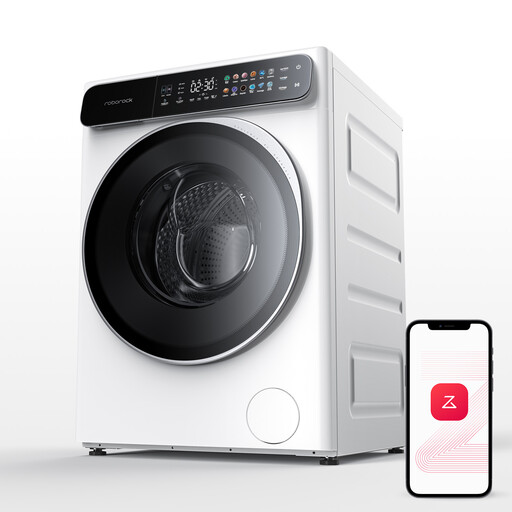 Image unavailable
This washer-dryer is worth considering when both functions need to fit in one space. The title lists a 10 kg washing capacity and a 6 kg drying capacity, so you’ll need to reduce any load over 6 kg before drying. Check its installation dimensions too.
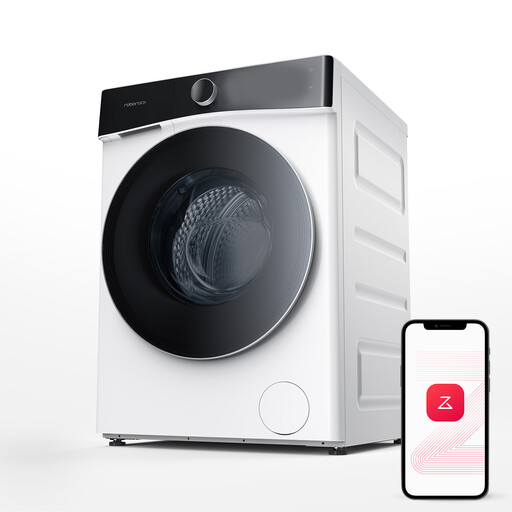 Image unavailable
This model combines washing and drying if there isn’t room for two appliances. The title lists a 10 kg washing capacity and a 6 kg drying capacity, as well as app control. For a combined cycle, bear in mind the drying limit and check the space it needs once installed.
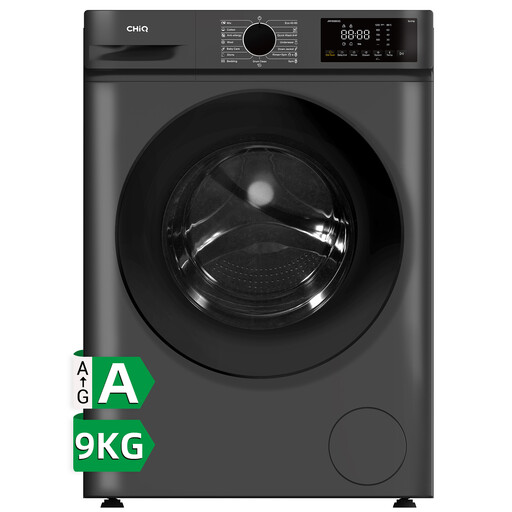 Image unavailable
This front-loader is worth considering if you have space in front of the door. The title lists a 9 kg capacity, a maximum spin speed of 1,400 rpm and a 15-minute quick programme. The 465 mm measurement is given along different axes in different descriptions. Check the dimensional specifications for the width, depth and height before considering it for an alcove.
Measure the space and the route to it, then compare them with the dimensions of the exact model. Allow room for a front-loader door to open or for clearance above a top-loader, as well as space for the connections.
It may be suitable if you can’t fit a separate tumble dryer and your loads fit within its drying capacity. For example, LG France lists a 9 kg washing capacity and a 6 kg drying capacity for the F964X71WSTA. A load over 6 kg can’t be dried in full in a combined cycle.
No. UFC-Que Choisir tests also look at washing, rinsing, programme duration, noise and ease of use. Where results are available on a like-for-like basis, compare them according to what matters for the way you’ll use the machine.
It provides information separate from the energy rating, including details on repairability and reliability. According to the French ministry responsible for the environment, the durability index has replaced the repairability index for washing machines since 8 April 2025. Check the score and its breakdown for the exact model you’re considering.