You have a narrow alcove
Width is the most important measurement. A top-loader may fit where a front-loader is too wide, as long as there’s room to open the lid above it.


Choose a washing machine based on the dimension that really limits where it can go: a top-loader suits a narrow space, while a front-loader may fit under a worktop or support a compatible stacked setup. Allow room for connections and the door to open, too. If you’re planning to put it in a bathroom, have the location and electrical installation checked before you buy.
Width is the most important measurement. A top-loader may fit where a front-loader is too wide, as long as there’s room to open the lid above it.
You want to keep your worktop clear or hide the appliance behind a cabinet door. A freestanding front-loader under a worktop and an integrated model need different cabinets, so check the space, door and fittings required.
You want to put a tumble dryer above the washing machine to save floor space. Check the available height, both appliance models and the stacking kit together.
First, identify what could prevent installation: the width, how far the machine will project under a worktop, the space needed for a stack, or the proposed bathroom location. If you’re planning to fit a kitchen door, check separately that the model is genuinely integrated and that its door panel will suit the cabinet.
| Constraint | What to check before you buy | Who this matters to |
|---|---|---|
| Width and loading | Measure the available width and check the lid’s opening clearance. Que Choisir gives a width of 40 to 46 cm for top-loading washing machines. | If my access space is narrow, I’m looking for a machine I can load without the lid getting stuck; around 33% of consumers prioritise width. |
| Depth and under-counter fit | Measure how far the machine will project, including connections, and allow for the door to open. Que Choisir gives a depth of 33 to 45 cm for slim front-loaders. | If I need to keep the worktop in place, I want the door to open without obstructing the walkway; depth or under-counter access is the priority for around 27% of consumers. |
| Stacked installation | Check the total height, then make sure the kit is compatible with the models and depths of both appliances. | I’d rather put the tumble dryer above the washing machine than use up more floor space; around 20% of consumers make stacking their main priority. |
| Bathroom location | Have the position in relation to the shower or bath, the connections and the electrical installation checked, especially if any changes to the circuit are needed. | In a bathroom, I need to know whether the space can accommodate the appliance before choosing its format; around 20% of consumers put suitability first. |
A washing machine may fit between two cabinets, but stick out once the pipes are connected or prevent the door from opening. A slim front-loader mainly reduces depth, not necessarily width.
Measure the width, installed depth, height, door or lid clearance and delivery route.
The Bosch and Electrolux kits mentioned for this type of installation have specific depth and compatibility requirements. A stated size range alone doesn’t guarantee that any pair of appliances will fit.
Note down the model numbers of your washing machine and tumble dryer, then check which kit the manufacturer recommends for that combination.
You may need to buy the compatible kit separately from the two appliances.
The space taken up when the door is open also matters when assessing a location near a shower or bath. A cupboard doesn’t remove the need to check the electrical installation.
Ask a qualified professional to check your plans before ordering the appliance, particularly if you need to install or move a socket.
Sliding a front-loader under a worktop doesn’t mean it can take a kitchen door. An integrated model must fit the space and the specified fixing system.
If you want to conceal the appliance, check its exact model number against the cabinet plan and installation instructions.
Miele states that the door panel required for its integrated appliances is not supplied.
Worth considering for a fitted kitchen or a stacked setup. Choose the appliance and kit models together.
Worth considering if the available width points you towards a top-loader.
Worth considering for a stack made up of two compatible front-loading appliances.
Worth considering for a front-loader intended for stacking or a fitted-kitchen installation with a door panel.
The top-loading Candy could suit a narrow space if its lid can open freely. The Samsung washer-dryer is a front-loading appliance to consider if there’s enough room in front of and behind it; its format alone doesn’t mean it can be integrated or stacked.
 Image unavailable
Worth considering when width is the limiting factor and the top of the appliance will remain accessible.
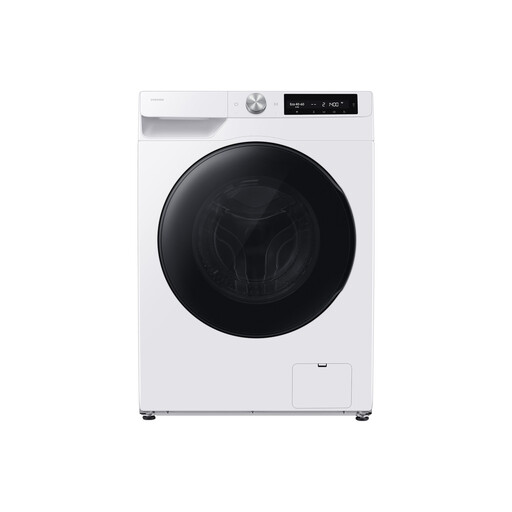 Image unavailable
Worth considering for a front-access space if the door can open and there’s room for the connections.
A bathroom location needs to be assessed in terms of how close it is to the shower or bath and the electrical installation. Promotelec highlights bathroom zones, earthing and residual-current protection in particular. Have your specific installation checked before you buy.
No, having a door on its own isn’t enough to confirm that the location is suitable. Promotelec says that cupboard assessments take the doors into account when open. Have the position checked in relation to the shower or bath.
Not if the worktop stops you opening the lid. Top-loaders are mainly suited to narrow spaces: Que Choisir gives a width of 40 to 46 cm for this type, but you’ll need to leave clearance above to load the washing.
No, you need a kit that’s compatible with both model numbers. The kits listed by Bosch and Electrolux have depth and model requirements, so check the exact combination before ordering the appliances.
Don’t assume it does: Miele says that the door panel required for its integrated appliances isn’t supplied. Check whether the panel is included, along with the space dimensions and fittings required for your chosen model.