If width is the issue, consider a top-loading washing machine; if you’re short on depth, look at slim front-loaders instead. A standard front-loader may fit under a worktop if the space and door clearance allow, while a compact model means accepting a capacity suited to smaller loads. In every case, check the exact model’s dimensions, taking connections and access to the laundry into account.
Who are these formats for?
When width is the main obstacle
In a bathroom, kitchen or alcove too narrow for a front-loader around 60 cm wide, a top-loader is worth considering if its lid can open freely. UFC-Que Choisir gives a width of 40 to 46 cm for this format; depth needs to be measured separately.
When depth gets in the way
If a front-loader’s width is fine but a door, unit or walkway limits the available depth, a slim model could be a good fit. You’ll also need room to open the door and load the washing in front of the appliance.
When you do smaller loads
A smaller household could consider a compact model if there isn’t room for a larger format. Think about your bedding, towels and how many extra cycles a smaller drum might mean, too.
How do the formats compare?
Start with the dimension that’s actually restricting your installation, then check how the machine opens and how much space you need for your usual loads.
| Consideration |
What to check before buying |
Who it matters to |
| Width and top access |
Measure the available width and the delivery route. For a top-loader, also check the clearance needed to open the lid. |
If the alcove is too narrow for a front-loader, I’m looking for a machine that fits without making loading difficult. Around 31% of consumers prioritise this width constraint. |
| Depth and door clearance |
Compare the exact model’s depth with the space needed for the hoses, then check how far the door swings open. |
I have room for the width of a front-loader, but need to keep the space in front of the machine clear. Depth is the main concern for around 31% of consumers. |
| Under-counter installation |
Check all three dimensions of the space, the appliance’s height once installed and the clearances specified in its instructions. |
To fit the machine under a worktop, I need to keep the door accessible and follow the requirements for the model I choose. Around 23% of consumers prioritise this type of installation. |
| Capacity in a smaller format |
Compare the stated capacity with the bedding, towels and everyday loads you wash, rather than an occasional small load. |
When space is especially tight, I can accept a smaller drum, but not if it means doing lots more washing. For around 15% of consumers, minimising the appliance’s footprint is the priority. |
Mistakes to avoid
-
Assuming a narrow machine is also shallow
A narrow top-loader can still be deep: the specifications for the Electrolux EW8T3653BA and Whirlpool TDLR 62322L FR/N both give a depth of 60 cm. A slim front-loader addresses a different space constraint and won’t necessarily be narrower.
Mark out the machine’s footprint in the intended spot, with the lid or door open, then compare it with the dimensions of the model you’re considering.
-
Choosing the smallest drum without considering your washing
UFC-Que Choisir points out that a capacity that’s too small can mean more frequent cycles and make it harder to wash bulky items.
If it’s going to be your main machine, think about your usual bedding, towels and clothes before choosing a compact format.
-
Relying on the word “slim” alone
The term doesn’t indicate a standard depth or the same capacity across different models. Beko, for example, lists different depth and capacity specifications for its appliances.
Compare the dimensions and capacity of each model, then check the connections and door clearance in its instructions.
-
Forgetting the installation requirements
Even if a machine fits in the space, it still needs to be connected, placed on a suitable floor and installed according to its instructions.
Before delivery, check that the water supply, waste outlet and electrical supply are suitable for the location. If anything needs to be changed, have it assessed by a qualified professional.
Brands to compare across formats
Electrolux
The EW8T3653BA top-loader is a useful reference for a narrow space: Electrolux lists its dimensions as 890 × 400 × 600 mm and its capacity as 6 kg.
- Loading from the top means you don’t need to open a door in front of this model.
- Its 600 mm depth and the space needed above it must suit the room; these dimensions don’t apply to every Electrolux washing machine.
Whirlpool
Whirlpool lists both the TDLR 62322L FR/N and TDLR 65230S FRN top-loaders as 40 cm wide, 90 cm high and 60 cm deep.
- These two models offer a like-for-like size comparison; the brand lists the TDLR 65230S FRN as having a 6,5 kg capacity.
- Depth and lid clearance are still key in a narrow space. Also check that the model you want is available.
Beko
For shallow front-loaders, Beko gives examples measuring 44 cm deep with a 6 kg capacity and 49 cm deep with a 7 kg capacity.
- These examples from the brand make it easier to compare the listed depth and capacity of different models.
- Check the full dimensions, hose clearance and door opening requirements in the instructions for the model you choose.
Candy
Candy offers slim and compact washing machines in a range of capacities; depending on the product, the brand lists depths of 33 to 46 cm.
- This variety makes it easier to look for an appliance that suits both the available depth and the amount of washing you need to do.
- These figures refer to different products, not one standard size across the range. Check the dimensions and connections for the model you choose.
Joybuy models to consider
This selection includes a top-loader for spaces where width is limited, plus two front-loaders to consider if depth and door clearance are guiding your choice. Compare each model with your available space before deciding which format to choose.
 Image unavailable
Candy TCA464TM4-S ProWash 500, 6 kg top-loader
Worth considering if width is your main constraint and the space above the machine is clear. The product name indicates a 6 kg capacity and a spin speed of 1,400 rpm.
Check the instructions for the depth including connections and the clearance needed to open the lid.
View on Joybuy
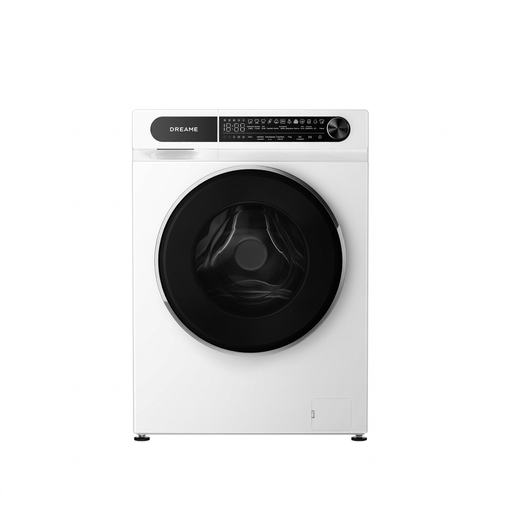 Image unavailable
Dreame DRWASHS8KG Washing Machine S, 8 kg, white
Worth considering if you’re looking for a front-loader for a shallow space. Its stated capacity is 8 kg, so check that it suits your usual loads.
Check the dimensions with the hoses in place, and leave enough room in front of the machine to open the door.
View on Joybuy
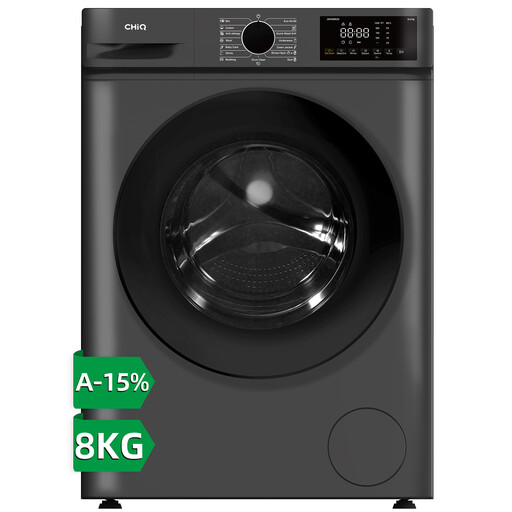 Image unavailable
CHiQ JW85883G, 8 kg, dark grey
Worth considering if you’d like a front-loader but need to keep an eye on the space it will take up. The product name indicates an 8 kg capacity and a spin speed of 1,400 rpm.
Measure the available width and check the full dimensions, connections and door clearance before deciding whether it will fit in the intended space.
View on Joybuy
Frequently asked questions
What should I measure before choosing a washing machine for a small space?
Measure the width, depth and height of the space, as well as the route the machine will need to take to get there. Allow room for the hoses and for the door or lid to open, then compare your measurements with the installation instructions for the exact model.
Is a slim model better than a top-loader for a small bathroom?
A slim model is best when depth is limited but there’s enough width for a front-loader and room for its door to open. A top-loader is better suited to a narrow space, as long as there’s room above it; the Electrolux and Whirlpool examples mentioned here are still 60 cm deep.
What capacity should one or two people consider?
UFC-Que Choisir suggests 5 to 7 kg for one or two people. Choose a capacity that suits your bedding, towels and washing habits: a smaller drum may work for small loads, but could mean running cycles more often.
Can you put a front-loading washing machine under a worktop?
Yes, provided the front-loader’s dimensions, the available space and the manufacturer’s installation requirements allow for it. Check the height, clearances and access to the door in the instructions; a top-loader needs clear space above its lid.


