Homes with limited width and clearance
If a wide appliance or an open door would obstruct movement in your kitchen, bathroom or utility room, consider a top-loading washing machine. You’ll still need enough room to open the lid fully.


Start by checking the space you can actually use, including room for the door or lid to open. A top-loading machine is best suited to a narrow space, while a slimline front-loader could work if there’s enough width and clearance in front of the appliance. A standard front-loader may also fit under a worktop if its dimensions are right. If you need washing and drying in the footprint of a single appliance, compare the washing and drying capacities of a washer-dryer separately.
If a wide appliance or an open door would obstruct movement in your kitchen, bathroom or utility room, consider a top-loading washing machine. You’ll still need enough room to open the lid fully.
If there’s enough width for a front-loader but not enough depth, compare slimline models. Before choosing a capacity, also measure the space taken up by the door and allow room for it to open.
A washer-dryer combines both functions in one appliance. Check its drying capacity, which is separate from its washing capacity, to see if it suits your usual laundry loads.
Consider one: when width is limited or an open door would block the way.
The trade-off: its lid needs clearance above the appliance, so you can’t use the top as a work surface.
Consider one: if there’s enough width and clearance in front of the appliance to load laundry through the door. A slimline model may fit under some worktops.
The trade-off: a drum that’s too small for your usual loads may mean more cycles, as Que Choisir points out.
Consider one: if you need to fit washing and drying in the footprint of a single appliance.
The trade-off: the drying capacity may be lower than the washing capacity, so you may need a smaller load for a combined cycle.
Once you’ve chosen a format, compare each model’s dimensions and capacity with your space and laundry needs, then check the information on its energy label.
| Factor | What to check | Your needs |
|---|---|---|
| Size and access | Measure the width, depth and height of the space, then allow for the room needed in front of the door or above the lid. Que Choisir generally puts the width of top-loading machines at between 40 and 46 cm; slimline front-loaders are still around 60 cm wide. | I need to be able to load the laundry without blocking a door, storage space or the way through the room. |
| Capacity | Compare the capacity in kg with your usual loads, including household linens. ADEME says a 7 kg washing machine is enough for most households; Que Choisir warns that a drum that’s too small may mean more cycles. | My laundry needs to fit in the drum without routinely requiring several washes. |
| Noise and spin cycle | Check the noise level and spin-drying class, as well as the duration, water use and energy consumption shown for the cycle you’re comparing. ADEME recommends checking the energy label for these details. | The machine will be near a living area, or I’ll need to dry laundry indoors, so these details matter to me. |
| Built-in drying | For a washer-dryer, check the washing and drying capacities separately, along with the information for the wash-and-dry cycle. For example, appliances featured by BUT have capacities of 8/5 kg or 9/6 kg. | If there’s no room for a second appliance, I want to know how much laundry can actually go from washing to drying without removing any items. |
An appliance may fit in the space but still get in the way when you open its door or lid, or a door to the room. A slimline front-loader mainly saves depth, while a top-loader mainly saves width.
Also measure the height and depth, and account for skirting boards and the space taken up by connections. Check the model’s dimensions and make sure you can open it fully in position.
Que Choisir points out that a drum that’s too small may mean more cycles. This takes longer and may increase water and electricity use.
Work out the size of your usual loads, including sheets and towels, before deciding between a smaller appliance and greater capacity.
For an appliance listed as 8/5 kg, the drying capacity is 5 kg, not 8 kg. If you wash a larger load, you’ll need to reduce it before starting the drying cycle.
Check both capacities for the model you’re considering, then decide whether you’d rather wash a smaller load or remove some laundry between the two functions.
The energy rating on its own doesn’t tell you everything that matters in a small room, such as noise, programme duration and spin performance.
Also compare kWh per 100 cycles, water use, duration and the noise information on the label. For a washer-dryer, use the figures for the cycle you plan to run.
These examples show specific configurations. Check each model’s features rather than assuming they apply to the brand as a whole.
Boulanger lists the Electrolux EW7T3733BA top-loader at 40 × 89 × 60 cm, with a 7 kg capacity.
Boulanger lists the Whirlpool TW621CSILENCEFR top-loader at 40 × 90 × 60 cm, with a 6 kg capacity.
Boulanger lists the Haier THASN286TM5P-S top-loader at 41 × 86 × 60 cm, with an 8 kg capacity.
These Joybuy options include a top-loader, front-loaders and an appliance that combines washing and drying. For each one, check the full dimensions and the clearance needed in your room.
 Image unavailable
A top-loader is worth considering if an open door would obstruct the way. The model name indicates a 7 kg capacity, 1,200 rpm and an A energy rating. Check how much room you’ll need to open the lid, and confirm that the installation instructions apply to this Haier model.
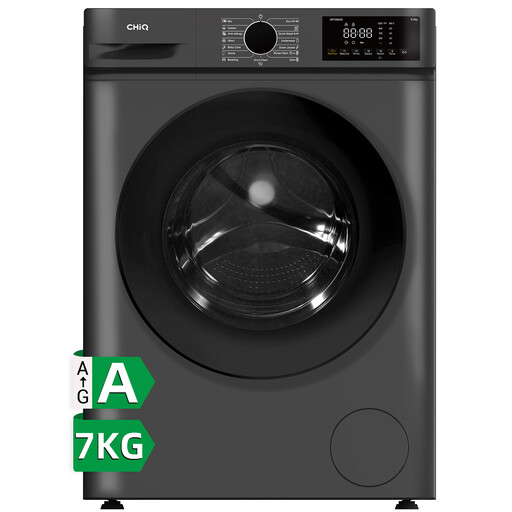 Image unavailable
This front-loader is worth considering if you have room in front of the door. The model name indicates a 7 kg capacity, 1,200 rpm, an A energy rating and 16 programmes. Before buying, check the width, the depth including the door, and the clearance needed to open it.
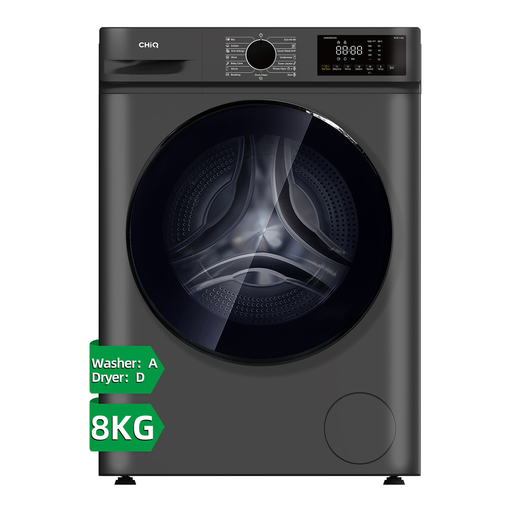 Image unavailable
This washer-dryer combines washing and drying in one appliance. Its stated capacities are 8 kg for washing and 5 kg for drying, with a 1,400 rpm spin speed. You’ll need to reduce a full washing load before drying it. The stated width for this model is inconsistent, so confirm its exact dimensions before deciding where to put it.
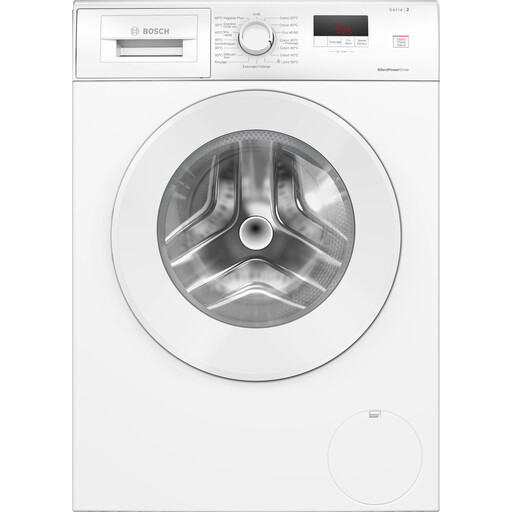 Image unavailable
Consider this front-loader if your space can accommodate a standard-sized appliance and leave room for the door to open. The model name indicates a 7 kg capacity, 1,400 rpm and an A energy rating. Before installing it in a small room, check its full depth including the door, as well as the required clearance.
No. It’s best suited to a narrow space or a walkway that an open door would obstruct. Que Choisir generally puts the width of top-loaders at between 40 and 46 cm, but you’ll also need to check the depth and make sure there’s room to open the lid. If depth is your main constraint, consider a slimline front-loader instead.
Start with the size of your usual loads, including sheets and towels, rather than automatically choosing a smaller drum to save space. ADEME says a 7 kg washing machine is enough for most households, while Que Choisir points out that a drum that’s too small may mean more cycles.
As well as the energy rating, compare energy use per 100 cycles, water consumption, programme duration, noise information and spin performance. For washer-dryers, the European Commission also provides information for specific cycles, so check the figures for the way you plan to use the appliance.
Not if the load is larger than its drying capacity. Appliances featured by BUT are listed as 8/5 kg or 9/6 kg, with separate washing and drying capacities. Check the figures for the model you choose and, if necessary, reduce the load before drying.