Which criteria should you check first?
For a small flat, choose the format that addresses the dimension preventing installation, then check that the capacity and spin features suit your usual laundry loads.
Standard front-loader
Worth considering: if the space allows for its width and depth, and the door can open.
Trade-off: a shallow alcove may rule it out, even if the width is suitable.
Top-loader
Worth considering: if width is the main obstacle and there’s enough clearance to open the lid.
Trade-off: a narrower machine isn’t necessarily less deep.
Slim front-loader
Worth considering: if depth is limited but there’s room for a front-opening door.
Trade-off: check that the capacity of the model you choose suits your loads.
Washer-dryer
Worth considering: if you’re also short of space to dry your clothes.
Trade-off: the drying load capacity may be lower than the washing capacity.
| Criteria |
What to check before buying |
Shoppers’ priorities |
| Space and installation |
Measure the alcove and the delivery route. Compare these measurements with the model diagram, allowing for the door to open and the hoses to fit. |
When every centimetre counts, I want to avoid buying a machine that fits in the alcove but can’t be opened or connected. Around 50% of shoppers in this situation would put this physical fit first. |
| Usable capacity |
Compare the stated capacity with your usual loads and the bulky items you actually wash. |
For my everyday laundry, I’d rather have enough capacity than a bigger drum I won’t use. Around 30% of shoppers in this situation would prioritise a suitable capacity. |
| Noise and spin performance |
Check the stated noise level and spin-efficiency class for the exact model. Keep these figures separate from independent test results. |
If the machine is near my living area and I dry my washing indoors, its noise and how much moisture remains in the clothes matter most. Around 20% of shoppers in this situation would put these two criteria first. |
Brands to compare
These examples let you compare formats and capacities across specific models; they don’t represent every machine from each brand.
Bosch
A useful point of comparison for a 7 kg front-loader with dimensions published by Bosch.
- Bosch lists the WGE02407FR as measuring 848 × 598 × 588 mm: compare these dimensions with your available space.
- These measurements apply to this front-loader, not the brand’s other models. Also check how much room is needed for installation.
Electrolux
Models to look at if the depth of a front-loader or the addition of a drying function is influencing your choice.
- Electrolux lists the slim front-loader EW6S3626BM as 411 mm deep, with a 6 kg capacity.
- The stated capacities for the EWW8416DB washer-dryer differ: 8 kg for washing and 4 kg for drying.
AEG
A brand to explore when comparing top-loading washing machines.
- AEG’s top-loader range includes models with capacities of 6 and 7 kg.
- Choose based on the dimensions, lid clearance and features of the specific model, rather than the range descriptions alone.
Washing machines to suit your available space
These Joybuy models include a shallow front-loader, two front-loaders with different capacities and a narrow top-loader. For each one, check the installation space and the load capacity you need. Their inclusion here doesn’t mean they’ll all fit in a small alcove.
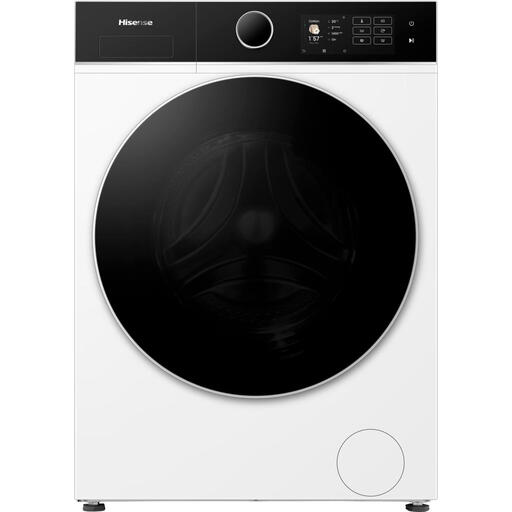 Image unavailable
Hisense WF5I8043BWF, 8 kg front-loading washing machine
Worth considering if depth is your main constraint, provided you check the full dimensions and door clearance against your available space.
Stated capacity of 8 kg and spin speed of up to 1 400 tr/min. Check that this capacity suits your usual laundry loads.
View on Joybuy
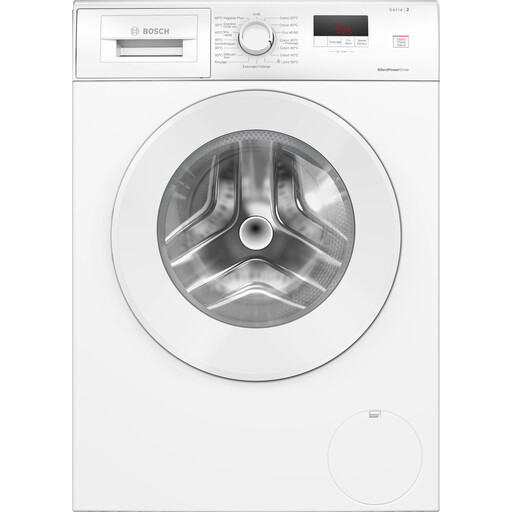 Image unavailable
Bosch WGE02407FR, 7 kg front-loading washing machine
Worth considering for everyday laundry if your space can accommodate a front-loader and leaves room for the door to open.
Bosch lists this model’s capacity as 7 kg and its dimensions as 848 × 598 × 588 mm. Also check the installation diagram and access to the connections.
View on Joybuy
 Image unavailable
Candy TCA464TM4-S ProWash 500, 6 kg top-loading washing machine
Worth considering if width is preventing installation and there’s enough clearance above to open the lid.
Stated capacity of 6 kg and spin speed of up to 1 400 tr/min. Also check the depth and compare the noise information if the machine will be near a living area.
View on Joybuy
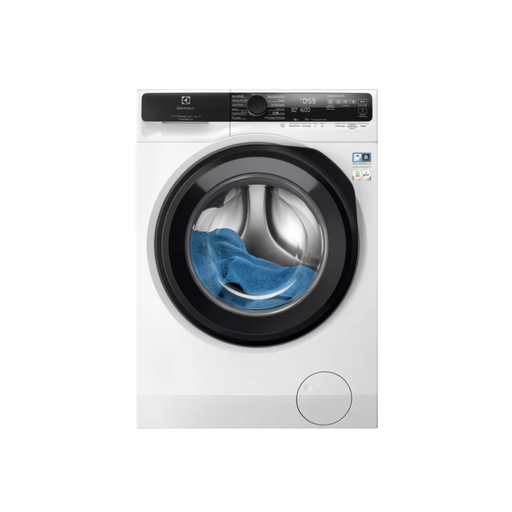 Image unavailable
Electrolux EW7FI259160V, 9 kg front-loading washing machine
Only worth considering if your space can accommodate a large-capacity front-loader and your laundry loads justify 9 kg.
Stated spin speed of up to 1 600 tr/min. A maximum speed doesn’t replace comparing the spin performance, noise and dimensions of the exact model.
View on Joybuy
Frequently asked questions
What should you measure before ordering a washing machine for a small flat?
Measure the width, height and depth of the space, as well as the delivery route. Allow for the door or lid to open and locate the plug socket, water inlet and drain. Then compare your measurements with the installation diagram for the model you’ve chosen.
Is a top-loader always a better fit for a small bathroom?
No. A top-loader is best suited to a lack of width and needs enough clearance above to open. If depth is the issue, compare the dimensions of a slim front-loader instead. Either way, check the measurements of the specific model.
What capacity should you choose for everyday laundry?
A 7 kg capacity is a useful guide: ADEME says it’s sufficient most of the time. However, consider your bulky loads and how often you do laundry before choosing a 6, 7 or 9 kg model.
How can you compare noise and spin performance?
Check the noise information and spin-efficiency class on the energy label for the exact model. If these factors are important to you, also compare any independent test results available for the models you’re considering, rather than relying on their format alone.
Can you alter the connections to install a washing machine in a rented property?
If the work involves changing the property or its fittings, ask the landlord for written permission first. ANIL cites this requirement under Article 7 f of the law of 6 July 1989. Using connections that are already in place is a separate matter; work out what’s needed before getting started.


