If your household gets through a lot of laundry, start with how much washing you actually build up and the space available. According to ADEME, a 7 kg capacity is enough in most cases. A front-loading machine may offer a larger capacity if your loads justify it; a top-loader is more suited to limited width, according to UFC-Que Choisir. In either case, compare the water, energy and noise figures for the specific model, along with its durability rating where applicable.
Who is this choice for?
In a shared home, choosing the right size depends less on how many people live there than on how much washing builds up between cycles and how much room you have for the machine.
Households that combine their laundry
If several people use the machine one after another, consider the size of your usual loads before choosing a drum. ADEME says a 7 kg capacity is enough in most cases; it’s worth considering a larger machine if you regularly fill it with your loads.
Households with a narrow space
If limited width restricts your options, start by comparing the machine’s dimensions and how it opens. UFC-Que Choisir says top-loading models are generally 40 to 46 cm wide; also check that the capacity suits the laundry you combine.
Households that do laundry near living spaces
If the machine runs while people are at home, spin-cycle noise becomes an important consideration. Also look at how easy the machine is to maintain and check the durability rating for the model in question, rather than judging its lifespan by capacity alone.
Which features should you compare?
First choose a style that fits your space and usual loads, then compare the models using the figures on their energy labels.
Front-loading
Consider it: if there’s room to install one and your combined loads justify a larger capacity, or if you need the machine to fit under a worktop.
Bear in mind: measure the space and allow room for the door to open before choosing a specific model.
Top-loading
Consider it: if a narrow width is more important, or if you prefer to load your washing from the top.
Bear in mind: check that the capacity suits your combined loads and leave enough room to open the lid.
| Feature |
What to check |
What matters to me |
| Capacity |
Estimate how much laundry builds up between cycles, then compare it with the machine’s capacity in kg. ADEME gives 7 kg as a suitable capacity in most cases; judge a larger capacity against your actual loads. |
We combine our clothes, but I don’t want to choose a large drum that regularly runs half-empty. |
| Size |
Measure the width, depth and clearance needed to open the machine. UFC-Que Choisir says top-loaders are generally 40 to 46 cm wide; check the dimensions of the model you choose. |
The machine needs to fit in the room without making it difficult to load or move around. |
| Water and energy |
Check the kWh per 100 cycles and litres per cycle on the label. Compare machines with similar capacities and uses, rather than judging consumption by the kg figure alone. |
As we run several loads in a row, I want to compare the stated consumption of machines that suit our loads. |
| Noise |
Compare the spin noise level in dB and its noise class on the model’s label. If you look at test results, choose those that measure noise under comparable conditions. |
If the machine will spin near a bedroom or an occupied room, I need to check its noise level before choosing it. |
| Durability |
For washing machines covered by the scheme in France, check the durability rating and its breakdown. The ministry responsible for the environment says this rating has applied to this category since 8 April 2025. |
With frequent use, I want to look at information on how easy the specific model is to repair and how reliable it is. |
| Washing results |
To compare two models, look for comparable tests covering washing, rinsing, spinning and programme duration. These measurements are included in UFC-Que Choisir’s testing protocol. |
I want to judge the results of everyday cycles, not just capacity or energy rating. |
Which mistakes should you avoid?
-
Choosing the largest capacity just in case
A large drum only saves you cycles if your household puts together suitably sized loads. ADEME says a 7 kg capacity is enough in most cases.
See how much laundry builds up before your usual wash days, then choose a capacity you’ll actually use.
-
Choosing a top-loader based on width alone
Its narrow width may solve an installation problem, but that doesn’t guarantee it will have enough capacity when several people combine their laundry.
Measure the space and compare the capacity of the top-loaders you’re considering with that of front-loaders that might also fit.
-
Focusing only on the energy rating
The energy rating alone doesn’t tell you how noisy the spin cycle is, how well the machine rinses or how long its programmes take. UFC-Que Choisir measures these aspects separately in its testing protocol.
Read the full label and, for your shortlisted models, look for tests carried out using a comparable method.
-
Confusing repairability with durability
The durability rating that applies to the relevant washing machines in France doesn’t just cover whether they can be repaired; it also takes reliability into account, according to the ministry responsible for the environment.
Check the model’s rating and, where available, look at the criteria behind it rather than another score with a similar name.
Which brands should you consider?
Brand names can help you draw up a shortlist, but choosing a machine for a shared household comes down to the features of each individual model.
Miele
UFC-Que Choisir names the Miele WCA132WCS and WED385 WCS among the washing machines it has reviewed.
- These specific models let you compare product information and test results, rather than relying on the brand’s reputation alone.
- For each one, check the capacity, noise, consumption and durability rating against your needs.
Bosch
The Bosch WGE03207FR and WGE02201FR are among the machines mentioned by UFC-Que Choisir.
- Identifying the specific models makes it easier to look up their dimensions and corresponding energy-label figures.
- A feature of one Bosch model won’t automatically apply to another, including the WGE02407FR featured below.
AEG
The AEG LTR8C7331A top-loading washing machine is among the appliances mentioned in UFC-Que Choisir’s research.
- This model gives you a starting point if limited width is leading you to consider a top-loader.
- Check its capacity and dimensions before deciding whether it suits your combined laundry loads.
LG
LG is among the brands featured in UFC-Que Choisir’s customer satisfaction ranking, based on responses to its newsletter survey collected in May 2025.
- This mention can help you put together a list of LG models to compare individually.
- A brand rating won’t tell you the size, noise level or durability rating of a specific model.
Front-loading washing machines to consider
These five Joybuy options are all front-loading washing machines. Compare their stated capacity with your usual loads, then check the dimensions and energy-label figures for the model you’re interested in.
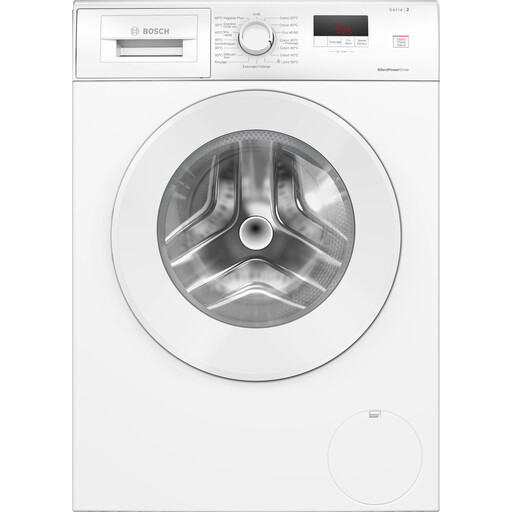 Image unavailable
Bosch WGE02407FR, 7 kg front-loader
Its stated 7 kg capacity matches ADEME’s general guideline if that’s close to the size of your usual loads. The model name indicates a 1,400 rpm spin speed and an A energy rating; also check its full dimensions, noise level and durability rating.
View on Joybuy
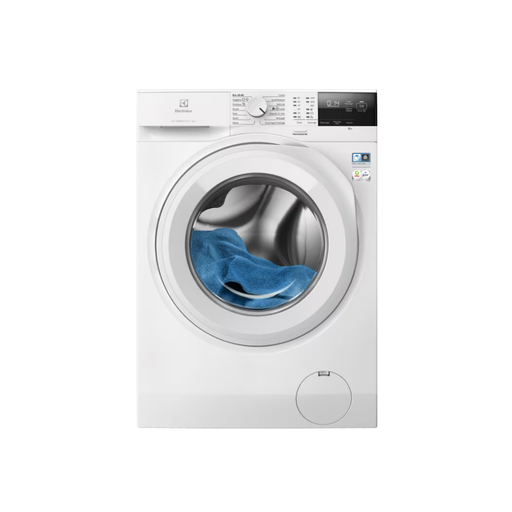 Image unavailable
Electrolux EW6FI4805AW, 8 kg front-loader
The stated 8 kg capacity is worth considering if your household regularly combines loads that need this much space. The model name mentions a 1,400 rpm spin speed and a steam function; compare its noise, water and energy figures with those of the other machines on your shortlist.
View on Joybuy
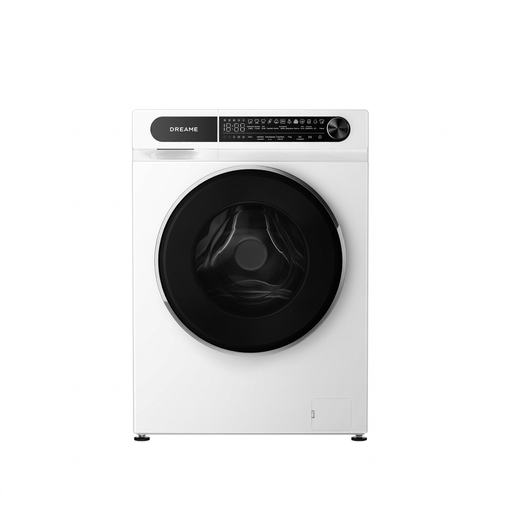 Image unavailable
Dreame DRWASHS8KG, 8 kg
Compare its stated 8 kg capacity with the amount of laundry you actually combine between cycles. Before choosing this model for a tight space, measure the room needed for installation and compare its noise and consumption figures.
View on Joybuy
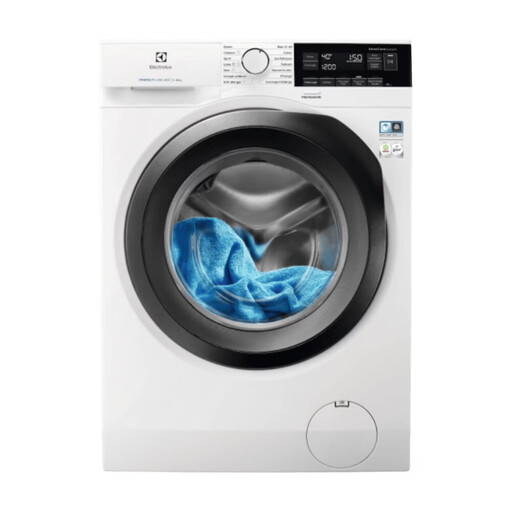 Image unavailable
Electrolux EW6F3811RC, 8 kg front-loader
Choose its stated 8 kg capacity only if it’s useful for your combined loads. The model name indicates a 1,400 rpm spin speed and a C energy rating; also check the model’s water, energy and noise figures before comparing it with other options.
View on Joybuy
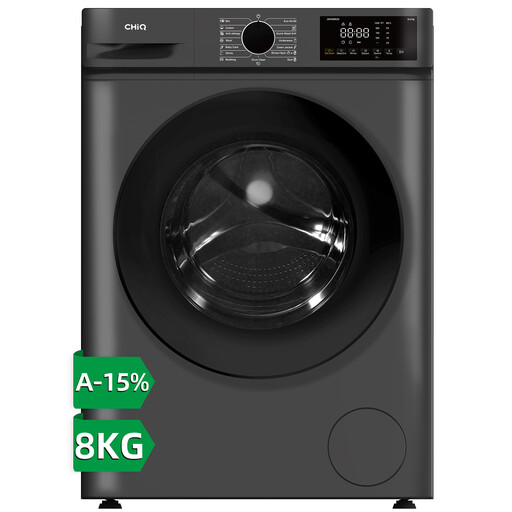 Image unavailable
CHiQ JW85883G, 8 kg front-loader
Compare its stated 8 kg capacity with the size of the loads your household usually puts together. The model name mentions 16 programmes, a 1,400 rpm spin speed and a steam function; check the installation dimensions and comparable energy-label figures separately.
View on Joybuy
Frequently asked questions
What should you compare on a washing machine’s energy label?
Compare the energy rating, kWh per 100 cycles, litres of water per cycle, capacity, Eco programme duration and spin noise level, along with its noise class. If your household gets through a lot of laundry, compare these figures across models with a capacity that suits your usual loads.
Should you check the durability rating in France?
Yes, if the washing machine is covered by the scheme. The ministry responsible for the environment says the durability rating has applied to this category since 8 April 2025. Check the displayed score and, if the details are available, the repairability and reliability criteria. This information doesn’t replace checking the capacity, noise level or consumption figures.
Is a top-loader always better for a small room?
A top-loader may be a good choice if width is an issue: UFC-Que Choisir says these machines are generally 40 to 46 cm wide. Also measure the depth and the space needed to open the lid, then check that the model’s capacity is enough for the loads your household combines.
Will a larger capacity always save you cycles?
No. It only helps if you actually combine loads that need the extra capacity. ADEME says a 7 kg capacity is enough in most cases; start with your usual laundry baskets before considering a larger machine, then compare the consumption figures of the models you shortlist.


