Who is this choice for?
How often you do the washing doesn’t determine the capacity you need on its own: the size of each load and the space available at home matter too.
Families and larger households
If laundry builds up between washes, consider the size of your usual loads before choosing a drum. ADEME says that 7 kg is usually enough and advises against running a cycle when there’s lots of space left in the machine.
House shares where noise matters
If the machine is close to living areas, compare the spin noise levels on the label. In its February 2026 survey, Que Choisir found that opinions on this noise were more mixed. How disruptive it is also depends on your home and how the machine is installed.
Households with limited space
Measure the available width, depth and height, as well as the space needed to open the door or lid. Que Choisir notes that the space available often determines whether a front- or top-loader is the better choice.
Which features should you compare?
Start with the size of your loads and the space available at home. Then compare the information on the labels on a like-for-like basis, bearing in mind that it may not cover every programme.
Front-loading
Worth considering: if there’s room for the door to open and your loads justify the capacity you choose. The Bosch WUU28T18FR and WUU28T6MFR front-loaders are listed at 8 and 9 kg respectively.
The trade-off: both Bosch models are 598 mm wide, according to their French product specifications. A larger capacity won’t help if the drum is often left mostly empty, as ADEME points out.
Top-loading
Worth considering: if limited width narrows your options. The Electrolux EW8T3653BA is 400 mm wide, according to its French product specification.
The trade-off: this model is listed at 6 kg. Check that this capacity suits your loads and that the lid has enough clearance to open fully.
| Feature |
What to check |
Think about your needs |
| Capacity |
Compare the stated capacity in kg with the weight of your dry laundry loads. Notice how often you run cycles with a light load, and leave room for the laundry to move around. |
Do my loads regularly fill a large drum, or would a more moderate capacity help me avoid frequent half-empty washes? ADEME says that 7 kg is usually enough. |
| Water and energy |
Compare the label figures for kWh per 100 cycles and litres per cycle, as well as the Eco 40-60 programme duration. The European Commission lists these as label information. Actual consumption varies, including according to the model and programme used, says ADEME. |
If we do the washing regularly, I want to compare consumption on a like-for-like basis, without assuming that Eco 40-60 figures apply to every cycle. |
| Spin performance and noise |
Check the spin-drying efficiency class, then the noise class and the dB level stated for the spin cycle. Check the model’s installation instructions too: the label alone can’t tell you how much vibration you’ll feel at home. |
Will the machine run near a room people use? If so, spin noise will affect our day-to-day routine. |
| Size |
Measure the height, width and depth, and allow room for the door or lid to open. As examples of specific models, Bosch lists dimensions of 845 × 598 × 590 mm for the WUU28T18FR front-loader, while Electrolux lists 890 × 400 × 600 mm for the EW8T3653BA top-loader. |
In our home, the available width may make a top-loader a better choice, but its capacity and the space needed to open the lid still have to work for us. |
Which branded models can you use as a guide?
These examples show specific capacities and designs; they don’t represent every washing machine from each brand.
Bosch
Two front-loaders to compare if you have enough space and are deciding between 8 and 9 kg.
- According to Bosch Home Appliances France’s product specifications, the WUU28T18FR is listed at 8 kg and measures 845 × 598 × 590 mm; the WUU28T6MFR is listed at 9 kg.
- Choose between these capacities based on the loads you actually wash, then check the dimensions and label of your preferred model.
Electrolux
An example of a top-loader to consider when width is limited.
- Electrolux France lists the EW8T3653BA as a 6 kg top-loader measuring 890 × 400 × 600 mm.
- Check that 6 kg suits your household’s loads and that there’s enough clearance above the machine to open the lid.
Miele
The WEA125 WCS Active is another 8 kg front-loader to consider alongside your needs.
- Miele France lists this model at 8 kg and 1 400 tr/min.
- A manufacturer’s claim about a model’s durability is no substitute for comparing its features and label with those of other machines you’re considering.
Which washing machines should you look at on Joybuy?
This selection includes front-loaders from 7 to 9 kg and a 7 kg top-loader. Match each machine’s capacity to the size of your usual loads, then check the label and make sure it will fit your space.
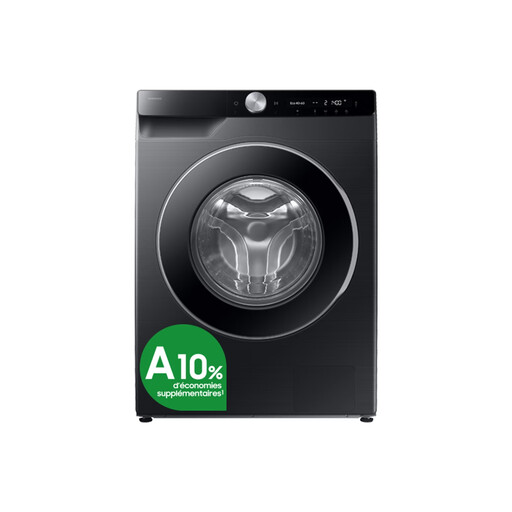 Image unavailable
Samsung WW90DG6U85LBU3 AI Wash 6000 Series, 9 kg
This 9 kg front-loader is worth considering if your loads regularly reach this size. Its product name indicates an A energy class; compare its label and check the dimensions before opting for a large drum.
View on Joybuy
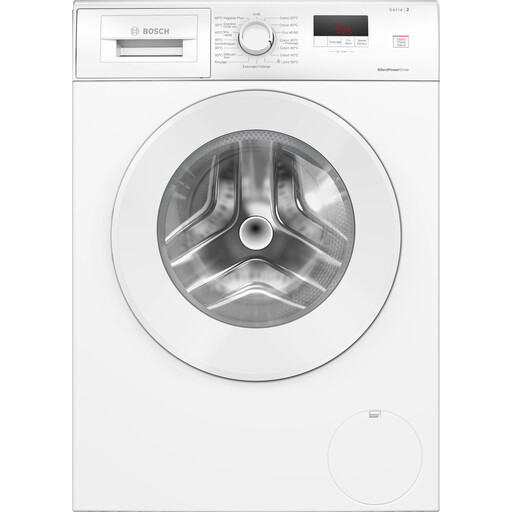 Image unavailable
Bosch WGE02407FR, 7 kg front-loader
It’s worth comparing the stated 7 kg capacity with your usual loads: ADEME says this is usually enough. The product name specifies 1 400 tr/min and an A energy class. Also check the label and the space needed for installation.
View on Joybuy
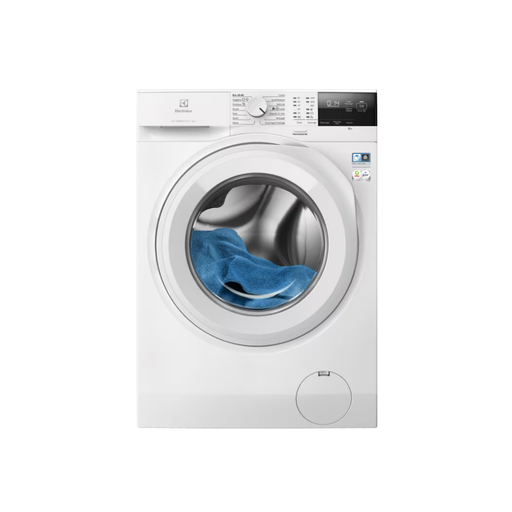 Image unavailable
Electrolux EW6FI4805AW, 8 kg front-loader
This 8 kg model is worth comparing if your loads regularly exceed what a smaller drum can hold. Its product name specifies 1 400 tr/min and Steam Hygiene and SensiCare features. Check the full dimensions and label before buying.
View on Joybuy
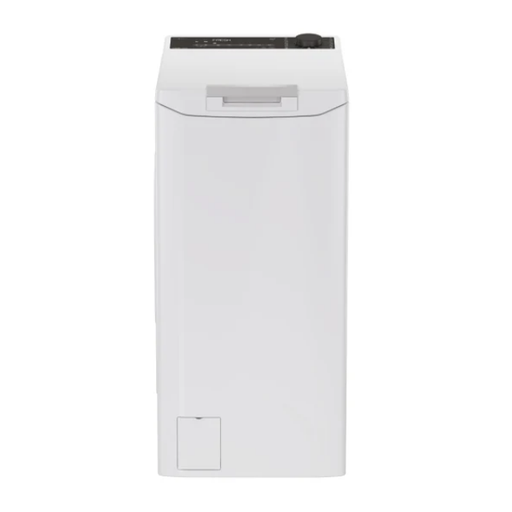 Image unavailable
Haier T Series 7 THASN276TM6-S, 7 kg top-loader
A top-loader is worth considering if a front-loader’s door would be difficult to access. The product name lists a 7 kg capacity, 1 200 tr/min and an A energy class. Measure the space available and allow room to open the lid.
View on Joybuy
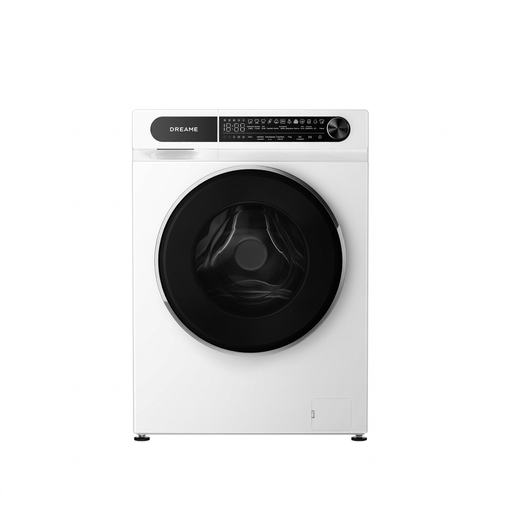 Image unavailable
Dreame DRWASHS8KG Washing Machine S, 8 kg
Consider this stated 8 kg capacity in relation to the size of your regular loads. Before choosing this model for a tight space, confirm which way the measurements are listed, check the full dimensions and review the spin information on the label.
View on Joybuy
Frequently asked questions
Do you always need a 9 or 10 kg machine to wash for several people?
No: the capacity you need depends on the size of your loads, not just the number of people in your household. ADEME says that 7 kg is usually enough. Consider what you usually wash before choosing a larger drum.
What should you compare on a washing machine’s energy label?
Compare the energy class, kWh per 100 cycles, litres per cycle, Eco 40-60 duration, spin-drying efficiency and noise information. The European Commission lists these as label details, but that doesn’t mean every programme will have the same duration or use the same amount of energy and water.
When should you choose a top-loading washing machine?
Consider this style if limited width makes it difficult to install a front-loader, provided the capacity suits your loads and there’s room to open the lid. As examples of specific models, Electrolux lists the EW8T3653BA at 400 mm wide and 6 kg, while Bosch lists the WUU28T18FR front-loader at 598 mm wide and 8 kg.
Can you assess spin noise before buying?
Yes. The label lets you compare the noise class and stated dB level during the spin cycle. However, these figures alone can’t predict vibration or how disruptive the machine will be in your home, so check the model’s installation instructions too.


