For regular washing in a shared flat, first choose a washing machine that can be delivered, connected and levelled on a hard, stable floor. Then compare the stated spin-cycle noise, capacity and dimensions of the exact model: a top-loader needs clearance above it, while a front-loader needs space in front of the door. A stated noise level alone is not enough to predict how much vibration will travel through your home.
Who is this choice for?
People mindful of spin-cycle noise
If the machine is near a living area or a shared wall, compare its stated spin-cycle noise and noise class. Also check the installation requirements: the label alone cannot tell you how much vibration will travel through the floor.
Housemates short on space
Measure the space and the delivery route, then allow enough room to open the door or lid, access the hoses and maintain the machine.
Households doing laundry frequently
Check the capacity against your usual loads, and look at the stated energy consumption, durability rating and access to the filter and other parts that need maintenance.
Which criteria should you prioritise?
First check the available space and whether the machine can be installed securely and level. Then compare the models that fit the room by their stated spin-cycle noise and the capacity you need for your laundry.
| Criteria |
What to check |
Who is this for? |
| Spin-cycle noise and stability |
Compare the dB rating during the spin cycle and the noise class for the exact model. Make sure it can be levelled on a hard, stable floor. |
If the machine spins near a living area or a neighbour, I want to minimise disturbance without relying on a simple promise of quiet operation; around 42% of consumers would make this their top priority. |
| Size and access |
Measure the machine and its delivery route. A front-loader needs space in front of the door; a top-loader needs room for the lid to open above it. |
When the utility room is narrow, I need to be able to get the machine in, load it and maintain it; space would be the main criterion for around 33% of consumers. |
| Capacity and regular use |
Check the capacity in kg, the energy consumption shown on the label and the model’s durability rating. |
In a household where laundry is done often, I’m looking for a suitable capacity and a machine that’s easy to maintain; around 25% of consumers would prioritise regular use above all. |
Mistakes to avoid
-
Assuming a low stated noise level means no vibration
The spin-cycle noise rating helps you compare models, but installation and how evenly the load is distributed also affect vibration during use.
Check the model’s label, then follow the instructions to remove the transit bolts, adjust the feet and install the machine on a hard, level, stable floor.
-
Measuring the space without checking the opening or delivery route
A machine may fit in the space but still be difficult to get through the door, connect or load.
Measure the machine, doorways and other access points, then check the clearance in front of a front-loader or above a top-loader, as well as access to the connections.
-
Treating an “anti-vibration” feature as a guarantee
A feature advertised by the manufacturer is not, by itself, enough to predict how much vibration you’ll feel in your home.
Compare the noise data for the exact model and check its installation requirements before factoring this feature into your decision.
-
Forgetting to maintain a machine used by several people
When laundry is done frequently, access to the filter and seals matters in everyday use. ADEME recommends descaling the washing machine and cleaning the filters and seals, among other things.
Check how easy it is to reach the parts that need maintenance, and agree with your housemates how to share these tasks.
Brands to consider
Miele
Worth considering if durability is one of your priorities for regular washing.
- Compare the durability rating of the model you’re interested in.
- Check its spin-cycle noise, dimensions and installation requirements separately.
Bosch
Worth looking at depending on the space available for a front-loader or a top-loader.
- Bosch’s instructions state that the machine must stand on a hard, level surface.
- This guidance doesn’t indicate how noisy or stable a specific model will be. Check its product details and label too.
Siemens
Include it when comparing models that will fit your space.
- Check the capacity and noise data for the model you’re considering.
- Don’t assume that a machine will be stable once installed based on the brand name alone.
AEG
Worth considering by comparing each model with the space available and how often your household does laundry.
- Compare the model’s dimensions, capacity and noise class.
- Also check access to the filter and the installation requirements.
Whirlpool
Worth considering, particularly if a top-loader would suit the room better.
- Whirlpool says its TDLRBX65242BSFR top-loader is 40 cm wide and has a capacity of 6,5 kg.
- For the same model, the brand states a spin-cycle noise level of 72 dB and attributes reduced vibration to its Zen motor. This information from the manufacturer cannot predict how much vibration you’ll experience at home.
Washing machines to consider on Joybuy
These models include two top-loaders, worth considering if the lid can open freely, and one front-loader, which may suit you if there’s enough room in front of the door. For each one, compare the capacity and stated features with your available space, and check the noise level on the label for the exact model.
 Image unavailable
Candy TCA464TM4-S ProWash 500, 6 kg top-loader
Worth considering if a top-loader suits the room and its 6 kg capacity meets your household’s laundry needs.
The model name indicates 1 400 rpm, an energy rating of B and 17 programmes. Check the clearance above the machine, its dimensions and the noise data on its label before you choose.
View on Joybuy
 Image unavailable
Haier T Series 7 THASN276TM6-S, 7 kg top-loader
Worth considering if you’d prefer to load the machine from above and want a stated capacity of 7 kg.
The model name indicates 1 200 rpm and an energy rating of A. Measure the space above the machine and the delivery route; also check the model’s noise label and installation instructions.
View on Joybuy
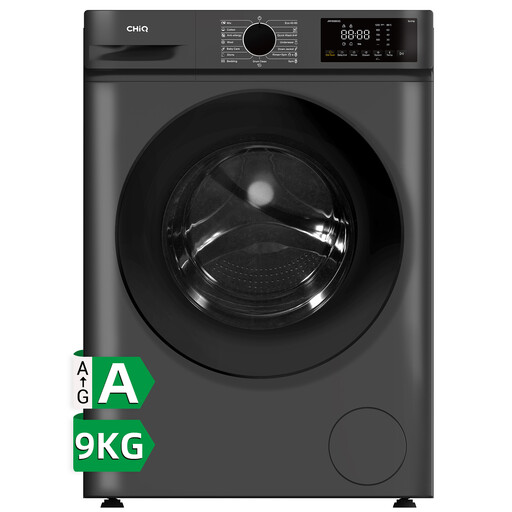 Image unavailable
CHiQ JW95883G, 9 kg front-loader
Worth considering if a front-opening door suits the room and a capacity of 9 kg meets your household’s laundry needs.
The model name indicates 1 400 rpm. Before finalising where it will go, confirm the model’s dimensions and check the stated spin-cycle noise and noise class on its label. You’ll also need to follow the instructions for removing the transit bolts and levelling the machine when setting it up.
View on Joybuy
Frequently asked questions
Which figure should I compare for washing machine noise in a flat?
Compare the stated dB level during the spin cycle and the noise class on the label for the exact model. These figures can help you compare machines, but they don’t tell you how much vibration will travel through the floor; check the installation requirements too.
Can you run a spin cycle late at night in a block of flats?
Check the rules that apply to your home before scheduling a late spin cycle. Look at your tenancy agreement, the building’s rules and any local regulations, and also consider how much noise the machine actually makes in your building.
What should you measure before a washing machine is delivered?
Measure the machine, the space it will go in and the entire delivery route, including the room needed to open the door or lid. Check the existing connections; when installing the machine, follow the instructions to remove the transit bolts and level it on a hard, stable floor.
How can you factor in durability if you do laundry frequently?
Check the durability rating displayed in France for the model you’ve chosen, and see how easy it is to access the parts that need maintenance and what after-sales service is available. ADEME recommends descaling the washing machine regularly and cleaning its filters and seals.


