Which criteria should you compare?
Start with your usual load, then rule out any formats that won’t fit the space available. Next, compare the usage information for the models that remain suitable.
| Criterion |
What to check |
Who it matters to |
| Capacity and cycles |
Weight of the loads you usually build up and the capacity of the programme you use; whether the cycle can be adjusted to suit the load. |
When I wait until I’ve gathered enough laundry before running a cycle, I want to avoid a drum that’s too large for my everyday loads. Around 36% of consumers put finding the right capacity first. |
| Format and installation |
Width, depth, height and clearance needed to open the machine; compatibility with the planned installation. |
In a tight space, I need to be able to install and open the machine without difficulty. This is the main concern for around 29% of consumers. |
| Consumption and comfort |
Electricity per 100 cycles, water per Eco 40-60 cycle, cycle time, spin performance and noise, compared on the same labelling basis. |
When I do laundry regularly, I keep an eye on water and electricity use, as well as noise near living areas. For around 21% of consumers, these everyday factors take priority over other criteria. |
| Durability |
The durability index for the model concerned and the details behind its score, alongside capacity and the energy label. |
I want to compare how long I may be able to keep using an appliance, without basing my choice on a single score. Around 14% of consumers prioritise durability. |
Format addresses a different constraint from capacity. UFC-Que Choisir generally gives a width of 40 to 46 cm for top-loading washing machines. For a front-loader, also check the space needed in front of the door. A washer-dryer is only the right choice if you genuinely plan to dry laundry in the same appliance: its drying capacity is lower than its washing capacity, according to UFC-Que Choisir. If you only occasionally wash a bulky item, check whether a local launderette could complement your home appliance.
Selected front-loading washing machines on Joybuy
These front-loaders offer a range of capacities for household laundry that you build up between washes. Match each one to your usual loads. This selection of front-loaders doesn’t, on its own, help you decide between a top-loader and a washer-dryer.
 Image unavailable
Bosch WGE02407FR, 7 kg front-loader, 1,400 rpm
Worth considering if your usual grouped loads suit a 7 kg capacity. The product title lists an A energy rating. Before choosing this model, check its dimensions, cycle information and connection requirements.
View on Joybuy
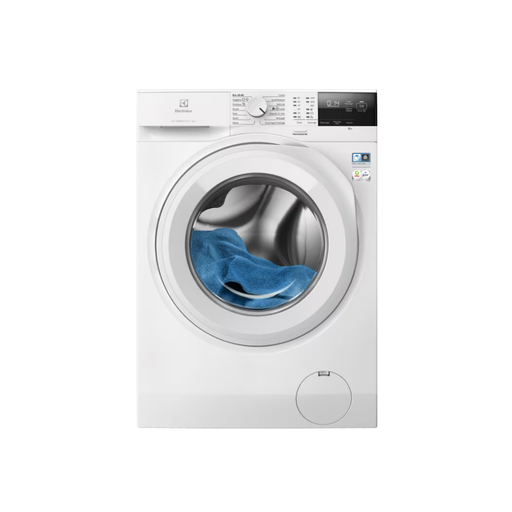 Image unavailable
Electrolux EW6FI4805AW SensiCare, 8 kg front-loader
Compare its 8 kg capacity with your regular loads rather than an occasional need. The product title gives a maximum spin speed of 1,400 rpm. Check the model’s label for the Eco 40-60 programme time and consumption figures.
View on Joybuy
 Image unavailable
Electrolux EW7FI259160V, 9 kg front-loader, 1,600 rpm
Consider this model if you regularly build up loads that call for a 9 kg capacity. Otherwise, it may be larger than you need day to day. Check the Eco 40-60 cycle time, dimensions and applicable durability index before choosing.
View on Joybuy
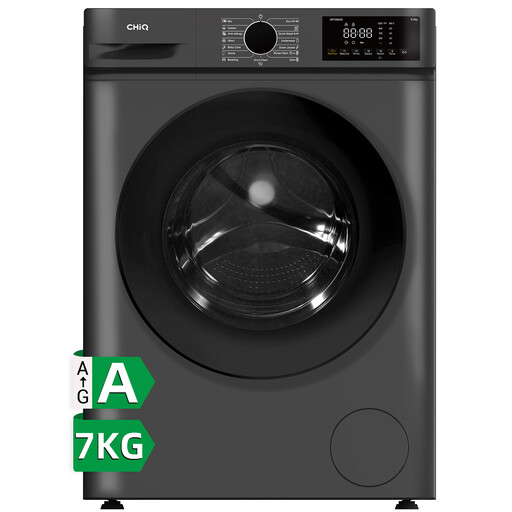 Image unavailable
CHiQ JW75883G, 7 kg front-loader
This model offers a capacity close to ADEME’s 7 kg guide, subject to the loads you actually wash. Before buying, check all the dimensions and the model’s water, electricity and noise figures on the label.
View on Joybuy
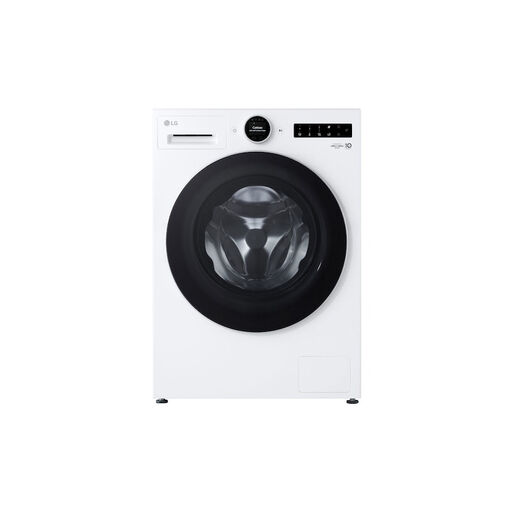 Image unavailable
LG F4WX851Y, 11 kg front-loader
Choose this capacity only if you regularly build up large loads; smaller loads alone don’t justify 11 kg. The product title lists an A energy rating. Also check the dimensions, installation requirements and figures on the energy label.
View on Joybuy
Frequently asked questions
Is a 7 kg washing machine always enough if I want to wash less often?
No. ADEME says that 7 kg is usually enough, but the capacity should suit the loads you actually wash. A larger capacity is mainly worthwhile if you regularly build up more laundry, including bulky items.
Top-loader or front-loader: which should I choose if space is limited?
If width is your main constraint, measure the space before looking at top-loaders: UFC-Que Choisir generally gives a width of 40 to 46 cm for this format. If you’re short on depth, consider the dimensions of a compact front-loader and check the clearance needed for its door.
What should I compare on the energy label if I do laundry regularly?
Compare electricity per 100 cycles, water per Eco 40-60 cycle, cycle time, spin performance and noise. Don’t focus on the energy rating alone. ADEME recommends relating this information to how you actually use the machine.
What is a washing machine durability index for?
For washing machines covered by the scheme in France, it provides an additional score out of 10, in line with information published by the ministry responsible for ecological transition and the decree of 5 April 2024. Check the breakdown, but assess the model’s capacity, dimensions and consumption separately.
Can a washer-dryer dry the entire load it has just washed?
Not necessarily. UFC-Que Choisir points out that its drying capacity is lower than its washing capacity. If you want to run both functions in succession, compare the separate capacities and the cycle time for your load.


