What should you check?
First, make sure installation is feasible. If you’re not sure, compare the practicalities of using a laundrette with those of having a machine at home. Once you’ve confirmed the space is suitable, consider how much room you’ll have to load the laundry and whether you need a drying function.
Front-loading washing machine
Worth considering: if you have around 60 cm of width and space in front for the door to open, based on the formats described by the French National Consumer Institute.
Bear in mind: the front of the machine needs to stay clear, even after installation.
Top-loading washing machine
Worth considering: if width is your main constraint; the French National Consumer Institute describes models that are 40 to 45 cm wide.
Bear in mind: you’ll need enough room above the machine to open the lid.
Washer-dryer
Worth considering: if you can install a machine but don’t have space to hang laundry up or fit two appliances.
Bear in mind: washing and drying capacities can differ. Electrolux, for example, lists 8/4 kg and 10.5/6 kg configurations.
Laundrette
Worth considering: if you can’t confirm that there’s a suitable space and the right connections before buying a machine.
Bear in mind: travelling to use equipment outside your home needs to work for how often you do laundry.
| Criteria | What to check | Who this matters to |
|---|
| Installation |
Measure the space and access routes. Check that the connections and floor stability meet the model’s requirements. If the property needs modifying, clarify this before you buy. |
I want to be sure I can install the machine as soon as I move in, without finding out later that it won’t fit or can’t be connected. Around 36% of consumers would put installation feasibility first. |
| Space |
Compare the width, depth and height, then check the clearance in front of a front-loader or above a top-loader. |
In a small room, I first need to find a format I can load once it’s in place. This would be the top priority for around 29% of consumers. |
| Washing and drying |
Match the capacity to your usual loads. For a washer-dryer, check the washing and drying capacities separately. |
If I can’t easily hang laundry up at home, I need to know how much of a load can be dried in the machine. Around 21% of consumers would prioritise this. |
| Use and durability |
Compare water, energy and noise figures for the cycle you’ll use. For a new washing machine sold in France that falls within the relevant category, also check its durability index, which has applied to this category since 8 April 2025, according to the French Ministry for the Ecological Transition. |
If I do laundry frequently, I want to take consumption, noise and expected lifespan into account. Around 14% of consumers would put these criteria first. |
Washing machines available on Joybuy
These top-loading and front-loading models are for washing at home, provided installation is possible. Compare their capacity and format with your available space. None of the appliances shown here is a washer-dryer.
 Image unavailable
Haier T Series 7 THASN276TM6-S, 7 kg top-loading washing machine
Worth considering if you prefer a top-loader for doing laundry at home, provided there’s clear space above it.
Stated capacity of 7 kg, spin speed of 1 200 tr/min and energy class A. Check the dimensions and connections in the instructions for this variant.
View on Joybuy
 Image unavailable
Hisense WF5I8043BWF, 8 kg front-loading washing machine
Worth comparing if you have space in front of the door and are looking for an 8 kg washing capacity.
The model name indicates a spin speed of 1 400 tr/min. Check the full dimensions, clearances and connections before deciding where to put it.
View on Joybuy
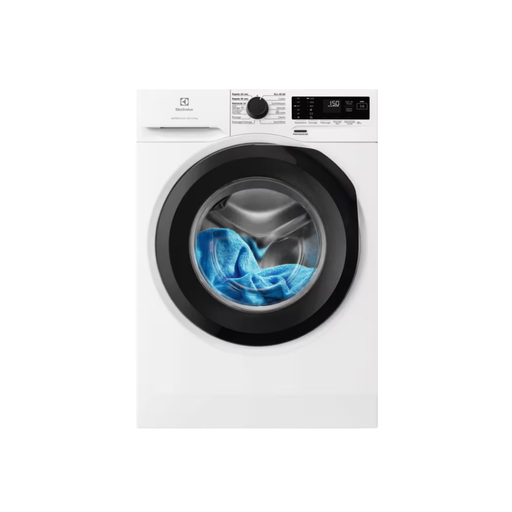 Image unavailable
Electrolux EWF1410N2, 10 kg front-loading washing machine
Its stated 10 kg capacity is best compared with the size of your usual laundry loads, rather than an occasional extra-large load.
Allow space in front of the door, and check the dimensions, delivery access and connections using the instructions.
View on Joybuy
 Image unavailable
Candy TCA464TM4-S ProWash 500, 6 kg top-loading washing machine
Worth considering if you’d like a top-loader and 6 kg loads suit the way you do laundry.
The model name indicates a spin speed of 1 400 tr/min and energy class B. Check that you have enough room to open the lid.
View on Joybuy
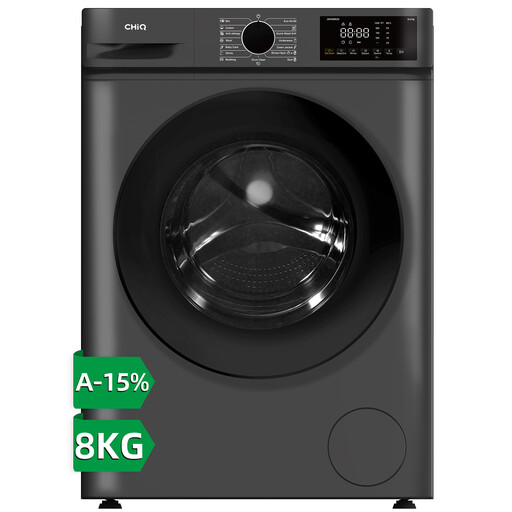 Image unavailable
CHiQ JW85883G, 8 kg front-loading washing machine, dark grey
Its stated 8 kg capacity can be compared with your usual loads if a front-loader suits the room.
The model name indicates a spin speed of 1 400 tr/min. Check all its dimensions, the door clearance and the energy label details for the model you’re considering.
View on Joybuy
Frequently asked questions
What should I measure before ordering a washing machine for a rented home?
Measure the space, delivery access routes and the clearance needed to open the door or lid. Then check that the water supply, waste outlet, electrical supply and floor stability meet the model’s requirements. Bosch also advises removing the transit bolts and adjusting the feet during installation.
Is a top-loading washing machine suitable for every small home?
No. Its width may suit a narrow alcove, but you still need room to open the lid. The French National Consumer Institute describes top-loaders that are 40 to 45 cm wide. If you have space in front for a front-loader, compare the capacity and dimensions of those models too.
Can a washer-dryer dry a full washing load?
Not necessarily: check both capacities for the specific model. An 8/4 kg configuration, such as those listed in the Electrolux range, has a lower drying capacity than washing capacity. Also compare the figures for washing alone with those for a wash-and-dry cycle.
Should I check the durability index for a new washing machine?
Yes, for new washing machines sold in France that fall within the relevant category. According to the French Ministry for the Ecological Transition, the index has applied to washing machines since 8 April 2025. It complements checks on capacity, consumption and installation requirements.
Is a durability index compulsory for a second-hand appliance?
No. The French Ministry for the Ecological Transition’s guidance excludes second-hand, reused and reconditioned appliances, among others, from the requirement to calculate and display an index. For this type of listing, ask for the exact model reference, the appliance’s condition and any available information about maintenance and spare parts.


