People with a very narrow alcove
If the width between two units is the main obstacle, compare top-loading models. However, check that there’s enough clearance to lift the lid fully and that there’s room behind the machine for the connections.


If width is limited, start by comparing top-loading washing machines. If a front-loader fits the width but its depth obstructs the way, consider slim models. In either case, also measure the space needed to open the machine, access the laundry and fit the connections. The dimensions of the appliance alone aren’t enough to confirm that it will be practical in its new position.
After a move, the main constraint might be the width of the alcove, the space in front of the machine or room for a tumble dryer in future. France’s National Institute for Consumer Affairs (INC) highlights the different space requirements of top-loaders and front-loaders.
If the width between two units is the main obstacle, compare top-loading models. However, check that there’s enough clearance to lift the lid fully and that there’s room behind the machine for the connections.
If a front-loader fits the available width but would protrude too far into a doorway or walkway, a slim model is worth comparing. You’ll still need enough room to open the door and load the laundry without obstructing the way.
If floor space is limited but there’s enough height, consider a front-loading washing machine, a tumble dryer and a stacking kit that are explicitly listed as compatible. Planning a stack doesn’t remove the need to check the footprint or access to the controls.
First measure the space and access to it, then choose the capacity and installation options that matter to you. A narrower machine isn’t necessarily shallower, and a less deep appliance still needs to be accessible through its door.
| Factor | What to check before you buy | Who this matters to |
|---|---|---|
| Alcove width | Measure the usable width between fixed obstacles. If you choose a top-loader, check that the lid can open fully. | Between two units, I mainly need the machine to fit without blocking access. Around 36% of consumers prioritise this width constraint. |
| Depth and front access | Check the appliance’s footprint, including its connections, and make sure there’s enough room to open the door and move around in front of it. | A front-loader fits the width, but I still need to open the room door and reach the drum. For around 29% of consumers, depth and front access come before other factors. |
| Washing capacity | Compare the stated capacity with your usual laundry loads and check the load limits for the programmes you plan to use. | I regularly wash large loads and don’t want to choose a machine that’s too small just to save space. Capacity remains the priority for around 21% of consumers. |
| Plans for a stack | Check the model numbers for the washing machine, tumble dryer and kit together, then check the total height and access to the controls. | I want to be able to add a tumble dryer without needing a second spot on the floor. Around 14% of consumers prioritise this installation option. |
France’s National Institute for Consumer Affairs generally puts top-loading washing machines at 40 to 45 cm wide, while a typical front-loader is around 60 cm wide. This difference can help you choose a size, but always check the dimensions and clearance requirements in the manual for the model you’re considering.
A narrow top-loader can still be deep, while a slim front-loader is often close to a standard model in width. The machine could still jut into the walkway, even if it fits the alcove.
Measure the usable width, depth and height, as well as the space taken up by connections and nearby obstacles. Compare these measurements with the appliance dimensions without packaging and check the manual.
As France’s National Institute for Consumer Affairs points out, you need space in front of a front-loader to take out and load laundry. The depth of the casing doesn’t tell you how far the door opens or how much room you’ll need to stand in front of the machine.
Ask for the opening diagram for the exact model and mark out the space the open door and the person loading the drum will occupy.
A front-loading washing machine and a tumble dryer aren’t automatically compatible as a stack. Bosch, for example, specifies a depth of over 55 cm for its stacking kit 00717524.
Check with the manufacturer that the full model numbers of both appliances are compatible with the kit, then measure the total height and check access to the controls.
You may need to buy a compatible kit as well as the two appliances.
A compact appliance doesn’t automatically make an installation suitable near a shower or bath. Promotelec highlights the position of the appliance, earthing and circuit protection.
Before ordering, ask a qualified professional to check the location and existing electrical installation. If changes are needed, deal with them separately from choosing your washing machine.
These models illustrate a range of sizes; a published dimension for one model doesn’t apply to every appliance in a brand’s range. Always compare the product details and manual for the model you’re actually considering.
Worth considering when comparing top-loaders for a narrow space.
Worth considering if a front-loader fits the width but needs to be less deep.
Worth considering if height as well as width limits your choice of appliance.
Worth considering when comparing a standard-size front-loader and planning a compatible stack, if needed.
These appliances offer several options to consider after a move: top-loading, front-loading and washer-dryers. Compare their listed specifications with your measurements. The washer-dryers featured here are combined appliances, not separate washing machines and tumble dryers designed to be stacked.
 Image unavailable
Worth comparing if top-loading is your priority in a narrow alcove. Check how much room you’ll need to lift the lid.
Listed capacity of 6 kg, spin speed of 1,400 rpm and 17 programmes.
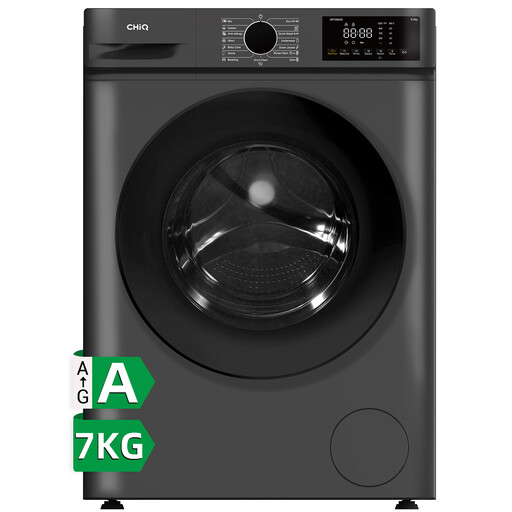 Image unavailable
Worth considering if you want to keep a front-loading machine. Measure the alcove and the space in front of the door before choosing this model.
Listed capacity of 7 kg, spin speed of 1,200 rpm and 16 programmes.
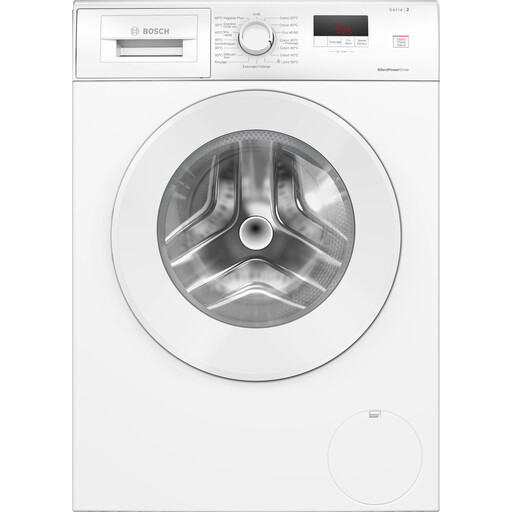 Image unavailable
Worth comparing if your space can accommodate a standard-size front-loader. Also check the depth with the door and connections, as well as access from the front.
Listed capacity of 7 kg, spin speed of 1,400 rpm and energy rating A, as stated in the product title.
 Image unavailable
Worth considering if you want washing and drying in one appliance and its width, depth and access suit your space.
Listed capacities of 10 kg for washing and 6 kg for drying. A full washing load therefore exceeds the stated drying capacity.
 Image unavailable
Worth comparing if you’re looking for an all-in-one front-loading washer-dryer. Make sure there’s enough space for the connections and to open the door.
Listed capacities of 11 kg for washing and 6 kg for drying. The drying capacity is lower than the washing capacity.
Yes, provided the location and electrical installation are suitable for the room. Promotelec highlights the position in relation to the shower or bath, earthing and 30 mA RCD protection. Ask a professional to check your specific situation before buying the appliance.
If the work involves altering the property or its fittings, France’s National Agency for Housing Information (ANIL) says you’ll need the landlord’s written permission. Before moving a socket or waste outlet, explain the work you’re planning and check your tenancy arrangements. Using connections that are already in place is a separate matter.
No. You need to check that both model numbers are compatible with the intended stacking kit. Bosch, for example, specifies a washing machine depth of over 55 cm for its 00717524 kit. Meeting this requirement alone doesn’t confirm that a particular combination is compatible.
In France, compare the durability rating shown for eligible washing machines, as well as the dimensions and capacity. ADEME says this rating has applied to washing machines since April 2025 and takes repairability and reliability into account. Check the information for the specific model and its product listing.
It could be, if it suits the amount of laundry you have and the programmes you use. ADEME says a 7 kg washing machine is usually sufficient, but bulky textiles, how often you do the laundry and the load limits for each programme may affect your choice.