What should you check before choosing?
In a narrow kitchen or utility room, start with the constraint that could prevent installation, then make sure the capacity suits your usual laundry loads.
Top-loading
Choose this if: width is limited and the lid can open freely.
Bear in mind: this format can’t be installed under a worktop, according to the National Consumer Institute.
Compact front-loader
Choose this if: depth is the main constraint and there’s enough width.
Bear in mind: the door needs space in front of the machine, even when the appliance is shallow.
Front-loader for under-worktop installation
Choose this if: you need to keep the worktop usable and the alcove can accommodate the model you’re considering.
Bear in mind: the manufacturer must specify that the model is suitable for under-worktop installation; a front-loading design alone doesn’t guarantee compatibility.
| Factor |
What to check before buying |
Who is this for? |
| Available width |
Measure the width of the alcove and the appliance. For a top-loader, also check there’s enough clear space above to open the lid. |
If the machine needs to fit between two units, I can’t make up for a few missing centimetres by choosing a shallower drum. Around 31% of consumers in this situation would put width at the top of their list. |
| Depth and clearance |
Compare the appliance’s depth with the available space, then check the clearance needed in front of the door. |
I want to be able to walk past the machine and load laundry without blocking the way. Depth would be the priority for around 25% of consumers in this situation. |
| Under-worktop installation |
Check the model’s manual for under-worktop compatibility, confirm the alcove height and check whether any additional parts are required. |
In a fitted kitchen, I need to keep the worktop in place while still being able to access my laundry. Around 25% of consumers in this situation would prioritise this type of installation. |
| Usable capacity |
Compare the stated capacity in kilograms with your usual laundry loads, and check the load limits for the programmes you use. |
If my household tends to have large loads, a machine that fits the alcove also needs to handle my everyday laundry. This capacity would come first for around 19% of consumers in this situation. |
Washing machines to compare on Joybuy
These models illustrate two different needs: reducing width with a top-loader, or considering a front-loader when depth matters more. Before you decide, compare the dimensions and clearance stated in the documentation for each model with the space you have available.
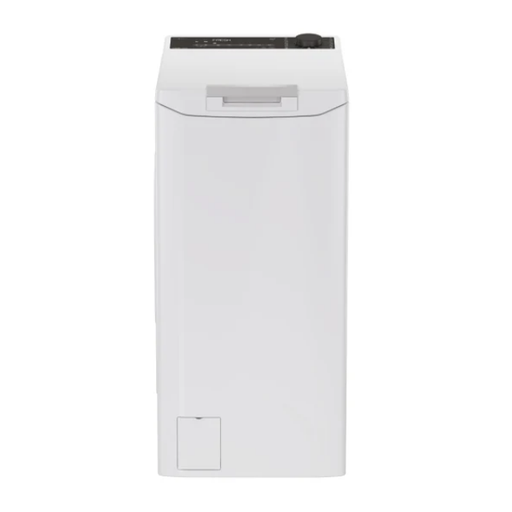 Image unavailable
Haier T Series 7 THASN276TM6-S, 7 kg top-loader
Worth considering if width is your main constraint and the lid can open freely. This format isn’t suitable for installation under a worktop.
Stated capacity of 7 kg, spin speed of 1 200 rpm and energy rating A. Check the dimensions and lid clearance against your available space.
View on Joybuy
 Image unavailable
Candy ProWash 500 TCA464TM4-S, 6 kg top-loader
Consider this model if width is your priority, as long as you can keep the lid accessible. Check that the stated 6 kg capacity suits your household’s usual laundry loads.
Spin speed of 1 400 rpm, energy rating B and 17 stated programmes. Check the model documentation for its dimensions and clearance requirements.
View on Joybuy
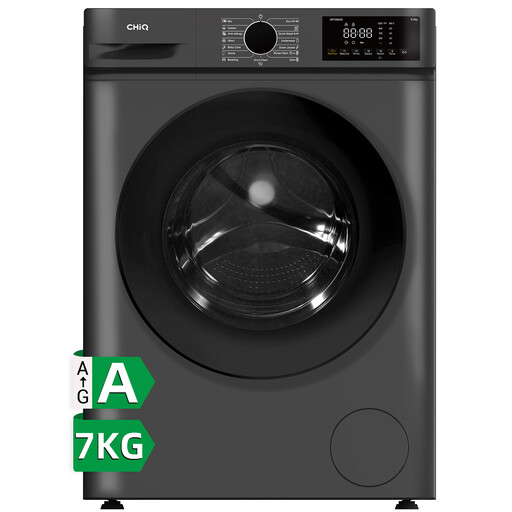 Image unavailable
CHiQ JW75883G, 7 kg dark grey front-loader
Worth considering if depth is your main constraint, but don’t assume a front-loader will also fit an alcove that’s narrow in width.
Stated capacity of 7 kg, spin speed of 1 200 rpm, energy rating A and 16 programmes. Check the overall width and the space needed to open the door.
View on Joybuy
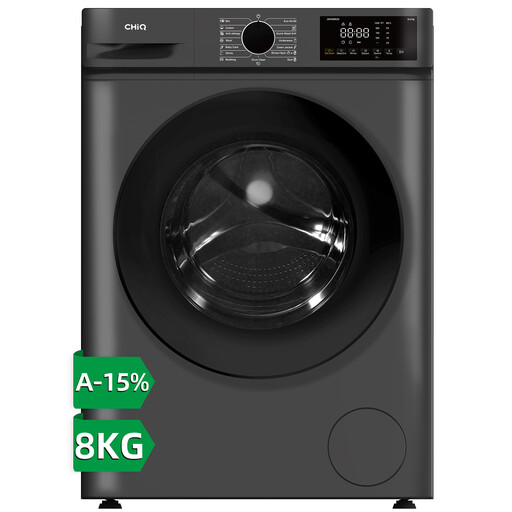 Image unavailable
CHiQ JW85883G, 8 kg dark grey front-loader
Compare its capacity with your laundry loads if you’re looking for an 8 kg model and need to keep an eye on the available depth.
Stated spin speed of 1 400 rpm and 16 programmes. Check the overall depth, width and door clearance before choosing this model for your alcove.
View on Joybuy
Frequently asked questions
Is a top-loading washing machine suitable for every narrow space?
No. It’s best suited to spaces where width is limited, provided the lid can open. The National Consumer Institute gives a width of 40 to 45 cm for top-loaders, compared with a typical 60 cm for front-loaders. Top-loaders aren’t suitable for installation under a worktop.
Is a compact front-loader also narrower?
Not necessarily. Electrolux compact front-loaders are designed mainly to reduce depth and are generally still 60 cm wide. Check the width of your alcove as well as the space needed in front of the door.
What capacity should you choose when space is limited?
Choose a capacity that suits your usual laundry loads rather than the largest model that fits in the alcove. The National Consumer Institute suggests 5 kg for one person, at least 6 to 7 kg for a couple with a child, and 8 to 10 kg or more for a large family. ADEME says that 7 kg is enough most of the time. Also check the load limits for the programmes you use.
Can you remove the top panel from any front-loader to install it under a worktop?
No. The manufacturer must specify that this is possible for the model in question. Bosch offers a range with removable top panels, for which an under-worktop cover may be required. Check the product details, dimensions and manual for the model you choose.
What should you compare once you’ve found a machine that fits?
Compare the capacity with your usual laundry loads, then check the water, energy, spin and noise information on the energy label, as ADEME recommends. These factors can help you choose between appliances that will fit in your home, but they don’t replace checking the necessary clearance.


