Households with laundry baskets that are often full
Clothes, towels and bedding pile up before each wash. If you regularly have large loads, it’s worth considering a capacity of 10 to 12 kg, as UFC-Que Choisir points out.


Choose a capacity based on the large loads you actually wash, rather than the biggest duvet you might wash one day. According to UFC-Que Choisir, 8 to 9 kg is generally enough for a household of 3 to 4 people, while 10 to 12 kg is a better fit when you regularly run one load after another. If you often wash smaller loads too, check the programmes available, the energy label figures and the space the machine needs.
Clothes, towels and bedding pile up before each wash. If you regularly have large loads, it’s worth considering a capacity of 10 to 12 kg, as UFC-Que Choisir points out.
Your choice should take into account which fabrics the programme can handle, as well as the space available. UFC-Que Choisir notes that large-capacity washing machines are often deeper and need clearance in front of the door.
You may alternate large loads with smaller loads sorted by type. In that case, maximum capacity isn’t the only thing to consider: check the limits for each programme and how the machine adjusts water and energy use to suit the load.
| Factor | What to check | Who is it for? |
|---|---|---|
| Your usual large loads | Consider the dry laundry weight of your regular loads and the capacity allowed by the programme you use. According to UFC-Que Choisir, 10 to 12 kg is a better fit when you regularly run one load after another. | If your baskets are regularly full, being able to wash clothes and towels together matters more than fitting the occasional duvet; around 33% of consumers prioritise these regular loads. |
| Bulky fabrics | Check the care instructions for duvets and throws, then confirm the permitted load for the programme you plan to use. | If you often machine-wash duvets and throws, you need to be able to wash them without choosing a drum that’s too large for the rest of your laundry; nearly 27% of consumers put this need first. |
| Frequent smaller loads | Check the manual for information on load adjustment, and compare the energy use per 100 cycles and water use per cycle shown on the energy label. | If you often need to separate laundry by fabric or purpose, handling partial loads becomes a priority for around 20% of consumers. |
| Space and long-term use | Measure the space, access route and clearance in front of the door. Also check the energy label and, in France, the model’s displayed durability index. | In a room where every centimetre counts, a large drum won’t help if the machine gets in the way of opening the door or loading laundry; around 20% of consumers prioritise these installation and everyday-use considerations. |
According to UFC-Que Choisir, the rated capacity refers to the weight of dry laundry for cotton or the Eco 40-60 programme. Other programmes may allow a smaller load.
Check the load table in the manual, especially if you often wash synthetics, jeans or wool.
A large capacity is useful for frequent, substantial loads, but it won’t automatically make smaller washes more energy-efficient.
Before deciding whether you’ll use the extra space often enough, distinguish between your usual loads and duvets or throws that you wash only occasionally.
UFC-Que Choisir says that some large-capacity washing machines are 68 cm deep. You’ll also need enough space to open the door and handle your laundry.
Check the overall dimensions, clearance in front of the machine, delivery access routes and access to the connections.
The European Commission says that washing machine energy labels also show energy use per 100 cycles, water use per cycle, programme duration and noise levels.
Compare these figures across machines that suit your loads and programmes, rather than judging energy use by the rating letter alone.
These 8 kg and 10 kg front-loading models let you compare two capacities for family laundry. If you regularly wash duvets, check the load allowed by the appropriate programme: the rated capacity alone won’t tell you whether it’s suitable.
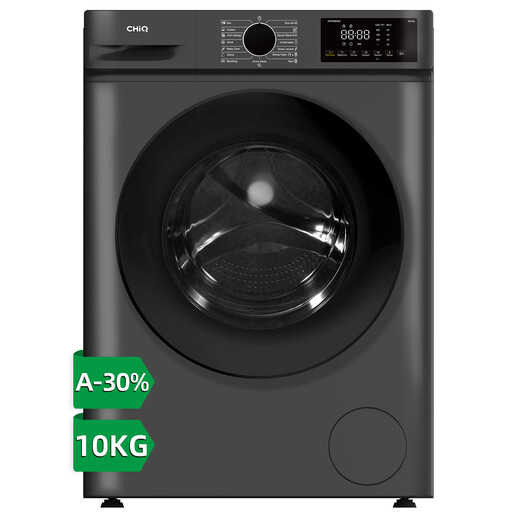 Image unavailable
Worth considering if you regularly wash large loads. It has a stated capacity of 10 kg, a spin speed of 1 400 tr/min and 16 listed programmes. For a duvet, check its care instructions and the load allowed by your chosen programme.
 Image unavailable
Its stated capacity of 10 kg suits a household that regularly washes large loads. Before choosing it for bulky fabrics or partial loads, check the programme limits and the model’s energy label.
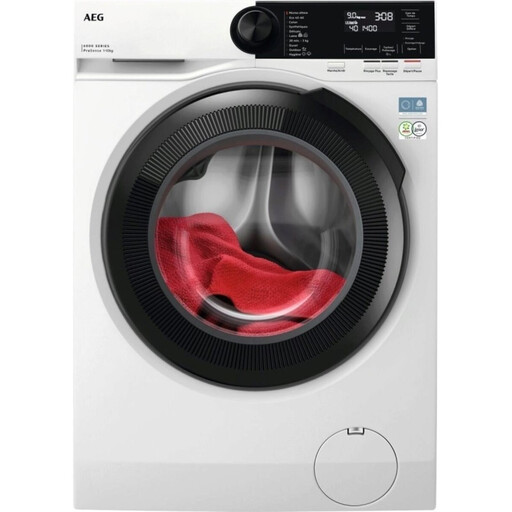 Image unavailable
Its stated capacity of 10 kg is worth considering for frequent family-sized loads; the listed spin speed is 1 400 tr/min. For bedding, check the load allowed by the relevant programme and the space needed for installation.
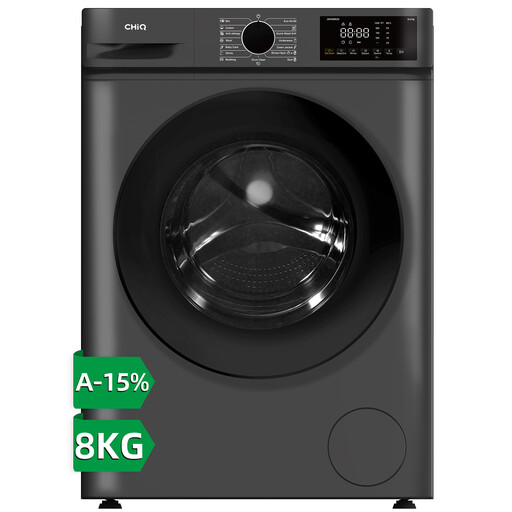 Image unavailable
Its stated capacity of 8 kg may suit you if your usual loads are more moderate than frequent, very large washes. It has a listed spin speed of 1 400 tr/min and 16 listed programmes. Check the permitted load for each programme before considering it for thick duvets.
No. According to UFC-Que Choisir, rated capacity refers to the weight of dry laundry for cotton or the Eco 40-60 programme. Check the manual for the permitted loads for other fabrics before choosing a machine for your usual laundry.
Compare models that suit your loads, then check the energy use per 100 cycles, water use per cycle and programme duration shown on their energy labels, rather than looking at the rating alone. The European Commission says the label displays these standardised figures; they don’t replace checking the programmes you’ll use.
Not on its own. If you alternate large and small loads, check the manual to see which programmes adjust water and energy use to the actual load. UFC-Que Choisir points out that this varies between machines.