Which criteria to prioritise
First, check that the washing machine fits the space available and can handle your usual loads. Then compare the Eco 40-60 programme figures for models that meet both requirements.
Front-loading
Consider it: if you regularly wash larger loads together and have around 60 cm of width, as UFC-Que Choisir notes is typical for standard front-loaders.
Bear in mind: you’ll need sufficient width, and a larger capacity won’t automatically save energy when you wash smaller loads.
Top-loading
Consider it: if width is the deciding factor. UFC-Que Choisir says top-loaders are generally between 40 and 46 cm wide.
Bear in mind: according to UFC-Que Choisir, capacity is generally between 5 and 8 kg, so check this against the weight of the loads you wash together.
| Criterion |
What to check |
Who it’s for |
| Capacity |
Compare the stated kg capacity for dry laundry with the weight of your usual loads; check the manual for the load limits of the programmes you use. |
If I wash sheets, towels and everyday clothes together, I want to avoid regularly splitting my laundry into separate loads. Around 29% of consumers say getting the capacity right is their top priority. |
| Water and electricity |
On the Eco 40-60 label, check the kWh per 100 cycles and litres per cycle, then compare models with capacities suited to your loads. |
I want to compare how much cycles use without relying on the energy rating letter alone; for around 29% of consumers, this is their main priority. |
| Size |
Measure the width, depth and height, then allow for the space needed to open the door or lid. |
When space is limited, my main concern is being able to install and load the machine without compromising on the capacity I need. This is the top consideration for around 21% of consumers. |
| Durability and spin performance |
Check the model’s durability rating, repair terms and the spin-drying efficiency class shown on the label. |
I want to consider reliability and repairability before convenience features, while also understanding the spin performance information. Around 21% of consumers say this is their main concern. |
The European Commission explains that the energy use, duration, noise and spin-drying information on the label relate to the Eco 40-60 programme. They don’t necessarily reflect the performance of quick or delicate programmes. In France, ADEME says the durability index has applied to washing machines since April 2025; its score out of 10 takes repairability and reliability into account.
Brands to consider
These models show some of the formats and capacities you can compare; the features of one range won’t necessarily apply to every machine from the same brand.
Bosch
The French product page for the Bosch WUU28T6MFR lists a 9 kg front-loader measuring 845 × 598 × 590 mm.
- This capacity may be worth considering if your household’s combined loads regularly come close to it.
- Bosch advertises a 10-year motor warranty for this model. Check exactly what it covers, along with the machine’s durability index.
Whirlpool
The French product page for the Whirlpool TWB 721 SENSE WASH FR lists a top-loader that’s 40 cm wide, with a capacity of 7 kg.
- Its dimensions make it worth considering if you have limited width and are looking at top-loaders.
- Check that 7 kg is enough for the loads you wash together. Compare the label figures and the model’s durability index rather than assuming its format means it uses less energy.
Miele
The French product page for the Miele WWG880 WCS lists a 9 kg front-loader with an A energy rating, using 40 kWh per 100 cycles and 50 L per cycle.
- These figures give you a useful comparison with the labels of other models with a similar capacity.
- A manufacturer’s claim about longevity alone doesn’t prove how long this machine will last; check its durability index too.
Washing machines to consider on Joybuy
This selection includes front-loaders in a range of capacities for larger loads, as well as a top-loader to consider when width is the main concern. For each model, check that the capacity suits your laundry and consult the label and durability index for that specific machine.
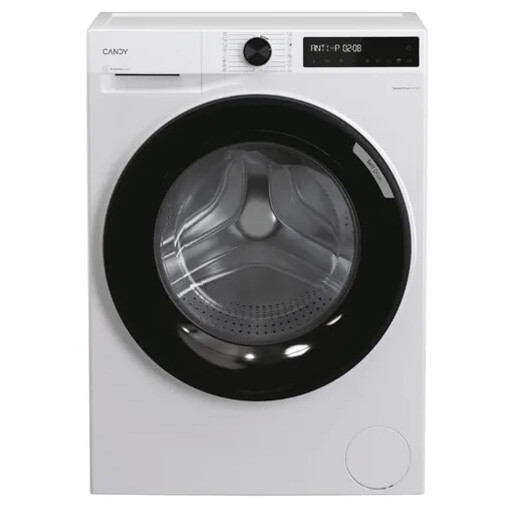 Image unavailable
Candy BR 411BL9-S, 11 kg front-loader, A energy rating
Worth considering if you regularly wash large loads together; check that this capacity suits your usual laundry.
The stated capacity is 11 kg. Check the model’s label and durability index before comparing cycles.
View on Joybuy
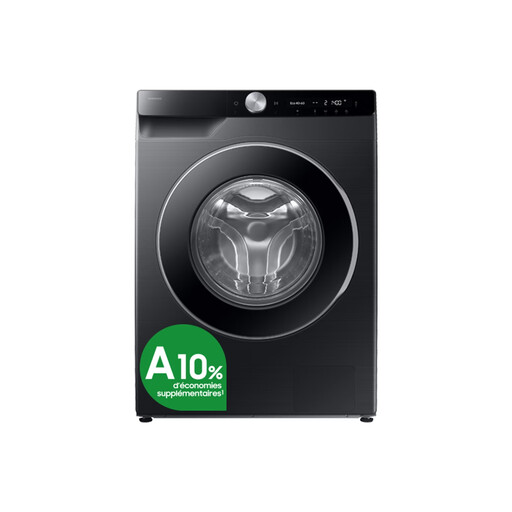 Image unavailable
Samsung WW90DG6U85LBU3 AI Wash 6000 Series, 9 kg, A energy rating
A capacity to compare with the loads your household puts together before starting a wash.
The title lists a 9 kg capacity. Check the Eco 40-60 cycle figures on the label and the model’s durability index.
View on Joybuy
 Image unavailable
Electrolux EWF1410N2, 10 kg front-loader
Worth considering if the loads you wash together regularly justify this capacity, rather than choosing a machine based only on occasional large washes.
The title lists a 10 kg capacity. Before comparing this model with others, check the Eco 40-60 duration on its product page and its durability index.
View on Joybuy
 Image unavailable
Electrolux EW7FI259160V SteamCare SmartSelect, 9 kg
Check whether its capacity suits the loads you wash together and whether its dimensions fit the space available.
The title lists a 9 kg capacity and 1 600 rpm; spin speed isn’t a substitute for the spin-drying efficiency class. Also check the Eco 40-60 duration and the model’s durability index.
View on Joybuy
 Image unavailable
Candy TCA464TM4-S ProWash 500, 6 kg top-loader
A top-loader is worth considering if width is limited, provided your combined loads fit within its 6 kg capacity.
The title lists 1 400 rpm and a B energy rating. Check the dimensions, Eco 40-60 figures and the model’s durability index before choosing.
View on Joybuy
Frequently asked questions
Which figures on the label should I compare between two washing machines?
Compare the energy rating, kWh per 100 cycles, litres per cycle, programme duration, noise level and spin-drying efficiency class. According to the European Commission, these label figures relate to the Eco 40-60 programme, so compare machines on the same basis and choose capacities that suit your loads.
Does the capacity in kg apply to every programme?
No. The stated capacity refers to dry laundry for the cotton or Eco 40-60 programme. Other programmes may have lower load limits, so check the manual if you often wash synthetic fabrics or wool.
Is a top-loading washing machine suitable if I wash larger loads?
Yes, if its capacity is enough for your usual loads and its narrower width suits your installation needs. UFC-Que Choisir says top-loader capacities are generally between 5 and 8 kg. Compare this range with the weight of your laundry before choosing a slim model.
Should I check the durability index when buying a new washing machine in France?
Yes. ADEME says the durability index has applied to washing machines since April 2025, and the French government departments responsible for ecology describe it as a score out of 10 that takes repairability and reliability into account. Check the rating for the model you’re considering, rather than relying on a warranty that covers only the motor.


