Choose a capacity based on the loads you wash regularly, rather than an occasional duvet: according to Que Choisir, 8 to 9 kg is generally enough for a household of 3 to 4 people, while 10 to 12 kg is more suitable when large loads are a regular occurrence. An even larger capacity may be worth considering if you often wash bulky items. If you mostly do small loads, compare water and energy use, as well as the eco 40-60 programme duration, before choosing a larger drum.
Who is this option for?
Households that regularly do large loads
If clothes, towels and household linen regularly fill your laundry basket, consider a capacity of 10 to 12 kg to reduce the need for repeat cycles. Que Choisir mainly recommends this range for households that genuinely do large loads one after another.
Households that often wash bulky items
Regularly washing throws or thick duvets can have more bearing on your decision than the number of people in your household. Que Choisir suggests considering very large capacities, from 12 to 15 kg, based on how often you wash these loads – not for the occasional wash.
Households short on space
If the width of your utility room dictates the type of machine you can have, a top-loading washing machine may be worth considering. However, Que Choisir notes that these models generally have a maximum capacity of 8 kg, so compare this limit with the size of your usual loads.
What should you look for?
Start by considering how often you wash large loads, then check what the programmes can handle and how much space you have. If laundry tends to pile up while you wait for it to dry, a tumble dryer could help without increasing your washing capacity. However, it needs space and adds to your electricity use.
| Factor | What to check | Who this matters to |
|---|
| Number of cycles |
Compare the capacity in kg of dry laundry with the size of your regular loads, then check the eco 40-60 programme information. |
When full laundry baskets keep piling up, my first priority is to avoid running another wash for the leftover laundry. Around 31% of consumers prioritise reducing the number of cycles. |
| Bulky items |
Check the maximum load for the programme you use and the size of the appliance before opting for a very large capacity. |
If I often wash throws or thick duvets, I want to include them in my usual laundry loads. For around 25% of consumers, washing these items regularly comes before other factors. |
| Capacity you’ll actually use |
Consider the size of your regular small loads and compare the water and energy figures shown for the reference programme. |
Most of my washes are small, so I don’t want to choose a large drum mainly for the occasional big load. Avoiding an oversized machine is a priority for around 25% of consumers. |
| Space and drying |
Measure the space and access route. If you plan to stack two appliances, check that they’re compatible and whether you’ll need a stacking kit. |
If the room is narrow or laundry takes a long time to dry, I need to address that before increasing the washing capacity. Around 19% of consumers prioritise the appliance format or drying. |
Mistakes to avoid
-
Assuming a larger drum always uses fewer resources
According to Que Choisir, a machine with too little capacity can mean running more cycles, while an oversized machine that’s only partly full can waste water and electricity.
Choose based on the loads you wash most often, and compare the energy label figures rather than looking only at the stated capacity in kilograms.
-
Assuming every programme can handle the maximum load
The stated maximum capacity doesn’t mean that synthetic, wool or delicate programmes can take as much laundry as the reference programme.
Check the load table in the model’s manual, particularly if most of your large loads consist of these fabrics.
-
Choosing a top-loading machine based on width alone
Que Choisir says these models are generally 40 to 46 cm wide, but their capacity usually doesn’t exceed 8 kg. Larger loads may therefore require extra cycles.
Compare this limit with the size of your regular loads, and also measure the space a front-loading model would take up.
-
Adding a tumble dryer without planning where to put it
A tumble dryer uses extra electricity and needs a suitable space. On the other hand, ADEME points out that drying laundry indoors releases a lot of moisture.
If drying is genuinely slowing down your laundry routine, check the installation requirements for both appliances. If you dry clothes indoors, make sure you have a large, well-ventilated room or one with an extractor.
Brands to consider for these capacities
Bosch
The WGH254A0FR front-loader is worth considering if you’re looking for a stated capacity of 10 kg.
- Bosch Electroménager France lists a 10 kg capacity and a spin speed of 1,400 rpm for this model.
- Compare its dimensions of 845 × 598 × 590 mm with your available space and doorways. The model’s specific warranty terms alone don’t indicate how reliable the brand is overall.
Haier
Haier France offers several 10 kg front-loading washing machines, including the I-Pro Series 3 HW100-B14939.
- The range includes this 10 kg, 1,400 rpm model, which is listed as energy class A.
- Check the specifications for the model you choose: they may not apply to other appliances in the range.
LG
The F14R15WHS front-loader is worth considering if you wash bulky loads often enough to justify a larger capacity.
- LG France lists an 11 kg capacity and a 68 L drum for the F14R15WHS.
- Check the model’s dimensions and energy-use information before deciding whether this capacity suits your regular loads.
Front-loading washing machines on Joybuy
These 10 or 11 kg front-loading models are worth considering if you regularly wash large loads. Their capacity doesn’t remove the need to check the load limits for each programme, the dimensions and the energy label information against your laundry habits.
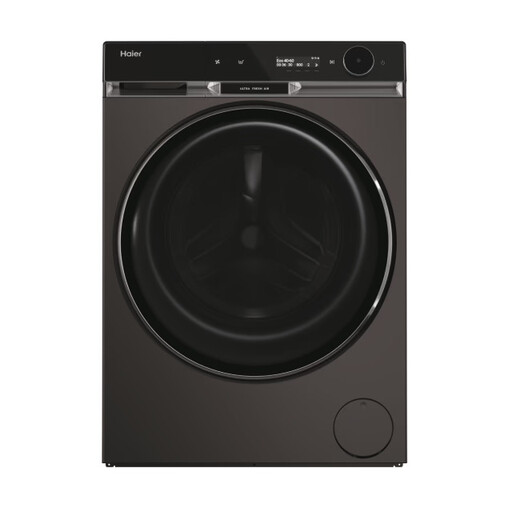 Image unavailable
Haier X Series 11 HW100-BD14397PGU1, 10 kg
Worth considering for frequent large loads if a 10 kg capacity suits the laundry you usually wash.
Front-loading washing machine listed at 1,400 rpm, energy class A, with AutoDose, steam and Wi-Fi.
Check the load limits for the programmes you use, as well as the space needed for installation and access through the doorway.
View on Joybuy
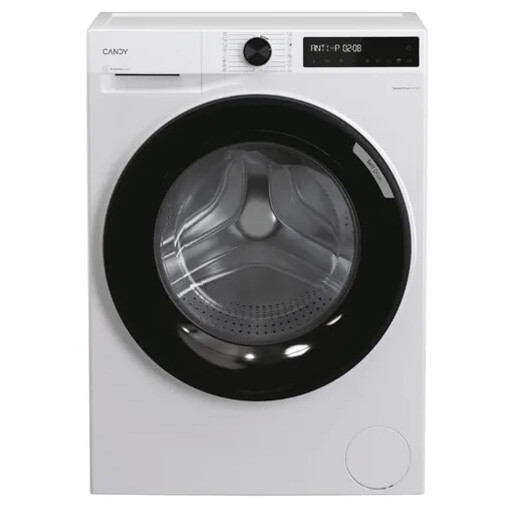 Image unavailable
Candy BR 411BL9-S, 11 kg, white
Its stated 11 kg capacity is worth considering if you often wash large loads, rather than just occasionally.
Front-loading washing machine, energy class A.
Check the load limit for the programmes you use, as well as the space needed for the appliance and its installation.
View on Joybuy
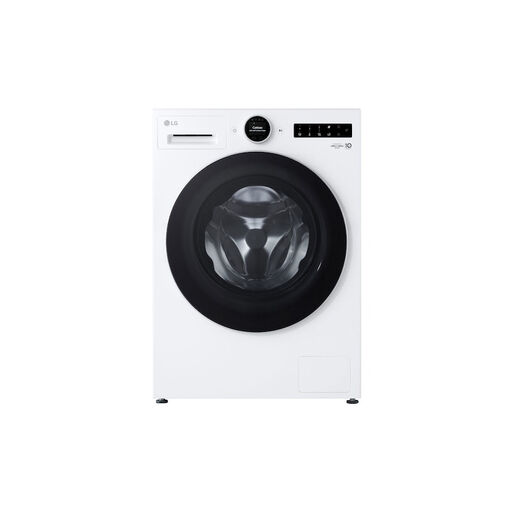 Image unavailable
LG F4WX851Y, 11 kg, white
Compare it with other 10 to 12 kg models if you regularly wash large loads.
Front-loading washing machine listed as energy class A.
Before relying on its 11 kg capacity for a particular fabric, check the load limit for the relevant programme and the space needed for installation.
View on Joybuy
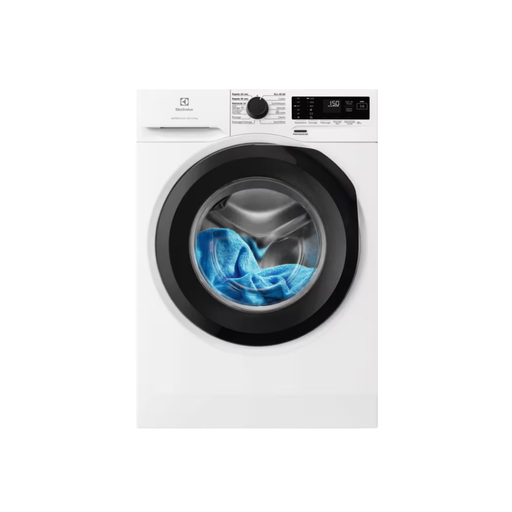 Image unavailable
Electrolux EWF1410N2, 10 kg
Its stated 10 kg capacity is worth comparing if you regularly wash large loads.
Front-loading washing machine with steam, Anti-Allergy and TimeSave features, and an Inverter motor. These feature names don’t guarantee particular washing results.
Check the maximum loads for the programmes that suit your laundry, as well as the dimensions of the space available.
View on Joybuy
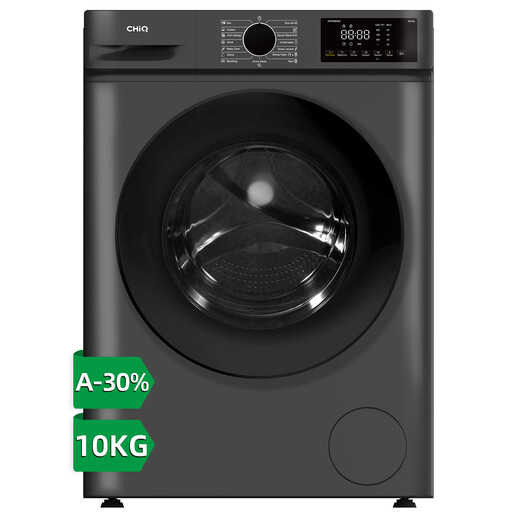 Image unavailable
CHiQ JW105883G, 10 kg, dark grey
Worth considering if a 10 kg capacity suits the large loads you wash regularly.
Front-loading washing machine listed at 1,400 rpm, with 16 programmes and a steam function.
Check the energy label to compare energy use, then check the dimensions and load limits for each programme.
View on Joybuy
Frequently asked questions
Does the stated 10 kg capacity apply to every programme?
No. The stated capacity refers to a load of dry laundry for the reference programme. Synthetic, wool and delicate programmes may take less. Check the model’s manual before planning to wash a large load of these fabrics.
What should you compare on a washing machine’s energy label?
Compare the energy class, energy use in kWh per 100 cycles, water use in litres per cycle, programme duration and noise level. Bear in mind that the reference figures relate to the eco 40-60 programme. ADEME recommends checking the label; detailed information about the model is also available in the European EPREL database.
Can you put a tumble dryer on top of a front-loading washing machine?
Yes, if the appliances are compatible with being stacked and you use a suitable stacking kit. Check the dimensions, stability and manufacturers’ instructions before planning your setup.
Does the statutory guarantee of conformity cover a new washing machine bought in France?
Yes. According to the French Ministry of the Economy, it applies to new goods sold by a trader to a private individual in France and requires the seller to supply goods that conform to the contract. It is separate from any commercial warranty offered by a brand or seller.


