Choose a capacity based on how often you do large loads, rather than simply on the size of your family. UFC-Que Choisir says that 8 to 9 kg is generally enough for a household of 3 to 4 people, while 10 to 12 kg is better suited to households that often have full laundry baskets. If you rarely wash bulky duvets and your regular loads are fairly small, choose a capacity that suits your everyday needs and check separately how to wash those larger items. The stated capacity in kilograms refers to dry laundry on a reference programme, not a capacity that applies to every fabric.
Who is this option for?
Families with frequently full laundry baskets
If you regularly do large loads, compare a capacity of 10 to 12 kg with the amount of laundry you actually wash. The number of people in your household alone is not enough to determine the right drum size.
Households with smaller everyday loads
If you sometimes wash sheets, throws or duvets but mostly do smaller loads, a large capacity reserved for those occasional washes may not be very useful day to day. UFC-Que Choisir recommends distinguishing between regular loads and occasional bulky items.
Households mindful of space and usage
If you want to cut down on cycles, measure the available space too, and compare the Eco 40-60 programme’s consumption figures. Noise, maintenance and warranty terms may also matter if you use your washing machine frequently.
Which capacity and features should you prioritise?
A capacity suited to everyday loads
Consider this: if your usual loads are small or medium-sized and bulky items are occasional; UFC-Que Choisir puts the typical requirement for a household of 3 to 4 people at around 8 to 9 kg.
The trade-off: exceptionally large loads may mean running several cycles or finding another way to wash a duvet.
A 10 to 12 kg washing machine
Consider this: if large loads come around often enough to fill the drum and avoid splitting your laundry across several washes.
The trade-off: a large drum that is rarely full may be less suitable for smaller loads. Make sure you have enough space, too.
An occasional solution for bulky items
Consider this: if you rarely wash duvets or thick throws, and your everyday laundry fits in a smaller machine.
The trade-off: you’ll need to arrange separate washing for these items and follow their care labels.
| What matters | What to check | Who is this for? |
|---|
| Number of cycles |
Compare the loads that actually fill your baskets with the stated capacity in kilograms of dry laundry. Check the dimensions before choosing a 10 to 12 kg machine. |
My laundry baskets regularly overflow, so I want to combine loads without buying a drum I’d rarely fill. Around 40% of consumers prioritise reducing the number of cycles. |
| Duvets and throws |
Check the fabric care label and the maximum load for the relevant programme in the manual. The stated capacity alone doesn’t tell you whether a duvet is suitable for the machine. |
My regular loads are fairly small, but I sometimes need to wash a bulky item without choosing a machine based on every wash around it. For around 30% of consumers, this balance comes before other considerations. |
| Consumption and space |
Compare energy use per 100 cycles and water use per cycle on the same Eco 40-60 basis. Measure the depth and check the route into the space where the machine will go. |
I’d like to run fewer cycles without choosing a machine that won’t fit in my home or suit my usual loads. This is the top priority for around 20% of consumers. |
| Durability and maintenance |
Check the durability index for the specific model, the warranty terms and the filter maintenance instructions. |
A machine that’s used frequently needs to be easy to maintain as part of my daily routine. Around 10% of consumers put this at the heart of their choice. |
Mistakes to avoid
-
Assuming a larger drum automatically uses less energy
According to UFC-Que Choisir, the benefits of a larger capacity depend on how often you actually wash large loads. A machine that is rarely full may use more energy than necessary.
Keep an eye on your laundry for a week or two before choosing 10 to 12 kg to reduce the number of cycles.
-
Assuming the stated capacity applies to every programme
The nominal load refers to dry laundry under specified programme conditions. The limits for wool, synthetics and delicate fabrics may be lower.
Read the washing machine manual and the duvet’s care label before deciding which programme and load to use.
-
Looking at energy rating alone
The rating on its own doesn’t tell you about programme duration, water use, noise or how the machine performs with varying loads. The European Commission links the figures on the label to the Eco 40-60 programme.
Compare the detailed figures for each model on the same basis, then check that its dimensions suit your space.
-
Overlooking maintenance for a frequently used machine
Commercial warranty terms and maintenance requirements vary by model, so they deserve as much attention as the machine’s capacity.
Check the durability index that applies to the model, the warranty terms and the maintenance instructions.
Brands to consider
Bosch
In France, Bosch offers 10 kg front-loading washing machines in its Série 6 and Série 8 ranges.
- Bosch’s product pages for the WGH254A0FR and WGB256A2FR both state a 10 kg capacity, with maximum spin speeds of 1 400 and 1 600 tr/min respectively.
- Compare the dimensions and warranty terms for the specific model. A commercial warranty advertised for certain appliances or motors doesn’t apply to the entire range.
Samsung
Samsung offers 11 kg washing machines in France. The product page for the WW11DG5B25AEEF lists a width of 600 mm, a height of 850 mm and a depth of 600 mm.
- This gives you the chance to check the stated capacity against a measured space.
- Connected features and energy management depend on the model and how they’re used; on their own, they don’t prove that you’ll save energy with your loads.
Haier
In France, Haier offers several 10 kg front-loading washing machines, including models in its I-Pro and X ranges.
- Haier’s product page for the HW100-B14939-FR states a capacity of 10 kg.
- The brand’s claims about fabric care, quiet operation or energy savings don’t replace comparing the specifications and dimensions of each model.
Electrolux
Electrolux offers 10 kg washing machines in France, including the EW6FI5120WA, which features the brand’s SensiCare function.
- According to Electrolux, SensiCare adjusts the programme duration, water and energy use to the weight of the load on this model.
- This description isn’t an independent measurement of consumption with a partial load, and may not apply to other models.
Large-capacity washing machines on Joybuy
These 10 or 11 kg models are worth considering if you regularly have large family loads that call for a bigger drum. If your usual loads are fairly small, compare this capacity with what you actually need. And if you’re washing a duvet, always check its care label and the washing machine manual.
 Image unavailable
Haier X Series 11 HW100-BD14397PGU1, 10 kg
Worth considering if you regularly do large loads and need a capacity of 10 kg.
Stated maximum spin speed: 1 400 tr/min. The product name mentions AutoDose and Wi-Fi; check the model’s product page for the features you’re interested in.
If you’re washing a duvet, check the programme’s permitted load and the fabric care instructions.
View on Joybuy
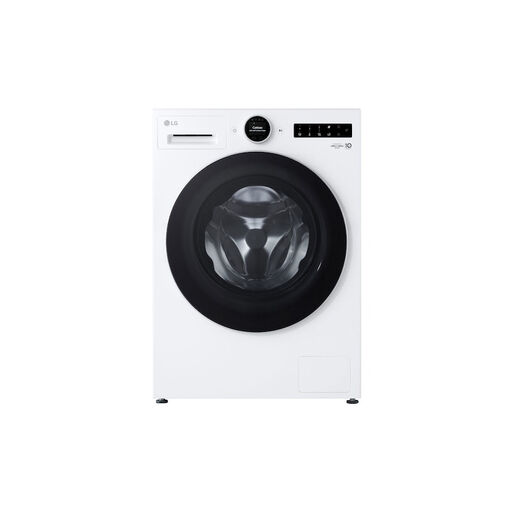 Image unavailable
LG F4WX851Y, 11 kg, white
Worth considering if you regularly fill a large-capacity machine rather than running more cycles.
The stated capacity is 11 kg, and the product name gives an energy rating of A.
Measure the space before buying. If you’re washing a duvet, check the manual for the permitted load on your chosen programme.
View on Joybuy
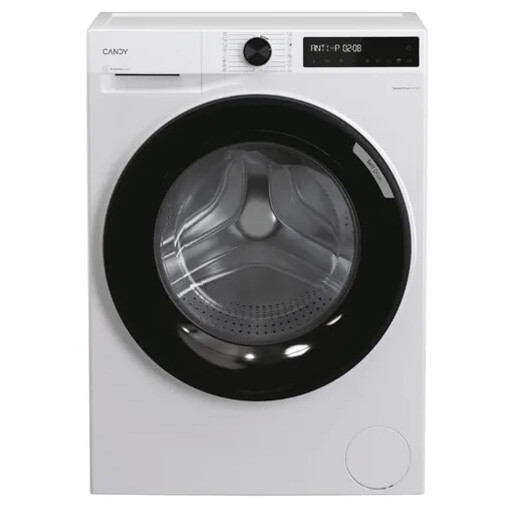 Image unavailable
Candy BR 411BL9-S, 11 kg, white
Its 11 kg capacity is worth comparing with your laundry loads if you regularly do large washes.
The product name gives an energy rating of A.
Before planning to wash a bulky item, check its care label and the maximum load for the relevant programme.
View on Joybuy
 Image unavailable
Electrolux EWF1410N2, 10 kg, TimeSave
The stated capacity of 10 kg may suit you if you regularly do large loads, without going straight for an even bigger drum.
The product name mentions TimeSave and an Inverter motor; check the programmes and conditions of use for these features.
Check the manual for the permitted capacity for wool, delicate fabrics or a duvet.
View on Joybuy
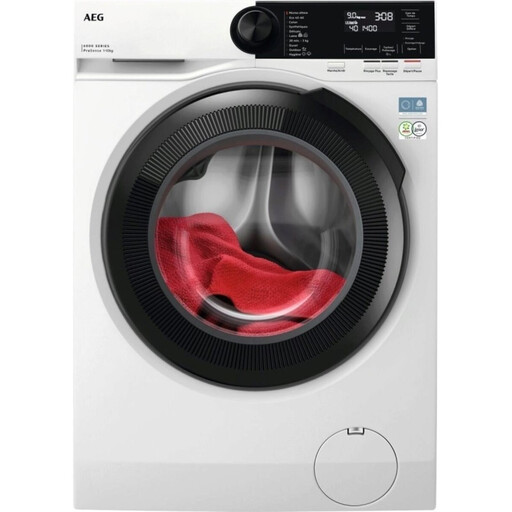 Image unavailable
AEG LFR62E114S, 10 kg, 1 400 tr/min
Compare it with your usual loads if you’re looking for a 10 kg capacity for larger family washes.
The product name gives a maximum spin speed of 1 400 tr/min and an energy rating of A.
Check the dimensions for your space and the load limits for the programmes you plan to use.
View on Joybuy
Frequently asked questions
Does the stated capacity refer to the weight of a wet duvet?
No. Under European regulations, the nominal capacity refers to the maximum weight of dry textiles under the conditions of the specified programme. For a particular duvet, check its care label, the washing machine manual and the load permitted by the programme you plan to use.
Why can’t every programme take an 8 or 10 kg load?
The nominal capacity doesn’t apply to every programme: wool, synthetics and delicate fabrics may have lower load limits. UFC-Que Choisir gives the example of an 8 kg washing machine with a limit of 3.5 kg for synthetics and 2 kg for wool. Check the figures for the specific model you’re considering.
How can I compare two machines if I often wash partial loads?
Start by comparing the figures on the labels on the same Eco 40-60 basis, particularly energy use per 100 cycles and water use per cycle. The European EPREL database may also show programme durations at different load levels for a specific model; these figures alone don’t predict how much energy each of your washes will use.
What maintenance does a frequently used washing machine need?
Always follow your model’s manual first. As a general preventive maintenance guide, ADEME recommends cleaning the filter and descaling the drum every three months. Adjust this routine to the manufacturer’s instructions and how often you use the machine.


