If you usually dry your laundry indoors, start by comparing the spin-drying efficiency class, noise levels during the spin cycle and capacity for your typical loads, rather than focusing solely on the maximum rpm. A washer-dryer meets a different need if you want to wash and dry in one go, but you’ll need to check its drying capacity separately. Whichever appliance you choose, drying laundry indoors requires a sufficiently well-ventilated room or suitable ventilation.
Who is this advice for?
Households that often dry full loads indoors
If you regularly wash bedding, towels or family laundry, choose a drum capacity that suits your usual loads. Also check the maximum load for each programme you use: it may differ from the capacity stated for the reference programme, as UFC-Que Choisir points out.
Anyone keen to reduce drying time
If your laundry dries indoors, check the spin-drying efficiency class for the exact model in its product details or on EPREL. Maximum rpm alone doesn’t tell you how much water will remain in your laundry.
Households with limited space for drying laundry
If you’re considering a washer-dryer to automate some of the drying, compare its drying capacity with its washing capacity. The two can differ.
What should you look for?
| What matters |
What to check |
Who is this for? |
| Residual moisture |
The spin-drying efficiency class for the exact model on EPREL or in its product details; declared noise levels during the spin cycle. |
When my laundry has to dry in a room at home, I want to reduce how much water it holds before hanging it up. Around 36% of consumers prioritise reducing residual moisture. |
| Usable capacity |
Capacity in kg of dry laundry for the reference programme, plus maximum loads for the programmes you use. |
For bedding and towels, I want a drum that suits my loads without having to run the washing machine more often. Around 29% of consumers would prioritise finding the right capacity. |
| Noise and placement |
Noise emissions in dB(A) during the spin cycle; appliance dimensions compared with the space available. |
If the washing machine is near a room in use, noise during the spin cycle matters to me. Around 21% of consumers prioritise noise and installation. |
| Automatic drying |
Drying capacity, which may differ from washing capacity; cycle time and wash-and-dry cycle information. |
When I can’t hang a whole load out to dry, I need to know how much a washer-dryer can dry without intervention. Around 14% of consumers would prioritise automatic drying. |
Mistakes to avoid
-
Choosing based on the advertised rpm alone
Maximum spin speed isn’t enough to compare spin-drying efficiency or noise levels. Bosch says that the speed of the WAN2827TFR may be reduced automatically if the load is unbalanced.
Check the spin-drying efficiency class and noise emissions for the exact model, then look at its maximum spin speed and the conditions under which it applies.
-
Expecting the washing machine to solve indoor humidity on its own
According to ADEME, laundry drying naturally indoors remains a significant source of moisture in the home after the spin cycle.
Also consider the size of the room where you dry your laundry, how well ventilated it is and whether it has suitable extraction.
-
Assuming a large drum is suitable for every cycle
The capacity stated for the reference programme doesn’t automatically apply to delicate fabrics or wool. A drum that doesn’t suit your loads may also mean more frequent washes or a machine that is underused.
Assess the weight of your dry laundry loads and check the limits for the programmes you actually use.
-
Confusing washing and drying capacity on a washer-dryer
A full load for washing may not be suitable for a single wash-and-dry cycle. For example, Electrolux lists a 9 kg washing capacity and a 5 kg drying capacity for the EW7W4954CA.
Compare both capacities, the full cycle time and the wash-and-dry information for the exact model before choosing this option.
Brands and models to consider
Bosch
The Series 4 WAN2827TFR is a useful point of comparison for an 8 kg front-loading washing machine.
- Bosch lists an 8 kg capacity, 1,400 rpm and dimensions of 845 × 598 × 590 mm for this model.
- Bosch says an unbalanced load may automatically reduce the maximum spin speed, so this figure alone won’t predict the result for a particular load.
Miele
The WEA125 WCS 8kg Active offers another 8 kg front-loading configuration to consider.
- Miele lists a 1,400 rpm spin speed and programmes including Delicates, Wool and Eco 40-60 for this model.
- Check the permitted load for the fabric programme you plan to use: the stated capacity may not apply to every cycle.
Hisense
The WF3S9043BB3 is an example of a 9 kg front-loading washing machine worth considering.
- Hisense lists a 9 kg capacity and 1,400 rpm spin speed. This model also has an automatic programme that weighs the laundry to adjust the cycle.
- To compare the declared figures with those of another appliance, check the label and EPREL product information for the exact model.
Electrolux
The PerfectCare 700 EW7W4954CA washer-dryer is an example of an option to consider when a practical drying-space constraint makes automatic drying appealing.
- Electrolux lists a 9 kg washing capacity, a 5 kg drying capacity and a 1,400 rpm spin speed for this model.
- Its capacity and wash-and-dry specifications apply to this particular model; they don’t represent every washer-dryer in the range.
Washing machines selected by Joybuy
These models are for washing laundry before drying it indoors. The final model is a washer-dryer to consider if you need to automate the drying process. For each one, match the capacity to your usual loads and check the spin-drying information for the exact model.
 Image unavailable
Hisense WF5I8043BWF, 8 kg, 1,400 rpm
Worth considering if your usual loads suit an 8 kg capacity and you’ll continue to dry your laundry on a rack. The product name lists a maximum spin speed of 1,400 rpm. Check the spin-drying efficiency class, noise levels and permitted loads for each programme for this model.
View on Joybuy
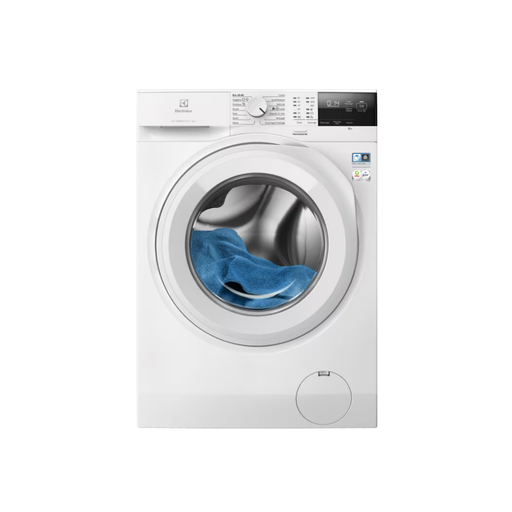 Image unavailable
Electrolux EW6FI4805AW, 8 kg, 1,400 rpm
Compare it with your usual household laundry loads and the programmes you use. The name indicates an 8 kg capacity and a maximum spin speed of 1,400 rpm, but the latter alone doesn’t establish spin-drying efficiency. Check the label for the exact model and the load limits for different fabrics.
View on Joybuy
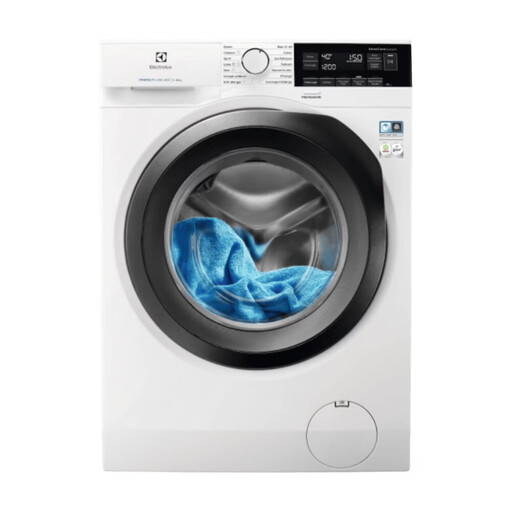 Image unavailable
Electrolux EW6F3811RC, 8 kg, 1,400 rpm
Consider this model if an 8 kg capacity suits the loads you dry after washing. The name indicates a maximum spin speed of 1,400 rpm. Separately, check the spin-drying efficiency class, energy efficiency class and load limits for your usual programmes on the label for the exact model.
View on Joybuy
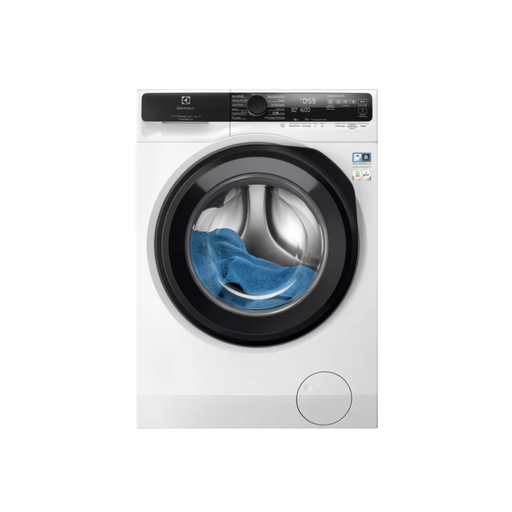 Image unavailable
Electrolux EW7FI259160V, 9 kg, 1,600 rpm
Worth considering for your usual loads if they suit a 9 kg capacity. The product name lists a spin speed of up to 1,600 rpm, but this figure alone won’t tell you how much moisture remains. Check the spin-drying efficiency class, noise levels and programme load limits for the exact model.
View on Joybuy
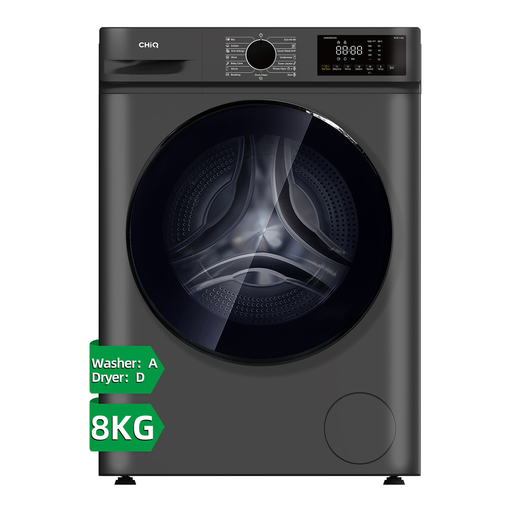 Image unavailable
CHiQ JW85882HG, washer-dryer, 8 kg/5 kg
Consider this option if combining washing and drying solves a specific drying-space problem. The name indicates an 8 kg washing capacity, a 5 kg drying capacity and a 1,400 rpm spin speed. Don’t expect it to dry a full 8 kg wash load automatically. Before buying, confirm the dimensions, combined cycle time, compatible fabrics and wash-and-dry label information.
View on Joybuy
Frequently asked questions
Which spin-drying indicator should I compare if I dry laundry indoors?
Start with the spin-drying efficiency class for the exact model, available in its product details or on EPREL, then check the declared noise levels during the spin cycle. Maximum rpm provides useful additional information, but isn’t enough to compare how much water will remain in your laundry.
Is a more effective spin cycle enough to prevent damp in the home?
No. Even after spinning, laundry hung up to dry releases moisture into the room. ADEME recommends drying it in a large, well-ventilated room or one fitted with a mechanical ventilation extraction vent. Choosing the right washing machine doesn’t replace this precaution.
What capacity should I choose to avoid doing more loads?
Start with the weight of your usual dry laundry loads and the programmes you use. UFC-Que Choisir gives general guidelines of 5 to 7 kg for a single person or couple with moderate washing needs, and 8 to 10 kg or more for a family that often washes household laundry. However, check the permitted load for each programme on the model you choose.
Can a washer-dryer dry its entire washing load?
Not always. Compare the washing and drying capacities of the model you’re considering. For example, Electrolux lists a 9 kg washing capacity but a 5 kg drying capacity for the EW7W4954CA, so you shouldn’t assume that a 9 kg load can be dried in a single cycle on this model.


