Households that dry almost all their washing indoors
Spin-drying efficiency matters particularly when clothes will then be dried on an airer. ADEME recommends choosing class A to help clothes dry quickly indoors.


If you regularly dry your washing indoors, first choose a capacity that suits your usual loads, then compare the spin-drying efficiency class, noise levels and duration of the Eco 40-60 programme. A front-loading machine is a good option if you have space for it; a top-loading model can suit narrower spaces, while a washer-dryer calls for separate checks of its drying capacity and full-cycle data.
Spin-drying efficiency matters particularly when clothes will then be dried on an airer. ADEME recommends choosing class A to help clothes dry quickly indoors.
Choosing a capacity that suits the amount you usually wash can help you avoid both repeated cycles and a drum that is regularly underfilled, in line with ADEME’s advice.
The machine’s width, access to the drum and the space needed for drying clothes can all influence your choice between a front-loader, a top-loader and a washer-dryer. With the latter, you’ll need to distinguish between its washing and drying capacities.
If you dry clothes indoors, start by considering the loads you actually wash and the space you have available. Then compare spin-drying performance and the information on the energy label.
| What to consider | What to check | Who is it for? |
|---|---|---|
| Spin-drying | Spin-drying efficiency class and noise level during the spin cycle; ADEME recommends class A for faster indoor drying. | If I dry almost all my washing indoors, I want it to retain less water when it comes out of the machine. Around 31% of consumers would prioritise spin-drying efficiency. |
| Capacity | Rated capacity in kg, compared with the size of your usual loads rather than occasional larger loads. | If I do regular washing, I want to fit it into each load without running extra cycles or often leaving the drum underfilled; around 25% of consumers would prioritise a capacity that suits their needs. |
| Noise and dimensions | Noise emissions during the spin cycle and exact dimensions, including the clearance needed to access the drum. | If the machine is close to living areas or needs to fit into a narrow space, its noise or dimensions come first. This is the main consideration for around 19% of consumers. |
| Programme duration and durability | Duration and energy and water consumption of the Eco 40-60 programme; the durability index applicable to washing machines sold in France, according to ADEME. | To plan washing and drying, I need to know how long the reference cycle takes and consider how durable the appliance is. Around 25% of consumers would put these factors first. |
A large drum won’t reduce the number of cycles if it’s usually underfilled. ADEME recommends matching the capacity to your needs.
Compare the rated capacity with the amount of dry washing you usually do, while leaving enough room for the clothes to move around.
Maximum spin speed doesn’t tell you enough about spin-drying efficiency or noise levels, both of which matter when clothes are dried indoors.
Check the spin-drying efficiency class and noise emissions on the label for each model.
Washing and drying capacities can differ: LG lists 8.5 kg for washing and 5 kg for drying on the F852SV52IRS.
Check the drying capacity and the data for the full wash-and-dry cycle before choosing this type of appliance.
If your wash load exceeds the drying capacity, you may need to split it into smaller loads.
The European Commission uses the Eco 40-60 programme as the reference for washing machine data; this doesn’t necessarily describe a quick cycle.
Compare models on the same basis, then check the manual if the duration of another programme is important for your routine.
Bosch offers a range of front-loading washing machines and highlights models with an A energy rating.
The Candy TCAS2854TM4-S is an example of a top-loading model. The brand lists this model as 405 mm wide, with a capacity of 8.5 kg.
LG describes the F852SV52IRS as a washer-dryer, with a washing capacity of 8.5 kg and a drying capacity of 5 kg.
These front-loading and top-loading models are worth considering if you plan to dry your washing indoors. Compare their capacities with your usual loads and check their spin-drying labels before choosing.
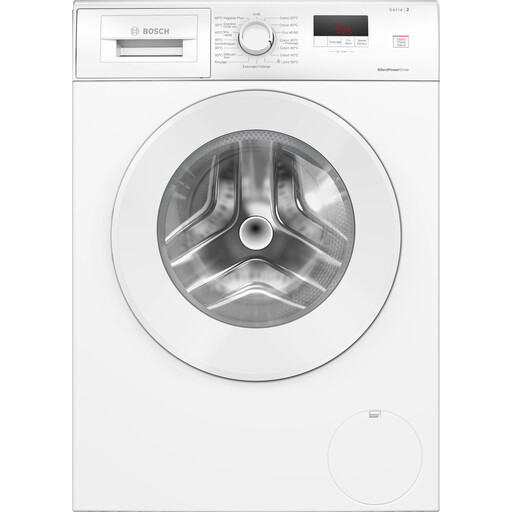 Image unavailable
Worth considering if your usual loads suit a 7 kg capacity and you have room for a front-loading machine.
Maximum stated spin speed: 1,400 tr/min. Also compare the spin-drying efficiency class on the label: spin speed alone isn’t enough when choosing a machine for indoor drying.
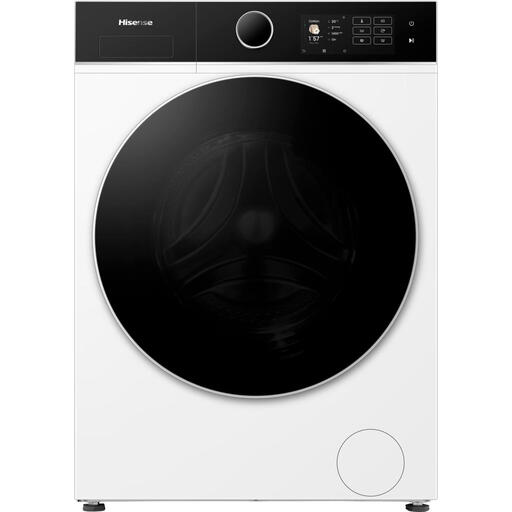 Image unavailable
Compare its 8 kg capacity with the size of your usual loads to avoid regularly underfilling the drum.
Maximum stated spin speed: 1,400 tr/min. Check the spin-drying efficiency class and exact dimensions of this model before buying.
 Image unavailable
A top-loader is worth considering if access to the machine affects your choice; also check that you have enough room to open the lid.
Stated capacity: 7 kg; maximum spin speed: 1,200 tr/min. If the machine is close to living areas, compare this model’s spin-drying class and noise levels.
 Image unavailable
Worth considering if a 6 kg capacity suits your usual loads and you prefer to access the drum from above.
Maximum stated spin speed: 1,400 tr/min. Check the dimensions, clearance above the machine and the spin-drying information on the label.
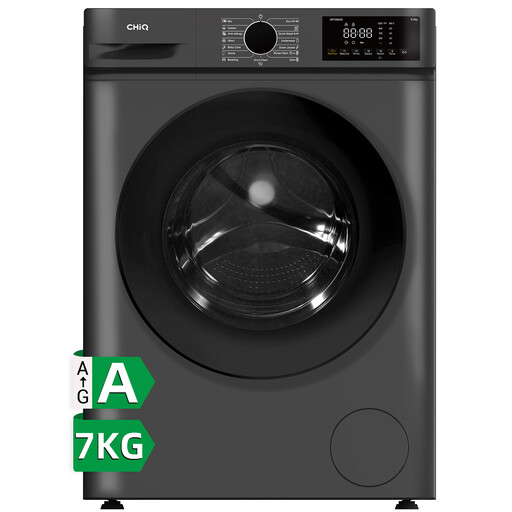 Image unavailable
Its 7 kg capacity may suit you if it matches the amount you usually wash; also measure the space available for this front-loading model.
Maximum stated spin speed: 1,200 tr/min; stated energy class: A. Check the spin-drying efficiency class separately, as this is an important factor when choosing a machine for indoor drying.
Start with the spin-drying efficiency class and noise levels during the spin cycle. ADEME recommends class A for spin-drying to help clothes dry quickly indoors. Then compare capacity, duration and the consumption figures for the Eco 40-60 programme.
No. Choose a capacity that suits your usual loads. ADEME recommends avoiding underfilled drums, while still leaving enough room for the washing to move around.
Not necessarily: you need to check its drying capacity separately. For example, LG lists 5 kg for drying compared with 8.5 kg for washing on the F852SV52IRS. A larger wash load will need to be reduced or split before drying.
According to ADEME, the index must be displayed on washing machines put on sale in France since April 2025. It offers a way to compare factors including repairability and reliability, but doesn’t replace checking a model’s capacity and spin-drying performance.
Compare their figures for the same Eco 40-60 programme: the European Commission uses this programme as the reference for washing machines. If you mainly plan to use a quick cycle, check each model’s manual too, rather than assuming the label figures apply to it.