For a household that often washes bedding, towels and several loads of laundry together, start by looking at front-loaders with a capacity suited to those loads. If space is tight or loading from the top is more important, consider top-loaders. For both types, the stated capacity won’t apply to every programme: compare the permitted loads in the manual, then check each model’s spin speed, noise and energy and water use. Cycle adjustment features can help you manage different laundry loads, but they don’t replace these checks.
Who are these criteria useful for?
Households that combine large loads
If several people wash bedding, towels and clothes together, compare the amount of dry laundry you actually accumulate with the permitted load for the programmes you use. UFC-Que Choisir points out that the stated capacity applies to the Cotton or Eco 40-60 programme.
Households short on space
In a kitchen, bathroom or narrow hallway, measure the space available and allow room to open the appliance. UFC-Que Choisir’s buying guide gives a width of 40 to 46 cm for top-loading washing machines.
Households with varying loads
If the people in your household wash different amounts and types of fabric, check the programmes and adjustment features on the specific model. An advertised feature doesn’t remove the need to check load limits and energy label figures.
What should you check before choosing?
Start with your laundry loads and the space available, then compare the figures for models that meet both requirements.
| Priority |
What to check |
My needs |
| Capacity per programme |
Compare the stated kilograms of dry laundry with the maximum loads for the programmes you use. According to UFC-Que Choisir, the stated capacity applies to the Cotton or Eco 40-60 programme, and not necessarily to wool or synthetic cycles. |
We often combine several loads, so I want to avoid running multiple cycles without choosing a drum that’s often underused. |
| Size and access |
Measure the space available and the clearance needed to load the machine. UFC-Que Choisir gives a width of 40 to 46 cm for top-loading models; their lids need clearance above the machine. |
If space is tight, width and top access matter just as much to me as capacity. |
| Energy and water use, spin and noise |
Compare electricity use in kWh/100 cycles, water use in litres/cycle, spin performance and noise on the energy label, using the same basis. ADEME recommends checking these figures rather than looking only at the energy rating. |
We do laundry often or the machine is near living areas, so I take water and electricity use, drying and noise into account. |
| Durability |
Look for the model’s durability index and the information that helps you interpret it. According to the French Ministry for Ecological Transition, the index has applied to washing machines in France since 8 April 2025. |
I want to be able to check the reliability and repairability information for the model I’m considering, as well as its capacity. |
| Cycles and varying loads |
Check the model documentation for programmes that suit your household, a delay start and any advertised load adjustment features. Check the permitted load and energy label figures separately. |
Our schedules and fabrics vary from one wash to the next. Useful controls can make laundry easier to organise, but shouldn’t be the only factor in my decision. |
What mistakes should you avoid?
-
Assuming the stated capacity applies to every programme
Sorting laundry into cotton, synthetics and wool can mean different load limits, even with a large-capacity drum. UFC-Que Choisir says the stated capacity applies to the Cotton or Eco 40-60 programme.
Compare your usual loads with the load table in the manual for the specific model.
-
Choosing a large drum based only on the number of people in your household
The number of people doesn’t tell you how much dry laundry builds up between washes. ADEME recommends matching the capacity to your actual needs to avoid running multiple cycles with an underfilled drum.
Think about how often you do laundry and how much you actually wash together.
-
Looking only at the energy rating letter
The rating letter doesn’t tell you everything you need to know if the machine runs frequently or is close to your living areas.
As ADEME recommends, also compare the kWh/100 cycles, litres per cycle, spin performance and noise shown on the energy label.
-
Assuming a feature is available across an entire brand
A load adjustment feature listed for one specific model doesn’t prove that another model has it, or that it delivers a particular wash result or measured saving.
Check the features on the product page for the model you’ve chosen, then look separately at its energy label and durability index.
Which brands and models should you consider?
These models give you examples of features to compare on a model-by-model basis. A brand alone won’t determine the capacity or features your household needs.
Miele
Worth considering if you’re looking for a front-loader and want to compare a specific model with your usual loads.
- Miele lists a capacity of 8 kg, a spin speed of 1,400 rpm and the AddLoad feature for the WEA125 WCS 8kg Active.
- These details apply to the WEA125 WCS 8kg Active. Check its dimensions and the permitted loads for the programmes you plan to use.
Bosch
A brand of front-loaders to consider by comparing the details for each model, particularly its capacity and durability index.
- Bosch features front-loading models in its documentation about the durability index.
- This brand-level information doesn’t replace checking the index and other details for the model you’re considering.
Electrolux
Consider this brand if top-loading suits your space constraints, provided the capacity is right for your household’s laundry loads.
- Electrolux lists a capacity of 6 kg and dimensions of 890 × 400 × 600 mm for the EW8T3653BA top-loader.
- Compare this model’s 6 kg capacity with the loads you actually combine. Its dimensions don’t apply to all Electrolux models.
Whirlpool
Worth considering if you’re looking for a top-loader with load management features; make sure to check the exact model.
- Whirlpool says that 6th Sense sensors adjust settings according to load size and type on the TDLRBX65242BSFR. This is the manufacturer’s description.
- A load management feature doesn’t replace checking the model’s capacity, noise and energy and water use.
Which washing machines should you look at on Joybuy?
This selection includes a top-loader and front-loaders for shared households. Compare their stated capacities with your laundry loads, and check the installation requirements and programmes for the model you choose.
 Image unavailable
Haier T Series 7 THASN276TM6-S, 7 kg top-loader
Consider a top-loader if space or access to the machine limits your options. This model is listed with a 7 kg capacity, a spin speed of 1,200 rpm and an A energy rating, as well as steam, an Inverter motor and Wi-Fi. Before settling on this capacity, check the clearance above the machine and the permitted loads for each programme.
View on Joybuy
 Image unavailable
Hisense WF5I8043BWF, 8 kg front-loader
If you combine laundry loads, compare its stated 8 kg capacity with the permitted loads for the programmes you’ll use. This front-loader is listed with a spin speed of 1,400 rpm and an Inverter motor. Also measure the space needed to open the door.
View on Joybuy
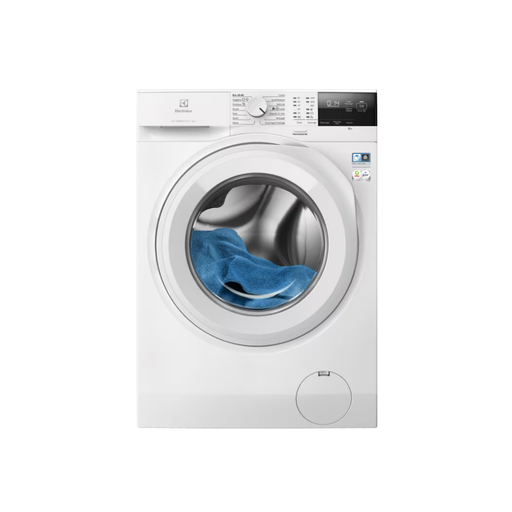 Image unavailable
Electrolux EW6FI4805AW, 8 kg SensiCare front-loader
If people in your household wash different types of laundry, check the programmes on this model and the loads they allow. It’s listed with an 8 kg capacity and a spin speed of 1,400 rpm, plus SensiCare and Steam Hygiene. The names of these features alone don’t tell you how they’ll affect your usual wash cycles.
View on Joybuy
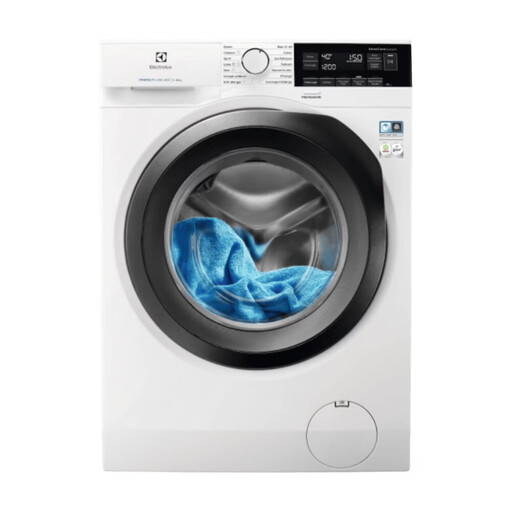 Image unavailable
Electrolux EW6F3811RC, 8 kg C-rated front-loader
Compare its stated 8 kg capacity with the amount of laundry your household washes together and the limits for each programme. This front-loader is listed with a spin speed of 1,400 rpm and a C energy rating. Check the full energy label to compare its energy and water use, spin performance and noise with other models.
View on Joybuy
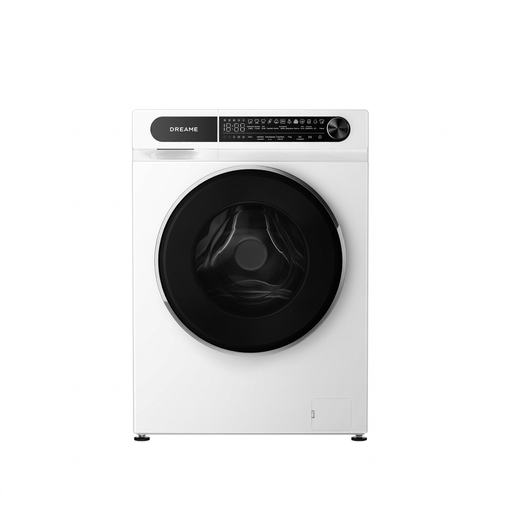 Image unavailable
Dreame DRWASHS8KG Washing Machine S, 8 kg
If your household combines laundry loads, compare the stated 8 kg capacity with the loads actually permitted for its programmes. Check the manual for cycles suited to your fabrics, then compare spin performance and the energy label figures if you dry clothes indoors.
View on Joybuy
Frequently asked questions
Can an 8 kg washing machine take 8 kg on every programme?
No. According to UFC-Que Choisir, the stated capacity refers to the weight of dry laundry permitted on the Cotton or Eco 40-60 programme. Check the manual for the loads allowed on other programmes before planning your household laundry.
What should you compare on the energy label if you do laundry often?
Compare the energy rating, kWh/100 cycles, water use in litres/cycle, spin performance and noise. ADEME recommends looking at these figures together when comparing models, rather than focusing on just one.
Should you check a washing machine’s durability index in France?
Yes, it’s a useful point of reference for the model you’re considering. According to the French Ministry for Ecological Transition, the durability index has applied to washing machines in France since 8 April 2025. Check the displayed index and detailed information, rather than looking only at its score.
When should you choose a top-loader over a front-loader?
Start by considering a top-loader if space is limited or access from above is essential: UFC-Que Choisir gives a width of 40 to 46 cm for this type of appliance. If you combine large loads, also compare its capacity and programme load limits with front-loaders that fit your space.
How can you organise laundry when several people share a washing machine?
Combine laundry that can be washed on the same programme without exceeding its permitted load. ADEME recommends waiting until you have enough laundry to fill the drum rather than running multiple lightly loaded cycles. Always follow the manual’s instructions for each type of fabric.


