Households with large laundry loads
You regularly wash bedding, towels or several loads of laundry. Choose a capacity that can handle these loads without leaving you with a drum that is rarely full.


For frequent laundry, start by choosing a capacity that suits the dry loads you actually put together. A front-loader is worth considering if you often wash bulky items; a top-loader may be a better fit if space is limited and you prefer loading from above. Then compare the load limits for each programme, spin-drying efficiency class, noise levels, consumption figures on the energy label and the durability rating for each model.
You regularly wash bedding, towels or several loads of laundry. Choose a capacity that can handle these loads without leaving you with a drum that is rarely full.
The spin-drying efficiency class can help you choose a model if you need to dry your laundry indoors. Spin noise also matters if the machine is near a living area.
If the space is narrow or close to rooms in use, measure the room needed for the machine and to open it, then compare the noise figures for the specific model.
Consider it: if you often wash large loads and bulky items. Electrolux France describes front-loaders as generally offering a larger capacity than top-loaders.
Bear in mind: you’ll need space in front of the door. A large capacity is only useful if your loads and programmes let you make the most of it.
Consider it: if width is limited or you prefer to load your laundry from above.
Bear in mind: you’ll need space above the lid, and should check the exact capacity. Electrolux France describes top-loaders as more compact, but that doesn’t necessarily mean they can handle your larger loads.
For everyday laundry in a French household, start with the loads you usually wash, then compare the figures listed for each model and the programmes you’ll use.
| Feature | What to check | Who it matters to |
|---|---|---|
| Capacity and number of cycles | Estimate the size of your dry laundry loads and check the load limits for the programmes you use most often, not just the maximum capacity. | If bedding and towels regularly fill the basket, I want to wash them without running extra cycles; around 31% of consumers in this group would make usable capacity their top priority. |
| Spin performance and indoor drying | Compare the spin-drying efficiency class, then the stated rpm, taking into account the fabrics and programmes you use. | When I dry my laundry indoors, I want to reduce how much moisture it retains after washing; this is a priority for around 25% of consumers. |
| Noise and space | Check the dB and noise class during spinning, and measure the machine and the space needed to open it. | If the machine is near a living area or in a narrow space, I need to make sure it fits without overlooking noise; around 19% of consumers would put this constraint first. |
| Water, energy and durability | Compare the kWh per 100 cycles and litres per cycle for the Eco 40-60 programme, then check the model’s durability rating. | For frequent washing, I want to check the stated consumption figures and the model’s durability before choosing; this would be the main concern for around 25% of consumers. |
Maximum capacity refers to a load of dry laundry and may be lower for other programmes, particularly those designed for certain fabrics. The consumption and noise figures on the label are based on standardised conditions. They’re useful for comparing models, but don’t on their own describe every wash at home.
A capacity that’s too large for your usual loads can mean running the machine with a partly filled drum; one that’s too small can mean running more cycles.
Estimate the size of your dry laundry loads and check the limits for the programmes you use, especially for fabrics other than cotton.
The maximum spin speed is no substitute for the spin-drying efficiency class, and it may be reduced on some models if the load is unbalanced.
Compare the spin-drying efficiency class, then check the speed and care instructions for the fabrics you wash.
A marketing claim won’t tell you the noise level of the specific model during spinning.
Check the stated dB and noise class, then make sure the space allows you to install the machine in line with the instructions.
The rating assesses reliability and repairability according to its criteria; a commercial warranty may cover only one component. Neither directly measures wash quality.
Check the model’s durability rating separately from what is actually covered by any commercial warranty on offer.
These examples illustrate different formats and capacities to compare; their features don’t apply to every model from each brand.
The Bosch WGE02408FR front-loader is listed with a capacity of 7 kg and a maximum spin speed of 1,400 tr/min.
Miele France’s range of front-loaders includes 9 kg W1 models, with stated spin speeds of 1,400 or 1,600 tr/min, depending on the model.
The Electrolux EW8T3653BA top-loader combines a stated width of 400 mm with a capacity of 6 kg.
The Whirlpool TDLR7251FR top-loader is listed with a capacity of 7 kg and a width of 40 cm.
These front-loading and top-loading models give you a range of capacities to consider for regular laundry. Start by shortlisting those whose format and load limits suit your habits, then compare their labels and durability ratings.
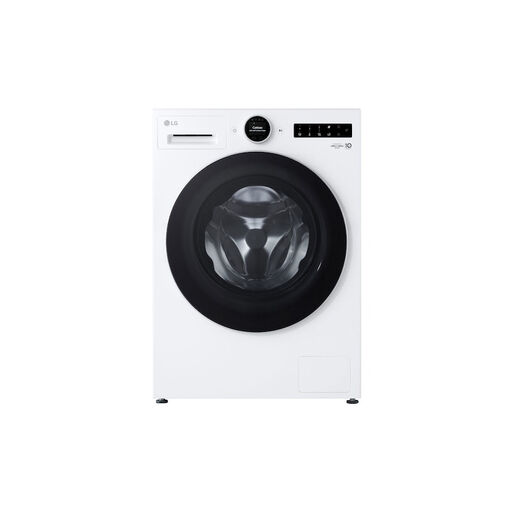 Image unavailable
Worth considering if you often put together large loads, provided your usual programmes can handle them.
Stated energy class A. Check the load limits for different fabrics and the durability rating listed for this model.
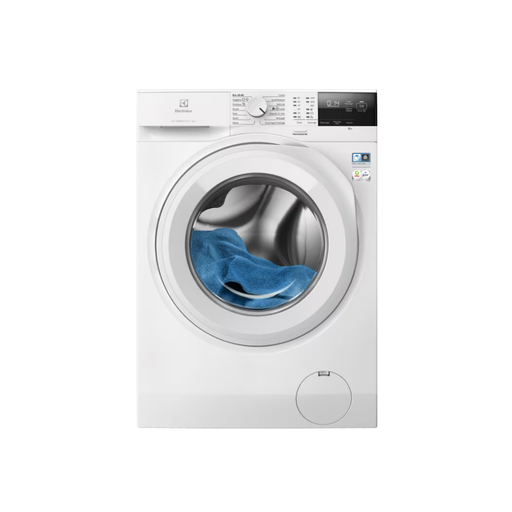 Image unavailable
Worth considering if your regular loads suit this capacity and you have enough space in front of the door.
Stated maximum spin speed of 1,400 tr/min. If you dry laundry indoors, compare the spin-drying efficiency class too, and check the model’s durability rating.
 Image unavailable
Worth considering for frequent or larger loads, once you’ve checked the limits for the programmes you use.
Stated maximum spin speed of 1,600 tr/min. To compare this model for indoor drying, check its spin-drying efficiency class too, as well as its durability rating.
 Image unavailable
Worth considering if you prefer loading from above and usually wash moderate-sized loads; check the space needed above the lid.
Stated maximum spin speed of 1,400 tr/min. If the machine will be near a living area, compare the noise figures on the label and check the durability rating.
 Image unavailable
Worth considering for regular household laundry, taking into account the space needed to install the machine and open the door.
Stated maximum spin speed of 1,400 tr/min. Check the load limits for your fabrics and the durability rating listed for this model.
Yes, for household washing machines covered by the requirement that has applied since April 2025, according to ADEME and the French order of 5 April 2024. The Ministry for the Ecological Transition states that the rating is out of 10 and must be displayed in shops and online. Make sure it relates to the model you’ve chosen.
It covers reliability and repairability, not wash quality. The Ministry for the Ecological Transition describes it as a rating that brings these two aspects together. Check the details to understand what has been assessed for the model you’re considering.
Start with the spin-drying efficiency class shown on the label. ADEME recommends choosing class A for faster indoor drying. Then compare the speed and noise levels, while following the care instructions for your fabrics.
No, the stated maximum load doesn’t automatically apply to programmes for synthetics, jeans or wool. If your household sorts laundry regularly, the load limits in the instructions are more useful than the stated capacity in kilograms alone.
Choose a capacity that suits the loads you put together and use a programme designed for the fabrics. ADEME recommends filling the drum sufficiently while leaving room for the laundry to move around. It notes that half loads use less water but just as much electricity.