To choose a washing machine for a flat, first measure the space and check the connections. Then compare the capacity, spin noise, cycle length and energy and water use of models that will fit. A front-loader works if there’s enough room to open the door; a top-loader is best if width is the main constraint, while a compact model suits limited depth. None of these formats guarantees vibration-free operation: installation and how the laundry is distributed in the drum matter too.
Who are these criteria useful for?
People who are sensitive to spin noise
If you’re concerned that doing laundry could disturb people in your home or your neighbours, compare spin noise before you buy. ADEME recommends paying particular attention to this if the machine will run at night. It’s also important to make sure it’s level.
People living in a studio or with a narrow space
If the machine needs to fit into an alcove, kitchen or bathroom, measure the available space and remember to allow for the connections and access to the drum. UFC-Que Choisir points out that a drum that’s too small can mean running more cycles.
Households that do laundry regularly
For everyday loads, choose a capacity that suits the amount of laundry you typically wash. You can then compare cycle length, water and energy use, and durability information to narrow down the models that fit your space.
Which criteria should you prioritise?
The format is the first thing to consider if access or dimensions are an issue. Then compare noise, capacity and energy and water use across specific models. For household washing machines, the European Commission says the label provides information including cycle length, water and energy use, and noise emissions.
Front-loading
Consider it: if there’s enough room to open the door.
Bear in mind: you’ll need space in front of the machine to load it. Installation and load size can still affect vibrations.
Top-loading
Consider it: if available width is a key factor, or you prefer to load from the top.
Bear in mind: you’ll need enough space to open the lid fully, and the capacity must suit your laundry loads.
Compact
Consider it: if the available depth rules out a deeper machine.
Bear in mind: a drum that’s too small can mean running more cycles, as UFC-Que Choisir points out.
| Criteria | What to check | Who it matters to |
|---|
| Noise and vibrations |
Compare the spin noise shown on the label for the exact model, and make sure it can be installed securely and level. |
If doing laundry could disturb neighbours in a nearby flat, I want to keep noise to a minimum without assuming the format alone will do the job. Around 29% of consumers would put this concern first. |
| Size and loading |
Measure the width, depth and height, then allow for the space needed to open the door or lid and connect the machine. |
In a studio or narrow alcove, the first priority is making sure the machine fits and remains accessible. Around 29% of consumers would make this their top priority. |
| Capacity and cycles |
Choose a capacity that suits the amount of laundry you regularly wash and check the length of the cycles you’ll use. |
When I do laundry every week, I’d rather have a suitable capacity than a drum that means I need to run more cycles. Around 24% of consumers would prioritise this. |
| Energy and water use, and durability |
Compare energy use per 100 cycles, water use per cycle and, if shown, the durability index. |
For regular laundry, I want to be able to assess energy and water use and lifespan, rather than looking at the energy class alone. Around 18% of consumers would make this a priority. |
Mistakes to avoid before buying
-
Choosing based only on rpm or a promise of quiet operation
Spin speed alone doesn’t tell you how noisy a machine will seem in your flat. AEG notes that a machine that isn’t level, is overloaded or has laundry distributed unevenly can make noise and shake.
Compare the spin noise shown on the label, then make sure the machine is installed securely and loaded according to the model’s instructions.
-
Choosing the smallest drum available
UFC-Que Choisir warns that a drum that’s too small can mean running more cycles, even if the machine fits easily into your space.
Measure the space, then choose a capacity that suits the amount of laundry you wash regularly.
Extra cycles take time and can increase water and electricity use.
-
Ordering before checking your bathroom
Available space alone isn’t enough to determine whether a spot near a shower or bath is suitable for installing an electrical appliance.
Check the exact location and, if you’re unsure, ask a qualified professional to inspect the electrical installation before ordering.
-
Comparing energy classes alone
An energy class doesn’t tell you how much water a machine uses per cycle, how long a cycle takes or how noisy it is. The European Commission lists this information separately on the labels for the relevant washing machines.
Read the full label for models that already meet your size and capacity requirements. Check the durability index too, if it’s shown.
Brands to consider for different needs
Bosch
Worth considering for certain front-loading or integrated models, depending on your space and the features you’re looking for.
- Bosch lists SpeedPerfect and Active Water Plus features, as well as an AntiVibration design, for the WAJ28057FF. The integrated WIW24348FF is listed as measuring 818 × 596 × 544 mm, with a 7 kg capacity.
- These details apply to specific models. Check their dimensions and spin noise, and don’t assume the stability claims apply across the whole brand.
AEG
Worth considering if top-loading suits your access or width requirements.
- AEG describes the LTR6G6120A as a 6 kg 6000 Series top-loading washing machine.
- AEG notes that levelling and how laundry is distributed can also affect shaking. A top-loading design alone won’t tell you how noisy the machine will be in your home.
Electrolux
Worth considering if limited depth makes a slim model a better fit.
- Electrolux offers a slim range listed as 41 cm deep, designed for small spaces.
- Compare the depth of your chosen model with the space needed for connections and loading. Depth alone won’t tell you its capacity or noise level.
Washing machines to compare on Joybuy
These front-loading and top-loading models let you compare different capacities and loading styles for doing laundry in a flat. Before choosing, check that each model’s dimensions suit your space, then compare its label with your priorities for noise and energy and water use.
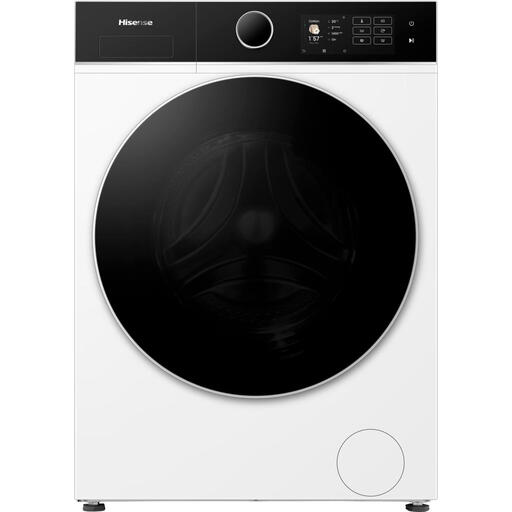 Image unavailable
Hisense WF5I8043BWF, 8 kg front-loader
Worth considering for regular laundry if a front-loader suits your space.
The model name indicates an 8 kg capacity, a 1 400 tr/min spin speed and an inverter motor. Check the full dimensions, spin noise and energy and water use on the product page and label for the exact model.
View on Joybuy
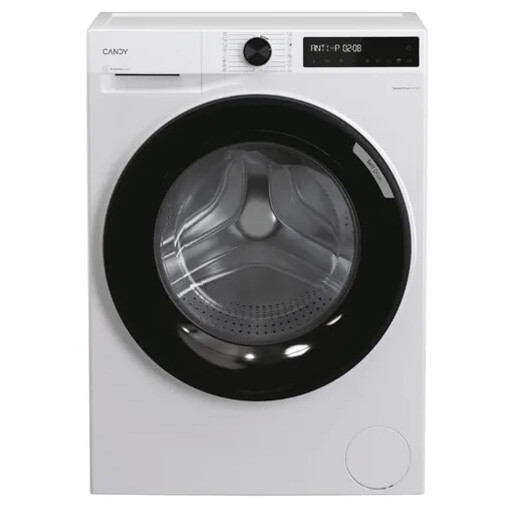 Image unavailable
Candy BR 411BL9-S, 11 kg front-loader
Worth comparing if you regularly have large laundry loads and have enough depth to install a front-loader of this capacity.
The product name lists an 11 kg capacity and an A energy class. Check the dimensions, including space for the connections, then check the spin noise and energy and water use on the label for the exact model.
View on Joybuy
 Image unavailable
Candy TCA464TM4-S ProWash 500, 6 kg top-loader
Worth considering if top-loading better suits your layout. Remember to allow enough room to open the lid.
The product name indicates a 6 kg capacity, a 1 400 tr/min spin speed and 17 programmes. Compare its spin noise on the label rather than assuming a top-loader will be quiet.
View on Joybuy
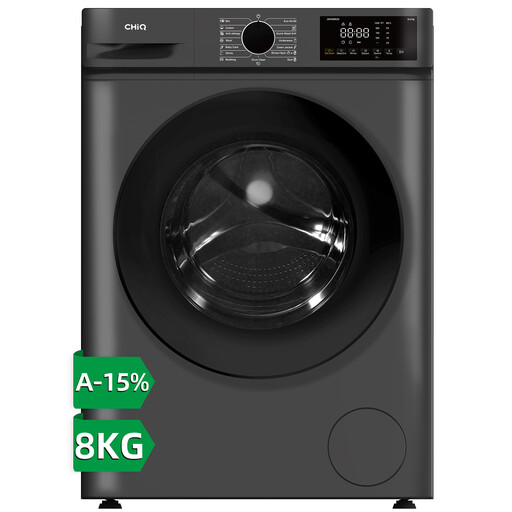 Image unavailable
CHiQ JW85883G, 8 kg front-loader
Worth considering if you’re looking for a front-loader for everyday laundry, provided it fits the space you have in mind.
The product name lists an 8 kg capacity, a 1 400 tr/min spin speed, 16 programmes and a steam function. Check the full external dimensions and the noise, cycle and energy and water use information on the product page and label for the exact model.
View on Joybuy
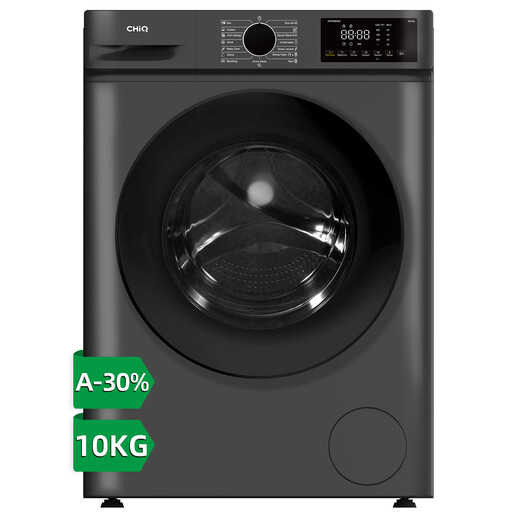 Image unavailable
CHiQ JW105883G, 10 kg front-loader
Worth comparing if you regularly have large laundry loads and have enough space for a front-loader.
The product name indicates a 10 kg capacity, a 1 400 tr/min spin speed, 16 programmes and a steam function. Confirm the external dimensions and check the label for the noise level, cycle length and energy and water use of the exact model.
View on Joybuy
Frequently asked questions
How can I compare the noise levels of two washing machines for a flat?
Compare their spin noise on the energy label for each exact model. This figure can’t predict all the vibrations you might experience at home: AEG notes that levelling, the load size and how the laundry is distributed can also make a difference.
Can you install a washing machine in a bathroom?
It can be possible if the location and electrical installation are suitable for the room. Before buying, check how the proposed position relates to the shower or bath and check the connections. If you’re unsure, ask a qualified professional.
Is a compact washing machine always better for a small flat?
No. Compact models are mainly for when space is limited. UFC-Que Choisir points out that a drum that’s too small can mean running more cycles, so measure the space and choose a capacity that suits the amount of laundry you usually wash.
What should I look for on the label besides the energy class?
Check the energy use per 100 cycles, water use per cycle, programme length and spin noise. The European Commission provides this information for the relevant washing machines. Compare models that already meet your capacity and size requirements.


