First, choose a washing machine that will fit through to its intended space and can be opened without obstruction: width alone isn’t enough. If depth is limited, consider a slimline front-loader; if width is the issue, look at top-loading models, making sure there’s room to open the lid. If you dry laundry indoors or run cycles near living areas, compare each model’s spin efficiency and stated noise level too.
Who are these criteria useful for?
People with very limited space
Whether it’s a kitchen, bathroom or narrow alcove, you’ll need to measure the access route, depth and space required to open the door or lid. UFC-Que Choisir distinguishes between slimline front-loaders and narrower top-loading machines.
Households sensitive to spin noise
If the machine is near your living areas, it’s worth comparing the noise levels of different models during the spin cycle. UFC-Que Choisir notes that this issue receives more mixed feedback from people surveyed; installation conditions also matter.
Households that dry laundry indoors
If you dry your laundry on an airer at home, check the spin efficiency rating as well as the maximum spin speed quoted. Also consider how much laundry you usually wash.
Which criteria should you compare first?
Start with the constraint that could prevent you from installing or opening the machine: that will determine the right format. UFC-Que Choisir describes front-loaders around 60 cm wide, slimline front-loaders and generally narrower top-loading models.
Standard freestanding front-loader
Consider this if: you have around 60 cm of width available and can open the door in front of the machine.
Allow for: the appliance’s depth, connections and the clearance needed in front of the door.
Slimline or compact front-loader
Consider this if: a front-loader’s width works for you, but its depth is a problem; UFC-Que Choisir gives a depth of 33 to 45 cm for the slimline front-loaders it features.
Allow for: a capacity that suits your usual loads, as well as room to open the door.
Top-loader
Consider this if: width is your main constraint; UFC-Que Choisir gives a typical width of 40 to 46 cm for this format.
Allow for: clear space above the lid, even if this format avoids the clearance needed for a front-loading door.
| Criteria |
What to check before buying |
Who is this for? |
| Space and installation |
Measure the access route and the space where the machine will go, then check the clearance needed for the door or lid and connections. |
With a narrow alcove, I want to be able to get the machine in and open it without blocking the way; around 36% of consumers would prioritise this constraint. |
| Spin noise |
Compare the stated spin-cycle noise in dB(A) and the noise class; also check the installation instructions. |
If the machine runs near my living areas, I want to minimise disruption during the spin cycle; this would be the top concern for around 29% of consumers. |
| Spinning and drying laundry indoors |
Check the spin efficiency rating and the maximum spin speed for the same model; don’t judge the result by speed alone. |
When I dry laundry at home, I want to reduce the moisture left in it after washing; around 21% of consumers would put this need first. |
| Consumption and durability |
Compare energy use per 100 cycles and water consumption for the Eco 40-60 programme, then check the durability index for the model concerned. |
For an appliance I use regularly, I want to keep an eye on consumption and assess how repairable it is; around 14% of consumers would consider this a priority. |
Mistakes to avoid
-
Choosing a smaller capacity without considering how often you wash
A smaller drum could mean running more cycles if your usual loads are still large.
Before choosing a capacity to save space, consider the weight of the dry laundry you wash and how often you do a load.
-
Assuming spin speed means laundry is ready to dry
The maximum spin speed in tr/min doesn’t tell you on its own how much moisture will remain in your laundry. The result also depends on the programme and load.
Also compare the stated spin efficiency rating of the models you’re considering.
-
Relying solely on the word ‘quiet’
The stated noise level during the spin cycle gives you a more precise basis for comparison than a marketing claim. Installation can also affect how disruptive the machine feels.
Check the dB(A) value and noise class, then make sure you can follow the manufacturer’s installation instructions.
-
Confusing the durability index with the warranty
The index helps you assess the repairability and reliability of the model in question; it doesn’t describe the retailer’s own commitments.
Check the index for the model sold in France, and look separately at the statutory guarantee of conformity and any commercial warranty on offer.
Brands to consider for different formats
Bosch
A range to explore if you’re looking for a freestanding front-loader and want to compare different capacities and noise levels.
- Bosch Électroménager France features energy rating A models and states that certain spare parts may be available for up to 15 years.
- For the model you choose, check the noise level on the label, its durability index and the exact terms for spare-part availability.
Electrolux
A range to consider if a top-loader would solve a lack of width.
- Electrolux France features top-loading models with capacities of 6 and 7 kg, and different spin speeds depending on the model.
- Measure the space and check the clearance needed above the model you choose; a top-loader won’t solve every space constraint.
Miele
A brand to consider if you’re comparing front-loaders designed for larger loads.
- Miele France gives the WWA120 WCS a capacity of 8 kg and a maximum spin speed of 1 400 tr/min.
- A lifespan claim made by the brand doesn’t prove how long every appliance will last. Compare the durability index and warranty terms for the model you’re considering.
Whirlpool
A brand to explore if a narrow top-loading washing machine would suit the available space.
- The European Commission’s product fiche for the Whirlpool TDLR 6040S EU/N gives dimensions of 90 × 40 × 60 cm.
- The same model is listed at 78 dB during the spin cycle, with noise class D. Check the label for the model you’re considering; these figures don’t apply to the whole brand.
Washing machines for different spaces
This Joybuy selection includes front-loaders with different capacities and a top-loader. Start by choosing a model that fits your available space, then check whether its capacity, spin performance and noise level suit your daily needs.
 Image unavailable
Hisense WF5I8043BWF – freestanding, 8 kg, 1 400 tr/min
If depth is your main constraint, measure the space needed for the door to open and for the connections before choosing this front-loader.
An Inverter motor is one of the features of this variant; check its noise and spin performance separately on the label.
View on Joybuy
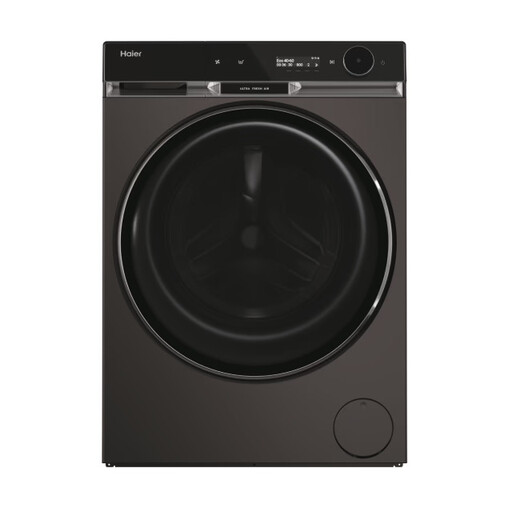 Image unavailable
Haier X Series 11 HW100-BD14397PGU1 – 10 kg, 1 400 tr/min
If you regularly wash large loads, check that this capacity suits your usual laundry and measure the available space with the door open.
This variant includes AutoDose and Wi-Fi; check how these features work if they matter to your choice.
View on Joybuy
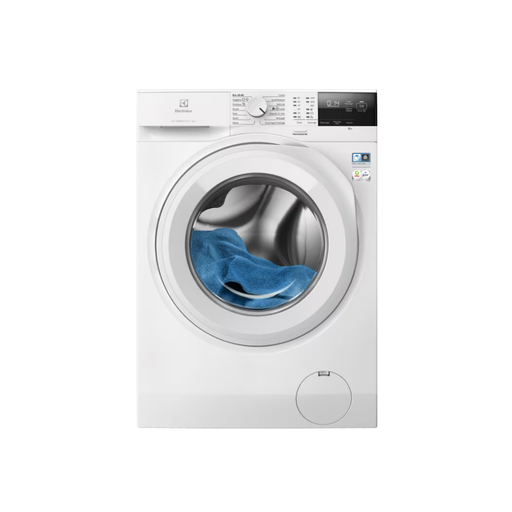 Image unavailable
Electrolux EW6FI4805AW – 8 kg front-loader, 1 400 tr/min
For everyday washing with varying loads, check that this capacity suits your laundry routine and that the door can open in the space you have available.
This variant includes the SensiCare feature; compare the spin efficiency rating and noise level on the label for the model being sold.
View on Joybuy
 Image unavailable
Candy ProWash 500 TCA464TM4-S – 6 kg top-loader, 1 400 tr/min
If a front-loading door would obstruct the way, a top-loader is worth considering, as long as there’s enough room to open the lid.
If the machine will be near your living areas, also compare its stated spin-cycle noise before buying.
View on Joybuy
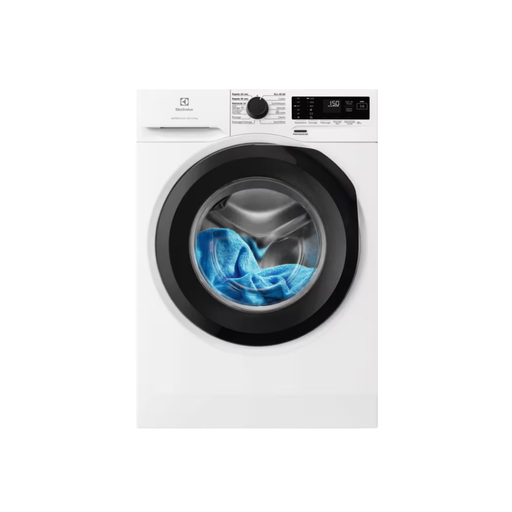 Image unavailable
Electrolux EWF1410N2 – 10 kg front-loader
This capacity is worth considering if your usual loads are large; also measure the available depth and the clearance in front of the door.
This variant includes TimeSave and Inverter features. Check the stated spin efficiency and noise level for this model separately.
View on Joybuy
Frequently asked questions
Is a slimline washing machine always better for a small flat?
No: it mainly helps when depth is limited. UFC-Que Choisir notes that slimline front-loaders generally remain close to 60 cm wide. Also check the door clearance, connections, access route to the room and whether the capacity will suit your laundry loads.
Which figures on the energy label should you check for a flat?
Compare energy use per 100 cycles, water consumption, the spin efficiency rating and noise during the spin cycle. As the European Commission explains, the consumption figures relate to the Eco 40-60 programme; they don’t necessarily describe every other programme.
Does a washing machine sold in France have to display a durability index?
For the washing machines concerned that have been sold in France since 8 April 2025, the durability index replaces the repairability index, according to the ministry responsible for ecology. It is rated out of 10 and takes repairability and reliability into account: look up the index for the specific model you’re considering.
What should you do if a new washing machine doesn’t match its description?
If you bought it from a trader in France, the statutory guarantee of conformity applies when a product doesn’t match its description, says the Directorate-General for Competition, Consumer Affairs and Fraud Control. Keep your order confirmation and the product details so you can report the issue to the seller; any commercial warranty is separate from this right.


