What should you compare?
First, choose between a front-loader and a top-loader based on the space available. Then compare noise, capacity and usage figures for models that fit.
Front-loading
Worth considering: if there’s enough space for the machine and to open the door.
Keep in mind: a front-loading design alone won’t tell you how noisy the spin cycle will be; compare the label for each model.
Top-loading
Worth considering: when width is limited; Electrolux’s guide refers to spaces 40 to 45 cm wide.
Keep in mind: allow enough clearance above the lid, and don’t assume a top-loader will be quieter than a front-loader.
| Feature | What to check | Consider your needs |
|---|
| Noise and stability |
Compare the noise level and noise class during the spin cycle on the specific model’s label. If a machine bangs, also check that it’s level and that all four feet are firmly on the floor, as Bosch and Miele recommend. |
The machine will be near a living space or the neighbours, so spin-cycle noise and a stable installation matter to me. |
| Size |
Measure the width, depth and space needed to open the door or lid. Also check that the space allows the machine to be installed securely. |
If width is limited, I can look at top-loaders, while remembering to allow enough room above the machine. |
| Capacity and consumption |
Match the capacity in kg to your usual loads. For models suited to your household, compare electricity use in kWh per 100 cycles and water use per cycle, as shown on the label. |
I’d rather have a drum that suits my laundry than choose a large capacity just in case. ADEME’s 7 kg guide is a useful reference, not a rule for every household. |
| Durability |
For a washing machine sold in France, check the model’s durability rating and find out about maintenance and repair options. Treat this as a separate consideration from the stated noise level. |
I want to compare durability without overlooking the dimensions or installation requirements. |
Brand guide
These examples can help you look into specific models and installation advice. A brand name alone won’t tell you how noisy a machine will be.
Bosch
Bosch France’s support advice offers useful checks if a washing machine becomes noisy or moves around.
- Its advice includes checking the transit bolts and levelling the machine.
- This advice doesn’t let you compare the noise levels of every Bosch model with those from other brands.
Electrolux
The brand suggests a top-loader when the available width is 40 to 45 cm.
- As a specific example, Electrolux lists dimensions of 890 × 400 × 600 mm and a capacity of 6 kg for the EW5T7622DC top-loader.
- These dimensions apply to this model and don’t tell you how noisy the entire range is.
Miele
Miele’s support team provides installation guidance to consult if the machine vibrates during the spin cycle.
- It recommends making sure the appliance is level and resting properly on all four feet.
- This is installation advice, not a comparison of noise levels between brands.
AEG
When looking at an AEG washing machine, check the format and figures for the model you’re considering rather than assuming how it will perform based on the brand.
- The model’s own label lets you compare its noise figures with those of other machines suited to your space.
- A brand appearing in a survey or test doesn’t prove that all its models are quiet.
Whirlpool
For a Whirlpool model, capacity, dimensions and spin-cycle noise are all worth considering separately.
- Comparing specific models helps you see how their features suit your space and household’s laundry.
- The Whirlpool name alone won’t tell you how much a particular machine vibrates or how durable it is.
Front-loading washing machines on Joybuy
These two front-loading models offer different capacities to compare. For a flat, check the dimensions and noise figures for the specific model before choosing. This list doesn’t compare front-loaders with top-loaders.
 Image unavailable
Bosch WGE02407FR, 7 kg front-loading washing machine
Its 7 kg capacity offers a useful comparison for everyday laundry, though you’ll need to consider the size of your actual loads. The model name indicates a spin speed of 1,400 tr/min. To gauge how disruptive it might be near living spaces, compare the noise figures on the label separately and check the space needed for installation.
View on Joybuy
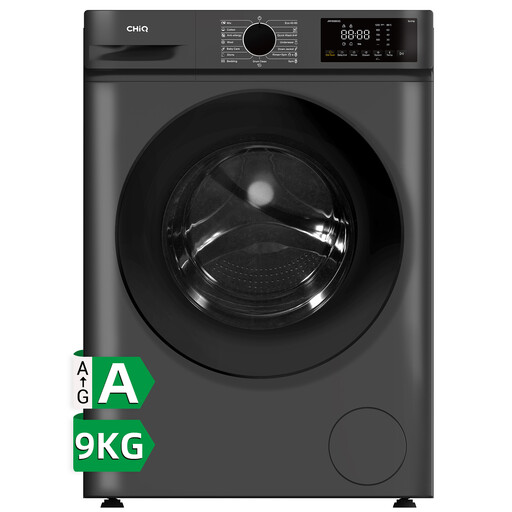 Image unavailable
CHiQ JW95883G, 9 kg front-loading washing machine
Its stated capacity of 9 kg is worth comparing with your usual loads if you mainly wash small quantities. The model name indicates a spin speed of 1,400 tr/min and a 15-minute quick cycle. Before choosing it for a compact space or somewhere close to the neighbours, check its exact dimensions and the noise level and class on its label.
View on Joybuy
Frequently asked questions
Should I replace a washing machine that vibrates a lot?
Not necessarily. If a machine vibrates or moves during the spin cycle, Bosch and Miele recommend checking the transit bolts, levelling and whether the feet are firmly on the floor. If the unusual noise persists after carrying out the checks in the instructions, have the appliance inspected.
Is a top-loading washing machine quieter than a front-loader?
The loading style alone doesn’t tell you. A top-loader may suit a narrow space, but compare the spin-cycle noise level and class of the specific machines that fit your available space.
What should I look for on the label if the machine is near the living room?
Start with the spin-cycle noise level and class, which ADEME lists among the information on washing machine labels. Then check the capacity, electricity use in kWh per 100 cycles and water use per cycle, comparing machines that suit your loads and available space.
What capacity should I choose for a small household?
Choose a capacity based on the size and frequency of your loads, including any bulky items you wash. ADEME says that 7 kg is enough most of the time, but this is only a guide; consider the laundry you usually do as well.
How should I consider durability?
Check the durability rating for the model sold in France: ADEME says this information has also been displayed for washing machines since April 2025. Consider it alongside the dimensions, capacity and spin-cycle noise, without assuming that good installation won’t matter.


