What should you check before choosing?
Start with the spin-cycle noise rating, then check that each model will fit your available space and can be installed securely.
| Criteria |
What to check |
What I need |
| Spin-cycle noise |
Check the dB(A) rating during the spin cycle and the acoustic class on the energy label. Compare these details across models that suit your capacity needs and available space, rather than relying on a programme name alone. ADEME recommends using the label to check details including noise and spin performance. |
My machine is near the living room or a bedroom, so I want to know the stated noise level during the spin cycle, not just during washing. |
| Stability |
Choose a hard, level floor, then check that the feet are properly adjusted as instructed in the manual. Make sure the machine isn’t touching nearby furniture either: Electrolux France and Bosch Électroménager France link instability with vibrations and knocking. |
If the machine might move during the spin cycle, I need to be able to install it without it rocking or touching furniture. |
| Space needed |
Measure the width and depth with the door or lid open. Check the clearances required in the manual for the exact model; width alone doesn’t tell you how much room you need to use a front-loading or top-loading washing machine. |
In a narrow alcove, I need to be able to open the machine, load the laundry and follow its installation instructions. |
| Capacity and spin performance |
Choose a capacity that suits your usual loads, then compare spin speed and spin-drying efficiency class without confusing them with the acoustic class. ADEME presents these as separate criteria on the energy label. |
I want to wash my usual loads without choosing a drum based only on its size or a spin speed based only on its number. |
Which brand models can you use as a guide?
These examples illustrate different criteria; the features of one model don’t necessarily apply to the whole brand.
Miele
The WCB100 WCS is an example of a front-loading washing machine whose Miele France specification lists 72 dB(A) during the spin cycle and an acoustic class of A.
- For this specific model, you can consider its acoustic class and noise rating together.
- Check the dimensions and installation instructions for the WCB100 WCS before choosing it for an alcove.
LG
The F14V71WHST is worth considering if you need a large capacity: LG France lists a capacity of 10,5 kg and a spin-cycle noise rating of 71 dB.
- The specification also gives the machine’s depth as 565 mm.
- LG France states that it can be up to 1 100 mm deep with the door open, so check the space in front of the door.
Electrolux
The French models YW8F2966AQ, which is front-loading, and EW8T3632AA, which is top-loading, show how different formats can suit different space constraints.
- Electrolux France lists the EW8T3632AA as 400 mm wide, with a capacity of 6 kg.
- The format alone doesn’t tell you how quiet a machine is: check the acoustic label for the model you’re considering.
Bosch
Bosch Électroménager France’s advice can help you prepare a stable installation, whichever model you ultimately choose.
- Bosch notes that a machine that isn’t level can make low rumbles and knocking noises, particularly during a fast spin cycle.
- This installation advice doesn’t prove that a Bosch washing machine is quieter than another model.
Washing machines available on Joybuy
These models include two 10 kg front-loading washing machines and a top-loading model for a narrower space. For each one, compare its stated spin-cycle noise with the space and installation conditions in your home.
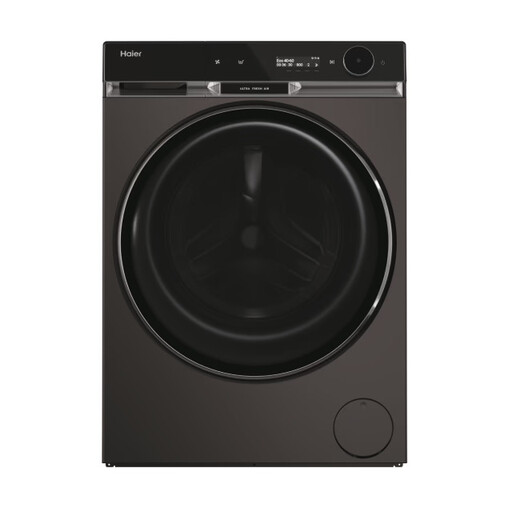 Image unavailable
Haier X Series 11 HW100-BD14397PGU1, 10 kg
For 10 kg loads near the rooms you spend time in, this model’s specification lists 68 dB(A) during the spin cycle and an acoustic class of A. Its product name specifies a spin speed of 1 400 tr/min. Before choosing it, check the manual for the space needed with the door open and the required installation clearances.
View on Joybuy
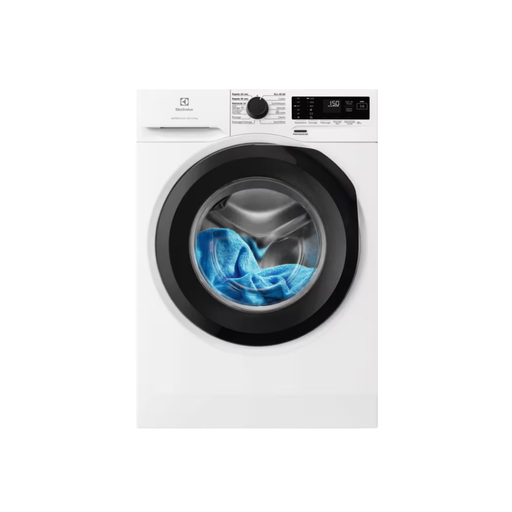 Image unavailable
Electrolux EWF1410N2, 10 kg front-loading
This 10 kg front-loading model is designed for households with enough space for this capacity. Its specification lists 76 dB during the spin cycle. Check the acoustic class on the energy label rather than assuming that “Noise Level B” is a confirmed class. Also check the depth with the door open and the required clearances.
View on Joybuy
 Image unavailable
Haier T Series 7 THASN276TM6-S, 7 kg top-loading
Its top-loading design and stated width of 405 mm make it suitable for a narrow space. However, the specification for this 7 kg model lists 77 dB(A) during the spin cycle and an acoustic class of C, so bear this in mind if the machine is near your living room. Also check how much space is needed above it to open the lid.
View on Joybuy
Frequently asked questions
Which figure should I check first to keep washing machine noise down?
Check the noise level in dB(A) during the spin cycle, along with the acoustic class on the energy label. ADEME recommends checking this label to compare details including noise and spin performance; a programme name isn’t a substitute for this information.
Will an anti-vibration mat be enough if the machine moves?
No. First check that the machine is stable and follow the instructions in its manual. Electrolux France explains that a machine that rocks may vibrate during the spin cycle. It should be on a hard, level floor, with the feet correctly adjusted. Any accessory you use must not compromise its stability.
Should there be a gap between the washing machine and the furniture?
Check the clearances specified in the manual for the exact model and make sure it isn’t touching nearby furniture. Les Numériques notes that contact like this can cause impact noise. Also check how much space is needed when the door or lid is open.
Is a top-loading washing machine quieter?
Its design alone doesn’t tell you whether it will be quieter. It may suit a narrow space, but compare its spin-cycle noise and acoustic class with those of front-loading models that also fit your space.
Does the energy label help you choose more than just a quiet machine?
Yes. ADEME says it also includes information about water, energy and spin performance. Consider these criteria separately: an energy class alone doesn’t tell you how noisy the machine is during the spin cycle.


