In a flat, first choose a washing machine that fits the space and can be installed securely. Then compare the stated spin-cycle noise levels of the models you’re considering: the type of door or lid alone won’t tell you how noisy a machine will be. A front-loading model could suit you if its size and loading style work for your laundry; a top-loader is mainly useful when width is limited. Consider a washer-dryer if you don’t have enough room to dry clothes, bearing in mind that its drying capacity is separate from its washing capacity.
Who is this choice for?
Households mindful of spin-cycle noise
If your machine will run near a living space or neighbours, compare the stated spin-cycle noise level for each model and make sure it can be installed securely. UFC-Que Choisir includes noise levels in its washing machine tests; installation is something you’ll still need to check at home.
People with a narrow space for their machine
Measure the width and depth, check the connections and allow room to open the door or lid. For example, AEG lists its LTR8C6150A top-loader as 400 mm wide, while Bosch lists its WAJ28057FF front-loader as 598 mm wide.
Households without a suitable place to dry clothes
A washer-dryer lets you wash and dry clothes in one appliance, but its drying capacity may be lower than its washing capacity. This matters if you want to run both stages back to back without taking out some of the laundry.
What should you check?
To choose between a front-loader, top-loader and washer-dryer, start with the constraint that will make the biggest difference to your routine: the width available, whether you can dry clothes on a rack, or the size of your loads. For all three types, compare the spin-cycle noise level of the specific model and check its installation requirements.
Front-loading washing machine
Consider this if: you have enough width and would like to use the top of the appliance as a surface.
Allow for: space in front of the door and behind the appliance for the connections; assess noise based on the model you choose, not its front-loading design.
Top-loading washing machine
Consider this if: width is your main constraint or you’d prefer to load your laundry from the top.
Allow for: space above the lid; a narrow appliance may still be quite deep.
Washer-dryer
Consider this if: you don’t have a suitable place to dry clothes and would prefer one appliance.
Allow for: a drying capacity that may be lower than the washing capacity, which could mean taking some clothes out before drying.
| What matters |
What to check before buying |
Who is this for? |
| Noise and vibration |
Noise emissions during the spin cycle and the model’s noise class; whether it can be levelled on a hard, flat floor. |
If the machine will run near neighbours or an occupied room, I want to minimise disruption during the spin cycle rather than relying solely on a promise that it’s quiet. Around 33% of consumers would make this their top priority. |
| Size and access |
Width, depth, connections and the space needed to open the door or lid. |
If the space is narrow, I need to be able to install and load the appliance without blocking it from opening. Around 27% of consumers would put this first. |
| Space for drying |
Whether there’s a suitable place to dry clothes on a rack; for a washer-dryer, its separate washing and drying capacities. |
Without a suitable place to dry clothes, I’m looking for another way to manage drying, while accepting that I may need to do smaller loads. Around 20% of consumers would make this their priority. |
| Laundry routine |
A capacity that suits your usual loads and the length of the programmes you plan to use. |
If I do laundry frequently, I want a load size and cycles that fit my schedule. Around 20% of consumers would make this their top priority. |
Mistakes to avoid
-
Relying on the word ‘quiet’ alone
A motor or casing that the manufacturer describes as quiet isn’t enough to tell you how disruptive the machine will be in your flat. The energy label lets you compare the stated spin-cycle noise level; secure installation matters too.
Check the noise emissions and noise class for the exact model, then read the instructions on levelling and clearances in its manual.
-
Choosing a top-loader based on width alone
Top-loading machines need clear space above the lid, and a narrow design can still be quite deep. The capacity should also suit your usual loads.
Measure the width, height and depth of the space, and check how far the lid opens before comparing models.
-
Confusing washing capacity with drying capacity
Miele says its WTD160 WCS can wash up to 8 kg but dry up to 5 kg. If your wash load is larger than the drying capacity, you’ll need to take some clothes out before running the drying cycle.
Check both capacities for the model you’re considering, along with the wash-and-dry cycle details if you plan to use it regularly.
-
Planning to dry clothes on a rack without considering the room
ADEME notes that drying clothes indoors adds moisture to your home, which is worth bearing in mind if space is limited.
Consider the room and its ventilation before making air-drying your usual solution. If it isn’t suitable, also compare how you’d manage loads with a washer-dryer.
Brands to compare
Bosch
Front-loaders to consider if stability and dimensions are among your priorities.
- Bosch lists a 7 kg capacity and dimensions of 848 × 598 × 546 mm for the WAJ28057FF, which can help you check whether it will fit.
- SilentPowerDrive and AntiVibration are the manufacturer’s terms. Compare the stated spin-cycle noise level for the specific model too, and don’t assume these features apply to the whole brand range.
AEG
A brand to consider for top-loading machines when width is limited.
- AEG lists dimensions of 890 × 400 × 600 mm and a capacity of 6 kg for its LTR8C6150A top-loader. Check that its depth and lid clearance will work for you too.
- These dimensions don’t apply to every AEG top-loader, and they don’t tell you how noisy the machine will be during the spin cycle.
Miele
Washer-dryers to compare if you’d like both functions in one appliance.
- Miele lists a washing capacity of 8 kg and a drying capacity of 5 kg for the WTD160 WCS, a useful distinction when planning your loads.
- A full washing load exceeds the stated drying capacity of this model.
Electrolux
Front-loaders to consider based on how you do your laundry; check the installation instructions for the model you choose.
- Electrolux says the SensiCare function on the EW6FI1410EB adjusts the programme duration, water and energy use to suit the load.
- This function doesn’t demonstrate an acoustic benefit. The brand recommends installing the appliance on a hard, flat floor, among other things.
Models to suit your space and drying needs
These Joybuy models cover two of the situations discussed here: limited width where top-loading is preferred, or the convenience of washing and drying in one appliance. Compare their installation dimensions and spin-cycle noise levels before choosing one for your flat.
 Image unavailable
Candy TCA464TM4-S ProWash 500, 6 kg top-loading washing machine
Worth considering if a top-loading design suits your space. The model name indicates a 6 kg capacity, 1,400 rpm, 17 programmes and Wi-Fi connectivity. Check the clearance needed to open the lid, the connections and the stated spin-cycle noise level.
View on Joybuy
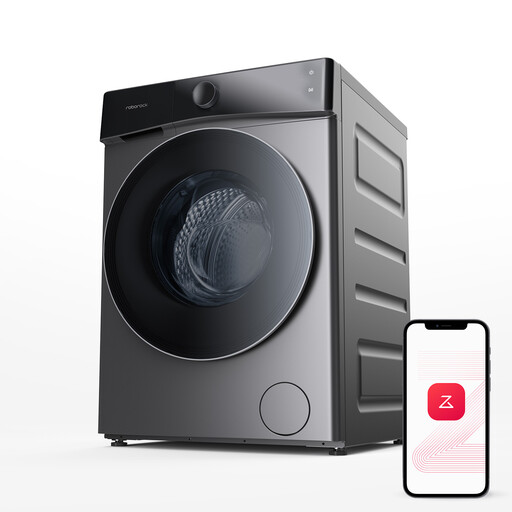 Image unavailable
Roborock Zeo Lite Gray, 10/6 kg washer-dryer
Consider this if you’d like to dry clothes without setting aside space for a drying rack. The model name indicates a 10 kg washing capacity, a 6 kg drying capacity, 27 programmes and automatic dosing. A full 10 kg wash load can’t be dried in one go at the stated capacity. Check the dimensions and spin-cycle noise level for the exact model.
View on Joybuy
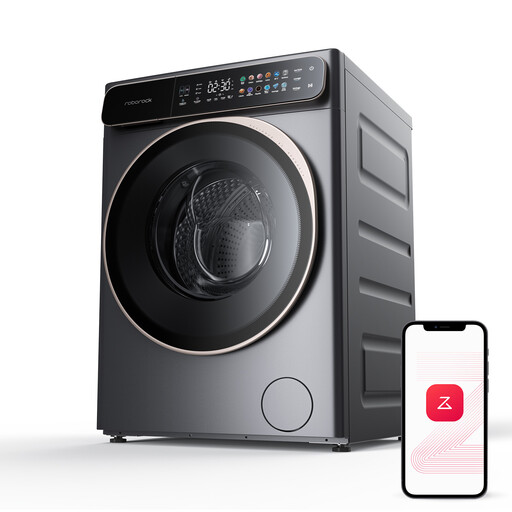 Image unavailable
Roborock Zeo One Gray, 10/6 kg washer-dryer
Worth comparing if integrated drying would help with limited space. The model name lists a 10 kg washing capacity, a 6 kg drying capacity and automatic dosing. Plan for a load that fits the drying capacity, and check the installation dimensions and spin-cycle noise level.
View on Joybuy
Frequently asked questions
Which noise level should I compare for a washing machine in a flat?
Compare the noise emissions during the spin cycle and the noise class shown on the energy label for similar models. These figures alone won’t tell you how vibrations will travel if the floor or installation isn’t suitable.
What should I check before delivery and installation?
Check the delivery route, the dimensions of the space, whether the door or lid can open fully, and whether there’s room for the connections. Make sure you have a hard, flat floor, then check the manual for the model’s levelling, water supply and drainage requirements. Also make sure a suitable socket is available.
Will a washer-dryer dry the entire load it has just washed?
Not necessarily: the drying capacity may be lower than the washing capacity. For example, Miele lists a washing capacity of 8 kg and a drying capacity of 5 kg for the WTD160 WCS. Check both capacities for your chosen model before planning to wash and dry a full load in one cycle.


