For frequent laundry in a flat, start by choosing a capacity that suits your loads and a design whose opening works for the space available. A front-loader needs room in front for the door to open; a top-loader opens upwards, so you’ll need space above it. Whichever type you choose, compare spin noise, programme times and filter access for each model.
Who are these criteria useful for?
People sensitive to spin noise
If you regularly run a wash near your living room, home office or bedroom, compare the decibel rating and noise class during the spin cycle. UFC-Que Choisir highlights spin noise as one of the things consumers surveyed would like to see improved.
Households with varying laundry loads
If you’re unsure what drum size you need, think about the loads you actually wash, including household linens. ADEME says that 7 kg is often sufficient, though you should still consider your own needs.
People who pay attention to maintenance
If you want to clean the filter without difficulty, check where it is and how to access it in the manual before buying. Filter access was among the maintenance aspects rated less favourably in the UFC-Que Choisir survey.
What sets washing machines apart?
Measure the space before choosing the type of opening. Then compare machines with a capacity that suits your usual loads.
Front-loading washing machine
Worth considering: if you can open the door fully and load the machine from the front.
Bear in mind: measure the clearance in front of the door as well as the machine itself.
Top-loading washing machine
Worth considering: if a front-opening door would be awkward, or you’d prefer to load laundry from above.
Bear in mind: leave enough space above to open the lid and remove your laundry, and check the model’s dimensions.
| Criteria |
What to check before buying |
Who is it for? |
| Spin noise |
Compare the decibel ratings and noise classes during the spin cycle on the energy label. |
If the machine runs near a living space, I want to minimise disruption during the spin cycle; around 31% of consumers rank this noise as their main concern. |
| Capacity and consumption |
Match the capacity in kg to your usual loads, then compare the kWh per 100 cycles and litres per cycle shown on the label. |
If my loads rarely fill a large drum, I want to avoid choosing a capacity that doesn’t suit my needs; this is the top priority for around 31% of consumers. |
| Cycle times |
Check the duration of the Eco 40-60 programme and consult the manual for the programmes you plan to use. |
I need to fit laundry around my daily routine without assuming the reference programme time applies to every cycle; around 23% of consumers prioritise this criterion. |
| Routine maintenance |
Find the filter and check in the manual how to access and clean it; also look at the durability index shown. |
To maintain my appliance regularly, I want to reach the filter without complicated steps; this is the top priority for around 15% of consumers. |
ADEME recommends matching the capacity to the amount of laundry in your household. The European Commission sets out the comparable information shown on the energy label, including consumption, the reference programme duration and spin noise. These figures don’t replace checking the manual for other programmes and maintenance instructions.
What should you watch out for before buying?
-
Choosing the biggest drum just in case
A larger capacity won’t necessarily suit the loads you usually wash. ADEME says that 7 kg is often enough, though this will depend on factors such as your household linens.
Estimate your regular loads before choosing a capacity, then compare noise, programme times and consumption across the models that suit you.
-
Overlooking spin noise
Spin speed and energy rating alone don’t tell you how much noise you’ll notice near your living spaces. UFC-Que Choisir lists spin noise among the issues raised by consumers surveyed.
Compare the decibel ratings and noise classes of the models you’re considering, then check the manufacturer’s installation instructions.
-
Assuming Eco 40-60 represents every programme
The Eco 40-60 duration lets you compare machines using a reference programme; it doesn’t tell you how long every cotton, synthetic or quick cycle takes.
Check the manual for the programmes you plan to use, especially if cycle times are an important factor in your decision.
-
Waiting until the first drain cycle to find the filter
Filter access was one of the maintenance difficulties highlighted in the UFC-Que Choisir survey. A general durability rating doesn’t tell you exactly what you’ll need to do on a particular model.
Find the filter and check how much room you’ll need to reach it in the manual, then read the manufacturer’s cleaning instructions.
Brands to know
There are no brands to feature in this section.
Washing machines available at Joybuy
This selection includes front-loading machines and one top-loading model. To compare them, match their capacity to your loads, then check the space required, noise levels and programmes for each appliance.
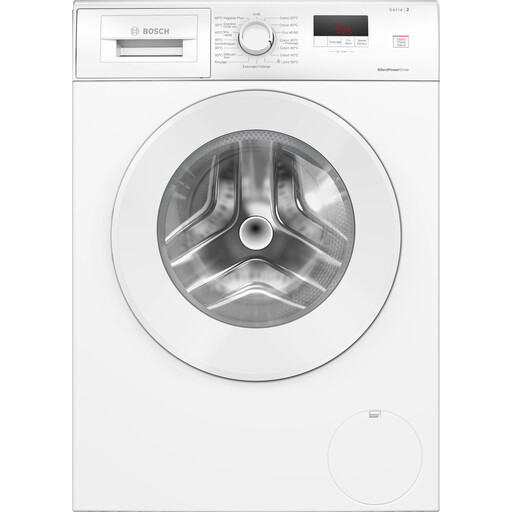 Image unavailable
Bosch WGE02407FR, 7 kg front-loader
Worth considering if your usual loads suit a 7 kg capacity and there’s room for the door to open in front of the machine.
Advertised spin speed: 1,400 rpm; class A stated in the product title. Check the manual for filter access and measure the clearance needed to open the door.
View on Joybuy
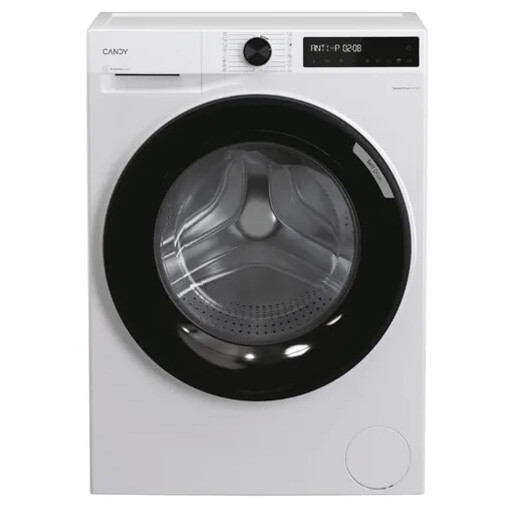 Image unavailable
Candy BR 411BL9-S, 11 kg front-loader
This capacity is worth considering if your regular loads call for it; if your loads are smaller, compare machines with smaller drums too.
Class A stated in the product title. Measure the space and check the manual for filter access and the duration of the programmes you plan to use.
View on Joybuy
 Image unavailable
Hisense WF5I8043BWF, 8 kg front-loader
An option to consider if your loads call for 8 kg and there’s room for the door to open.
Advertised spin speed: 1,400 rpm; Inverter motor mentioned in the product title. Check the full dimensions, required clearance and how to access the filter.
View on Joybuy
 Image unavailable
Haier T Series 7 THASN276TM6-S, 7 kg top-loader
Top loading could suit you if it would be awkward to open a front-loading door in the space available.
Advertised spin speed: 1,200 rpm; class A and Wi-Fi mentioned in the product title. Check the space above the machine, spin noise and filter access.
View on Joybuy
 Image unavailable
Electrolux EW7FI259160V, 9 kg front-loader
Worth comparing if your regular loads call for 9 kg and you have enough room in front of the door.
Advertised spin speed: 1,600 rpm; SteamCare and SmartSelect features mentioned in the product title. To check cycle times, consult the model’s manual, especially for Eco 40-60 and the quick programme; also check filter access.
View on Joybuy
Frequently asked questions
What should I compare on a washing machine’s energy label?
Compare the energy efficiency class, kWh per 100 cycles, litres per cycle, Eco 40-60 duration, and the decibel rating and noise class during the spin cycle. The European Commission lists these as energy label information; check the manual separately for the duration of other programmes.
Is a 7 kg capacity enough if I do laundry often?
It may be enough even if you do laundry frequently: ADEME says that 7 kg is often suitable. However, check the size of your usual loads, especially when washing sheets or towels.
Is a top-loader better than a front-loader in a small flat?
Not necessarily: the right choice depends on the space available and how you’ll open the machine. UFC-Que Choisir highlights the importance of available space; measure the clearance in front of a front-loader or above a top-loader, as well as the access needed to install the machine.
How can I tell whether the filter will be easy to clean?
Check the model’s manual to find the filter and understand how to access and clean it. Make sure there’ll also be enough room to do this once the machine is installed.


