Families with children
If clothes, bedding and towels regularly fill the laundry basket, you’ll want to avoid running extra cycles without choosing a drum that’s rarely full. UFC-Que Choisir suggests 8–10 kg as a guide for families with children.


For a family with children, UFC-Que Choisir generally recommends starting with a front-loading washing machine with an 8–10 kg capacity. A 10–12 kg model becomes a better option when you regularly have large loads to wash. A top-loading model is more suited to homes with limited width or access, and usually has a lower capacity. Then compare models based on the space available, the load limits for each programme and the consumption figures shown for Eco 40-60.
If clothes, bedding and towels regularly fill the laundry basket, you’ll want to avoid running extra cycles without choosing a drum that’s rarely full. UFC-Que Choisir suggests 8–10 kg as a guide for families with children.
Duvets, throws or large loads of household linen may make a 10–12 kg capacity worth considering if you wash them regularly. UFC-Que Choisir notes that this capacity is most useful when you frequently have large loads to wash.
A top-loading washing machine is worth considering if a front-loader won’t fit or if loading from above is more convenient. Width matters just as much as capacity: UFC-Que Choisir states that top-loaders in its washing machine guide do not exceed 8 kg.
First, choose a capacity that suits your usual loads, then check the programmes, the space available and the consumption figures for the specific model.
Consider this: for a family with children’s everyday clothes and household linen, following UFC-Que Choisir’s guidance.
Bear in mind: if you often wash large loads, check that the programmes you use can handle them without you needing to run extra cycles.
Consider this: when the available width or top-loading design is the deciding factor.
Bear in mind: this format is less suited to large loads: UFC-Que Choisir states that top-loaders do not exceed 8 kg.
Consider this: when you regularly have large loads to wash and fill the drum, as UFC-Que Choisir explains.
Bear in mind: if you don’t use the full capacity very often, you’ll still need to compare the model’s consumption and dimensions.
| Criterion | What to check | Think about your needs |
|---|---|---|
| Usual load size | Estimate the weight of your usual loads when dry and how often you wash large loads. UFC-Que Choisir suggests around 8–10 kg for families with children, and says 10–12 kg is most useful when you regularly have large loads to wash. | I often wash clothes for the family, but don’t want to choose a large capacity just for the occasional big load. |
| Load size for each programme | Check the manual for the maximum load allowed on the programmes you’ll use, particularly for fabrics other than cotton. Don’t assume the stated capacity applies to every cycle. | I also wash jeans, synthetics and delicate fabrics, so I need to plan for these loads as well as cotton washes. |
| Water and electricity | Compare the capacity with the figures on the label for the exact model: kWh per 100 cycles and litres per cycle. The European Commission provides these figures for the Eco 40-60 reference programme; regulated energy consumption takes several load sizes into account. | I do laundry frequently, so I want to compare figures for the same programme, rather than judging machines by their energy rating alone. |
| Space and access | Measure the height, width and depth, as well as the delivery route. For a front-loader, also check there’s enough room to open the door; for a top-loader, make sure you can access the top to load it. | The machine needs to fit in the room, but I also want to be able to open the door and load the laundry once it’s installed. |
The advertised capacity alone doesn’t tell you how much you can wash on every synthetic, wool or delicate-fabric programme. If the chosen programme has a lower load limit, you may need to split the laundry into separate loads.
Before choosing, check the programme load chart in the manual for the specific model.
UFC-Que Choisir recommends matching the capacity to the size of your household and the amount of laundry you actually wash. Using a large-capacity machine for small loads doesn’t automatically save water or electricity.
Compare the kWh per 100 cycles and litres per cycle shown on the labels, bearing the machine’s capacity and how often you fill it in mind.
A front-loader may fit the available width but still be awkward to use if its depth or door opening obstructs the way. A top-loader can solve a width problem, but it usually has a lower capacity.
Measure the space and access routes, then check the dimensions of the model and the clearance needed to load it.
These model examples can help you compare formats and measurements, but they don’t represent every washing machine made by each brand.
To get an idea of the space needed for a 10 kg front-loader, the French product page for the Bosch WGG254FAFR lists dimensions of 845 × 598 × 588 mm.
The Electrolux YW7T3713DA top-loader is an example of a top-loading model: its French product page lists a 7 kg capacity and a width of 400 mm.
The French product page for the LG F14R31WHSA lists an 11 kg front-loader measuring 600 × 850 × 565 mm.
These 9–11 kg front-loaders are suited to two needs: everyday family laundry and regular large loads. Compare each model with the space you have and the programmes you usually use. This selection doesn’t include top-loaders.
 Image unavailable
Its stated capacity of 10 kg fits the guidance to consider for everyday laundry in a family with children. The product title lists a spin speed of 1,400 rpm and an A energy rating. Check the space needed for installation and the load limits for your usual programmes.
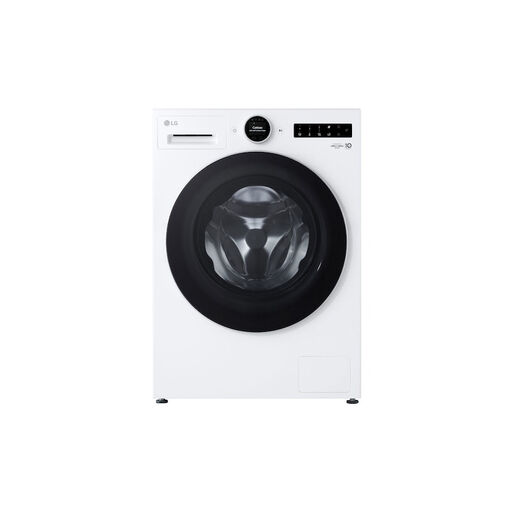 Image unavailable
This 11 kg front-loader is worth considering if you regularly wash large loads that make use of its capacity. The product title lists an A energy rating. Check the installation dimensions, door opening and load limits for each programme before choosing it.
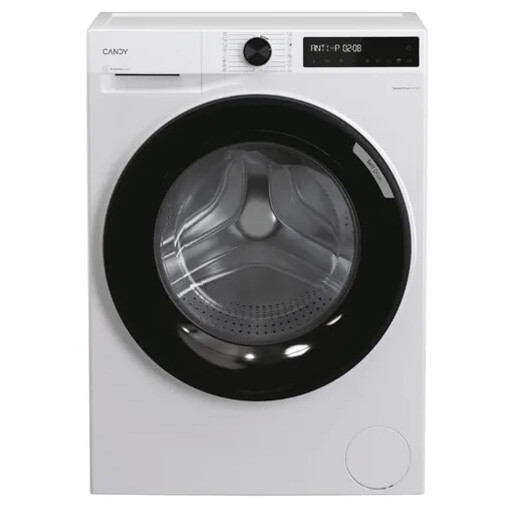 Image unavailable
Its stated capacity of 11 kg is worth considering for regular, bulky family loads. The product title lists an A energy rating. Carefully measure the available depth and door clearance, then check the load limits for each programme.
 Image unavailable
This 9 kg front-loader is within the range to consider for everyday family laundry, rather than repeated extra-large loads. The product title lists a spin speed of 1,600 rpm. Check its depth, door opening and the load limits for the programmes you’ll use.
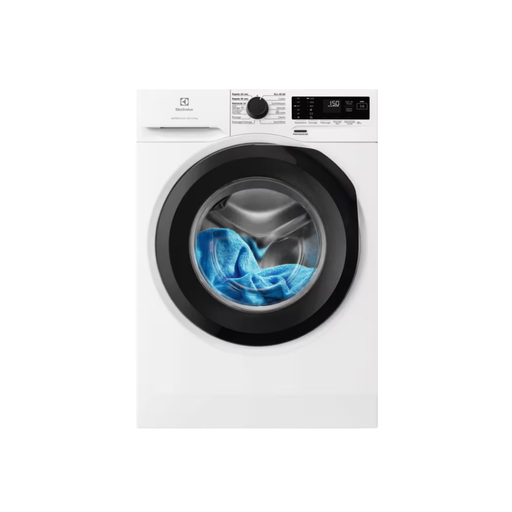 Image unavailable
Its stated capacity of 10 kg fits the guidance for a family with children. To compare it with other front-loaders, check the installation dimensions, load limits for each programme and the consumption figures on the model’s energy label.
UFC-Que Choisir suggests 8–10 kg as a starting point for a family with children, and says 10–12 kg is more suitable when you regularly have large loads to wash. Think about the size of your usual loads: washing a duvet occasionally isn’t the same as running a full drum several times a week.
Don’t assume the stated capacity applies to every programme. For synthetic, wool or delicate-fabric washes, check the maximum load in the model’s manual before planning a large load.
Compare their capacities, kWh per 100 cycles and litres per cycle, as shown on their energy labels. According to the European Commission, these figures are for the Eco 40-60 reference programme; regulated energy consumption takes several load sizes into account. The energy rating alone doesn’t show how well each machine will fit into your laundry routine.
Measure the height, width and depth of the space, as well as the access route to it. Compare these measurements with the dimensions of the exact model. Allow for a front-loader’s door to open or a top-loader’s lid to lift, as well as the space taken up by the machine when closed.