Which criteria should you prioritise?
Start with your usual loads: they determine the capacity you need. Next, compare the stated water use of washing machines with other washing machines, or dishwashers with other dishwashers. Then check that the programme this figure refers to fits your routine.
| Criterion | What to check | Who it matters to |
|---|
| Suitable capacity |
Compare your regular loads with the capacity in kg for laundry or place settings for dishes. Also consider how often you run cycles. |
If my loads rarely fill the appliance, I want to avoid choosing a capacity I won’t use. Around 40% of consumers rank this as their top requirement. |
| Water per cycle |
Check the litres per cycle on the label and compare only appliances in the same category, taking their respective capacities into account. |
When replacing an appliance, I want to compare its stated water consumption with that of similar models. This is said to be a priority for around 40% of consumers. |
| Programme you’ll use |
Check the duration of the washing machine’s Eco 40-60 programme or the dishwasher’s Eco programme, as well as the programmes you plan to use. |
If the reference cycle doesn’t fit my routine, I need to look at other programmes without assuming they use the same number of litres as the eco cycle. The programme people can actually use is said to be the main concern for around 20% of consumers. |
Appliances to compare on Joybuy
These washing machines and dishwashers come in different capacities and formats to suit regular laundry and dishwashing. Compare each model with appliances in the same category, then check its label against your loads, the programmes you use and the space available.
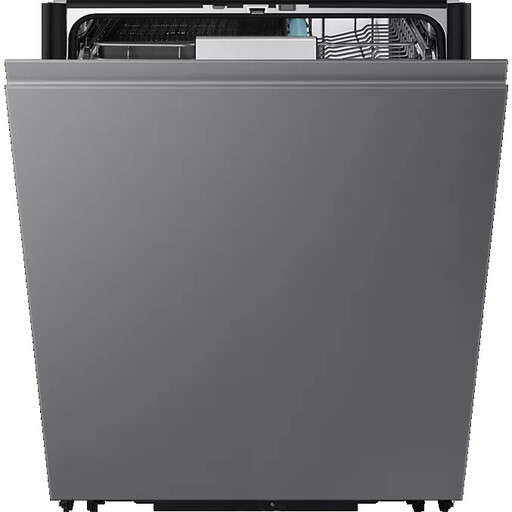 Image unavailable
Samsung Bespoke AI DW90H79JAI0U1, integrated dishwasher, 14 place settings
Worth considering if you’re looking for an integrated dishwasher for regular loads of up to 14 place settings.
Stated width: 60 cm; stated energy rating: A. Check the space and installation requirements, along with the litres per cycle and duration of the Eco programme on the label for the exact model.
View on Joybuy
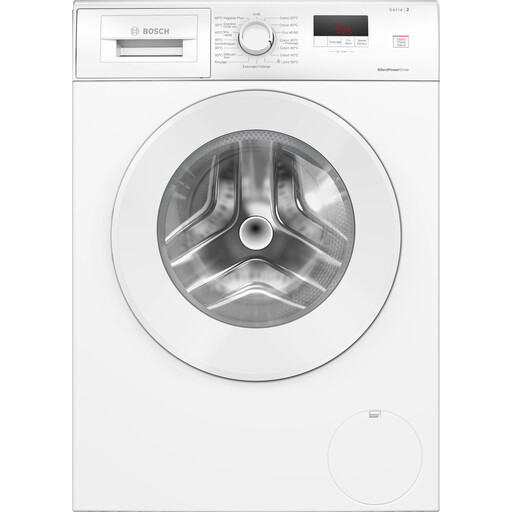 Image unavailable
Bosch WGE02407FR, front-loading washing machine, 7 kg
Worth comparing if your regular laundry loads suit a 7 kg capacity.
Stated spin speed: 1,400 rpm; stated energy rating: A. Check the label for the litres per Eco 40-60 cycle and its duration, as well as the installation requirements.
View on Joybuy
 Image unavailable
Haier T Series 7 THASN276TM6-S, top-loading washing machine, 7 kg
Worth considering if you want a top-loading machine and 7 kg suits your usual laundry loads.
Stated spin speed: 1,200 rpm; stated energy rating: A. Check there’s enough room to open the machine, and check the water per Eco 40-60 cycle on the label.
View on Joybuy
 Image unavailable
Hotpoint H4FD641A, freestanding dishwasher, 14 place settings
Worth comparing if your kitchen can accommodate a freestanding appliance and you regularly have enough dishes for a 14-place-setting load.
Stated width: 60 cm; stated noise level: 41 dB; stated energy rating: C. Check the litres per Eco cycle and its duration on the label, along with the space and connections required.
View on Joybuy
 Image unavailable
Candy ProWash 500 TCA464TM4-S, top-loading washing machine, 6 kg
Worth considering if your regular loads suit a 6 kg capacity and a top-loading machine works in your space.
Stated spin speed: 1,400 rpm; stated energy rating: B. Check the litres per Eco 40-60 cycle and its duration before comparing it with other washing machines.
View on Joybuy
Frequently asked questions
What should you compare on the labels of two washing machines?
Compare the litres per cycle, capacity in kg, kWh per 100 cycles and duration of the Eco 40-60 programme. The European Commission says this programme is the reference for water-related requirements for the washing machines covered by the rules. Its figures shouldn’t be assumed to apply to a quick or specialist programme.
What should you compare on the labels of two dishwashers?
Compare the litres per Eco cycle, capacity in place settings, kWh per 100 cycles and programme duration. The European Commission says this information appears on the label. Also check that the format and baskets suit the dishes you tend to accumulate between cycles.
Does a washing machine with a larger capacity always use less water?
No. A larger capacity only helps you avoid extra cycles if you regularly have more laundry to wash. ADEME says that 7 kg is enough for most households and advises against running a largely empty drum, while leaving enough room for clothes to move freely.
Should I choose an appliance based solely on its eco programme?
No. The eco programme provides a common basis for comparison, but its duration needs to suit the way you use the appliance. Check the other programmes you’ll need, without assuming they use the same amount of water as the reference cycle.


