Households doing laundry regularly
If you often run small loads, check how much washing builds up between cycles before choosing a capacity. ADEME advises against running lots of cycles with a drum that isn’t full enough.


For everyday laundry, start by considering how much dry washing you actually accumulate before each cycle. According to ADEME, a 7 kg capacity is enough most of the time, while a larger capacity makes sense if your usual loads mean you have to wash more often. Choose between a top-loader and a front-loader based on the space needed to open the machine and the capacity you’re looking for, then compare water and energy use, spin performance and noise on the label for the exact model. In France, the Ministry of the Economy states that the durability index has applied to both top-loading and front-loading washing machines since 8 April 2025.
If you often run small loads, check how much washing builds up between cycles before choosing a capacity. ADEME advises against running lots of cycles with a drum that isn’t full enough.
A larger capacity is worth considering if you regularly have to split your usual loads across several washes. Make sure the machine will fit in its space and that the cycle times suit your routine.
Whether the machine loads from the top or the front could determine which format works best. Measure the delivery route and the space available, including the clearance needed to open the lid or door.
First, work out which capacity and loading style suit your laundry and your home. Then compare the Eco 40-60 programme data across different models.
| Criteria | What to check | What I need |
|---|---|---|
| Capacity | Compare the capacity in kg of dry laundry with your usual loads and how often you wash. ADEME gives 7 kg as a guide that’s enough most of the time, but it isn’t a rule for every household. | Do my loads usually fill a standard drum, or do I often have to split them across several cycles? |
| Loading style and dimensions | A top-loader is loaded from above, while a front-loader is loaded from the front, as the National Consumer Institute explains. Check the exact model’s height, width and depth, access to the drum and delivery route. | I need to be able to open the machine and load the washing without blocking the space around it. |
| Water and energy use | On the energy label, compare the energy class, kWh per 100 Eco 40-60 cycles, litres per cycle and the programme duration. Use the same programme as your basis for comparison. | If I wash frequently, I want to understand both the consumption figures and how long a cycle takes. |
| Spin performance and noise | Check the spin-drying efficiency class and the stated noise level during spinning, rather than judging the machine by its spin speed in tr/min alone. Compare these details on the product specifications for the models you’re considering. | Will the machine be near a living area? If so, the noise level during spinning matters when I choose. |
| Durability | In France, the durability index replaced the repairability index for top-loading and front-loading washing machines on 8 April 2025, according to the Ministry of the Economy. Check the index and its criteria for the model you’re considering. | I want to compare durability without relying only on advertised features or a commercial guarantee. |
The wrong capacity can mean running more washes or regularly using a drum that’s too large for the load. UFC-Que Choisir highlights both of these risks.
Pay attention to the amount of dry laundry you have and how often you wash. Use ADEME’s 7 kg guide as a starting point, then adjust it to suit your actual needs.
Capacity or spin speed alone won’t tell you about the model’s water and energy use, Eco 40-60 programme duration or noise level.
Compare the energy label figures together, and use the same reference programme when comparing consumption.
A front-loader opens at the front, while a top-loader needs clearance above it. The machine’s depth and the route to its final position matter too.
Measure the space, the clearance needed to open the machine and the delivery route, then check the full dimensions of the model you’re considering.
Bosch France’s product details for the WGB254A2FR describe a 10 kg front-loader. It’s an example to consider if your usual loads call for a larger capacity.
Electrolux France’s range of top-loading washing machines could be a useful starting point if a top-loader works better in your space.
Miele France’s product details for the WWI880 WCS PWash&TDos&Steam describe a 9 kg front-loader. Consider it if this capacity suits your loads.
This selection includes top-loading and front-loading washing machines with capacities from 6 to 9 kg. First choose a capacity that suits your loads, then check the loading style, dimensions and label for the exact model.
 Image unavailable
Worth considering for everyday loads if a front-loader suits your space.
Compare the energy label figures and check the WGE02407FR’s durability index before choosing.
 Image unavailable
Top-loading may work well if access from the front is restricted. Make sure there’s enough clearance for the lid.
Before ordering, check that the brand and model number on the product documentation match the THASN276TM6-S: the manufacturer details associated with this listing are contradictory. Also check the energy label and durability index for the exact model.
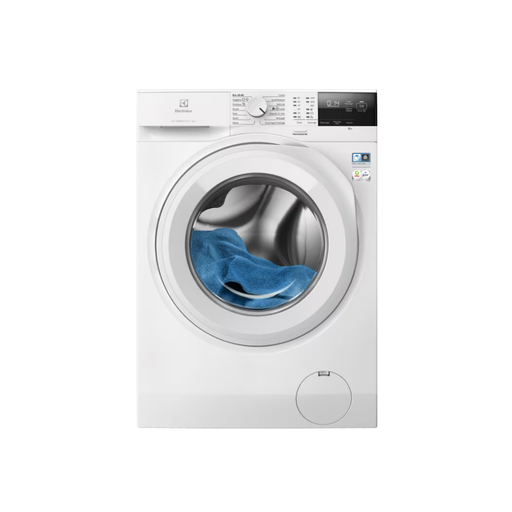 Image unavailable
Compare the 8 kg capacity with your regular loads rather than choosing it just for the occasional large wash.
Check the clearance needed for the door, then compare the Eco 40-60 figures, noise during spinning and the durability index for the exact model.
 Image unavailable
Consider this capacity if your usual loads are large and you regularly have to split them when using a smaller drum.
Pay particular attention to the depth and delivery route. The energy label and durability index for the EW7FI259160V will help you complete your comparison.
 Image unavailable
Compare this top-loading format with your everyday loads: 6 kg may feel restrictive if you regularly build up more washing than that.
Measure the clearance above the machine and check the energy label, including the Eco 40-60 programme duration and noise during spinning, as well as the durability index.
Compare 7 kg with the amount of dry laundry you usually have when you start a wash, rather than looking only at the number of people in your household. ADEME says this capacity is enough most of the time. If you regularly have to split your usual loads, consider a larger capacity.
When comparing washing machines, check the energy class, kWh per 100 Eco 40-60 cycles, litres per cycle, programme duration, spin performance and stated noise level. The Eco 40-60 programme gives you a common basis for comparison; check the figures for the exact model.
Yes. According to the Ministry of the Economy, the durability index has replaced the repairability index for front-loading and top-loading washing machines since 8 April 2025. Check the index and its criteria when comparing the models concerned, while also considering capacity, dimensions and consumption.
Yes. A top-loader is loaded from above, while a front-loader opens at the front, as the National Consumer Institute explains. Measure the space, the clearance needed to open the machine and the delivery route before choosing a format.
Confirm with the seller what’s included in the delivery and installation service, and whether they’ll take away your old appliance if you need them to. Also check the delivery route and the space available. In France, the Ministry of the Economy explains that the legal guarantee of conformity covers new, second-hand and refurbished goods sold by a business to an individual. This is separate from any commercial guarantee that may be offered.