What should you compare?
Front-loading
Consider it if: your loads vary in size and you have enough room to open the door.
Bear in mind: a large capacity is only useful if your usual laundry loads call for it. Check the dimensions of the model you’re considering, too.
Top-loading
Consider it if: you have limited width or prefer to load the machine while standing.
Bear in mind: check that the capacity can handle your larger loads and that there’s nothing in the way when you open the lid.
Washer-dryer
Consider it if: you need to wash and dry with one appliance because there isn’t room for two.
Bear in mind: you may not be able to dry a full wash load in one go. Also compare the figures for the wash-and-dry cycle with those for washing alone.
| Criteria | What to check | Who it matters to |
|---|
| Capacity |
Compare the kg of dry laundry with your usual loads, then check the load limits for the programmes you typically use. |
I want to wash my sheets without running several cycles, but I don’t need a large drum for every wash. Around 29% of consumers prioritise a capacity that suits their needs. |
| Water and electricity |
Compare the kWh/100 cycles, litres/cycle and Eco 40-60 programme duration shown on the energy label. |
I do laundry regularly and want to compare the stated consumption figures for different appliances, not just their energy classes. Around 21% of consumers put consumption first. |
| Noise and spin performance |
Check the spin noise in dB(A) and the spin efficiency class, rather than looking at spin speed in tr/min alone. |
The machine is near a room in use, or I rely on the spin cycle before drying clothes indoors. Around 21% of consumers prioritise the balance between noise and spin performance. |
| Durability |
For a washing machine covered by the French durability rating, check its score out of 10 and the criteria behind it for the exact model. |
I want to compare repair options and reliability criteria before replacing my appliance. Around 29% of consumers put durability first. |
The energy label provides declared figures you can use to compare models. For household washing machines covered by the scheme in France, the Ministry for the Ecological Transition states that the durability rating has replaced the repairability rating since 8 April 2025. It complements these figures rather than replacing them.
Washing machines to consider on Joybuy
These front-loading and top-loading models offer a range of capacities and formats for regular household laundry. If you also want to dry clothes in the same appliance, assess this option separately by comparing its washing and drying capacities.
 Image unavailable
Haier T Series 7 THASN276TM6-S, top-loading, 7 kg
Worth considering if you prefer to load laundry from the top and a 7 kg capacity suits your usual loads.
The product name lists 1,200 tr/min, an A energy class, steam and Wi-Fi. If noise matters to you, compare the spin noise level before you choose.
View on Joybuy
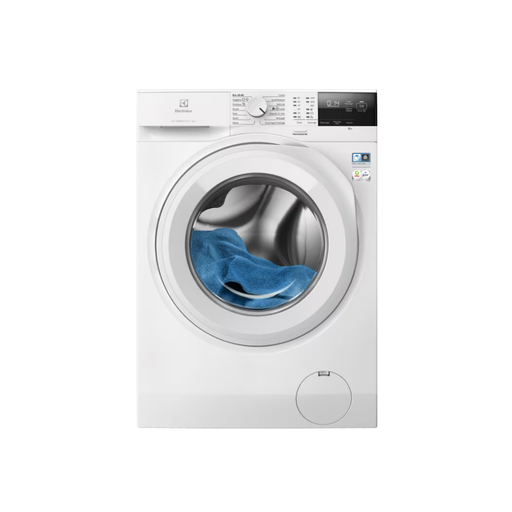 Image unavailable
Electrolux EW6FI4805AW, front-loading washing machine, 8 kg
Worth considering if your usual loads call for an 8 kg front-loader and you have enough room for the door to open.
The product name lists 1,400 tr/min, along with Steam Hygiene and SensiCare functions. Check the spin noise if the machine will be near a room in use.
View on Joybuy
 Image unavailable
Electrolux EW7FI259160V, front-loading washing machine, 9 kg
Worth considering if 9 kg loads suit your household laundry and regular washing.
The product name lists 1,600 tr/min, SteamCare, SmartSelect and a connected feature. Check the depth and the room needed to open the door before installation.
View on Joybuy
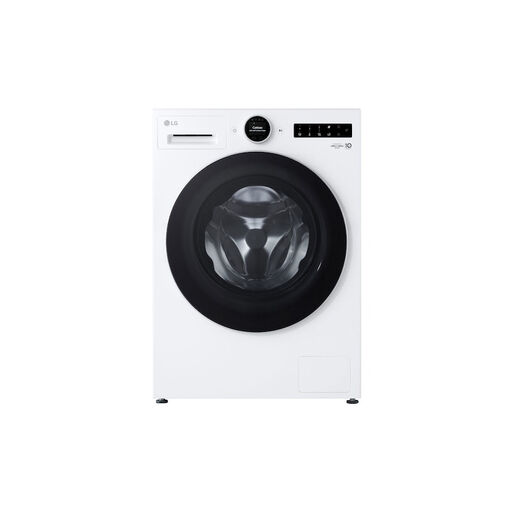 Image unavailable
LG F4WX851Y, front-loading washing machine, 11 kg
Worth considering if you regularly wash bulky loads. Not every household needs an 11 kg capacity.
The product name lists an A energy class. Measure the space where you plan to put the machine and check the dimensions of this model before buying.
View on Joybuy
 Image unavailable
Candy ProWash 500 TCA464TM4-S, top-loading, 6 kg
Worth considering if you want to load laundry while standing and 6 kg is enough for your usual loads, including the household laundry you wash regularly.
The product name lists 1,400 tr/min, a B energy class, Wi-Fi and 17 programmes. Compare its spin noise with the requirements of your chosen location.
View on Joybuy
Frequently asked questions
Should you check the durability rating of a new washing machine?
Yes. For household washing machines covered by the scheme in France, check the rating and the criteria behind it for the exact model. According to the Ministry for the Ecological Transition, the durability rating has replaced the repairability rating for washing machines since 8 April 2025. You’ll still need to check capacity, noise and consumption.
Is an A energy class enough to choose between two washing machines?
No. Also compare the kWh/100 cycles, litres/cycle and the Eco 40-60 programme duration shown on the energy label. These declared figures help you distinguish between models in the same class, according to what matters most to you.
Can you fill the drum to capacity on every programme?
No. The permitted load can vary depending on the fabric programme. If you often use wool or delicate cycles, check their load limits in the model’s manual rather than relying only on its stated capacity.
Can a washer-dryer dry an entire wash load?
Not always: compare its washing capacity with its wash-and-dry capacity. Bosch lists 9 kg and 6 kg respectively for the WNG24402FR, while Miele lists 9/6 kg for the WTW870WPM. If the load exceeds the drying limit, you’ll need to remove some laundry before starting that stage.


