
Livraison le jour même ou le lendemain

Qualité garantie

Débloquez vos offres de bienvenue: Livraison GRATUITE | Jusqu'à -80 % | 30 jours d'essai gratuits à JoyPlus
Téléchargez l'application
Buying a washing machine involves more than comparing price and spin speed. Between promises of artificial intelligence, steam programmes and advertised savings, some features can be difficult to interpret. A poorly sized appliance can also quickly become bulky, noisy or expensive to run.
Here are the criteria to review before buying, along with a selection of models suited to different household profiles in France.
A 10 or 11 kg washing machine can be an excellent choice for a family, but this capacity is only truly useful if you regularly wash large quantities of laundry. For a single person or couple, a 6 to 8 kg model will often be the more suitable option.
An oversized drum used for small loads also takes up more space without offering any practical day-to-day benefit. Conversely, overloading an 8 kg machine restricts the movement of the laundry and can compromise washing performance.
A 1,400 or 1,600 rpm spin cycle can extract more water before laundry goes into the tumble dryer, but this figure alone is not enough to assess a machine. Also check the spin-drying efficiency class, noise level and whether the spin speed can be adjusted for different fabrics.
In an apartment, a washing machine rated at 68 to 72 dB during the spin cycle may be far more comfortable to live with than a faster model that is significantly noisier.
A connected or Wi-Fi-enabled washing machine generally lets you monitor a cycle, schedule a delayed start or access additional programmes through an app. These features can be convenient, but they do not replace the essential criteria: dimensions, capacity, consumption, maintenance and connection quality.
Steam functions should also be assessed according to how you intend to use them. A refresh programme can reduce creases or odours on certain garments, but a full wash cycle is still essential for genuinely dirty laundry.
Always check the depth, width and height, and remember to allow enough room to open the door or lids. A front-loading washing machine also requires clear space in front of it. With its opening on top, a top-loading model can be easier to install in a narrow room, but it generally cannot be placed beneath a worktop.
The A energy class is now a useful benchmark for comparing appliances on a consistent basis. Consumption in kWh per 100 cycles provides a more detailed comparison: some product specifications, for example, list 33, 41, 44 or 51 kWh per 100 cycles.
Water consumption per cycle also deserves your attention, particularly if your household runs several loads each week. Compare these figures with the duration of the Eco 40-60 programme, as an economical cycle can be considerably longer than a quick programme.
A washing machine with an inverter motor adjusts the motor speed while reducing reliance on traditional mechanical components. Manufacturers often associate this technology with quieter operation and better-controlled energy consumption, but the stated noise level remains the most relevant figure when comparing appliances.
For an installation near a bedroom or in an open-plan kitchen, pay particular attention to:
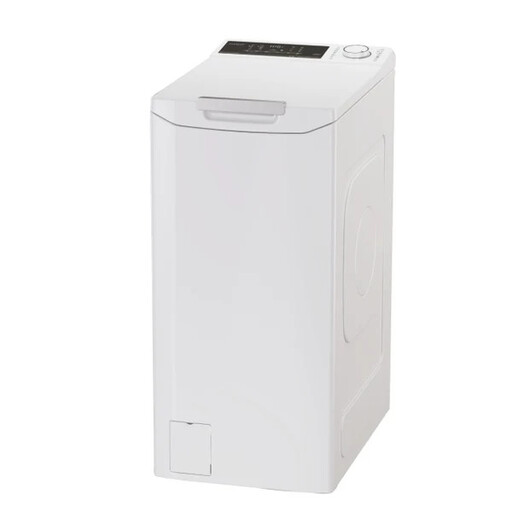
Why this model suits this profile: this 6 kg top-loading washing machine is suitable for smaller homes and households looking for a compact appliance with quick cycles.
The capacity and dimensions are clearly stated: 6 kg, 40.5 cm wide and 60 cm deep. Steam functionality is not advertised on this model, so you are not paying for an option it does not provide.
17 programmes, inverter motor, Wi-Fi and quick cycles ranging from 14 to 59 minutes. Its stated energy class is B.
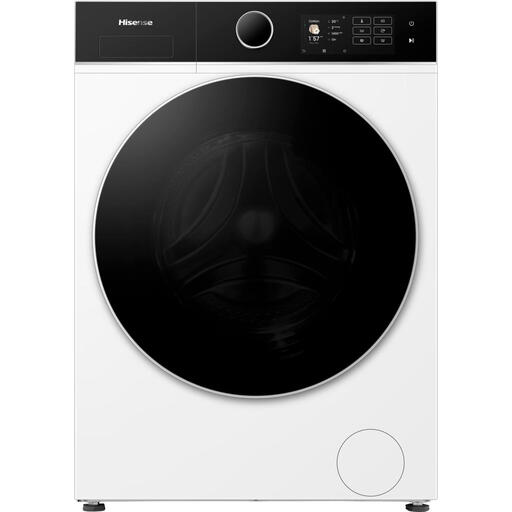
Why this model suits this profile: its stated depth of 47 cm makes it easier to install in a narrow bathroom or utility room.
The product specifications combine this compact format with an 8 kg capacity. You should still measure the skirting boards, pipes and door-opening angle.
A class, 33 kWh per 100 cycles, 38 litres per cycle, 1,400 rpm spin speed and Wi-Fi connectivity.
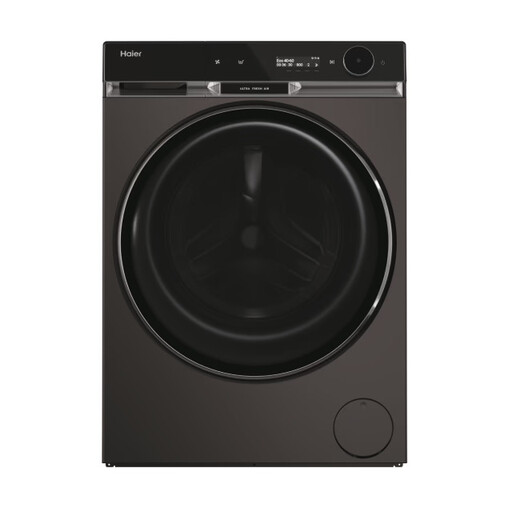
Why this model suits this profile: it is designed for households seeking to combine automatic dosing, steam, connected monitoring and quieter operation.
The highlighted features are accompanied by precise specifications: 10 kg capacity, 68 dB(A) during the spin cycle, 41 kWh per 100 cycles and 48 litres of water per cycle.
Direct-drive motor, AutoDose, steam programme, Wi-Fi, Bluetooth and dimensions of 595 × 850 × 611 mm.
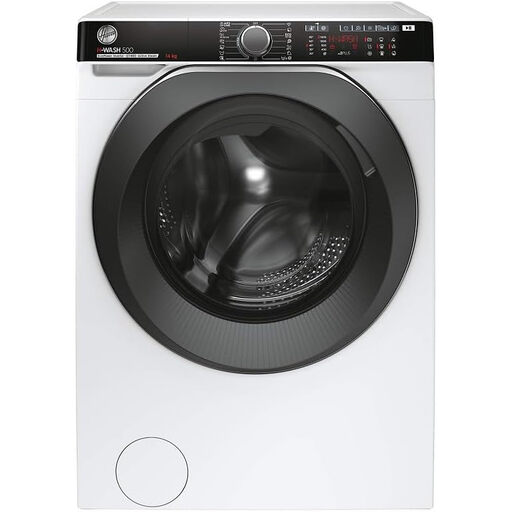
Why this model suits this profile: its 14 kg capacity is designed for large families and users who regularly wash bulky items.
The very large capacity is clearly stated, as is the 80 dB noise level. This allows you to check that the room and its acoustic environment are suitable before ordering.
14 kg capacity, 1,400 rpm, 16 programmes, stainless-steel drum and compatibility with a connected smart-home environment.
Browse our complete selection of washing machines and compare capacities, dimensions, features and consumption levels according to your household’s needs.
Before running your first wash, install the appliance on a stable, perfectly level floor. Remove the transit bolts from a front-loading model, connect the water inlet and drain correctly, then plug it into an earthed socket. Avoid using power strips and extension leads if the instruction manual advises against them.
To extend the life of your washing machine:
An 8 or 9 kg washing machine is generally sufficient for everyday family use. A 10 or 11 kg capacity becomes worthwhile if you frequently wash bed linen, towels or sportswear. Ultimately, how often you do laundry matters just as much as the number of people in the household.
Wi-Fi connectivity does not automatically reduce energy consumption. It makes it easier to monitor cycles, access certain programmes and track consumption. When comparing appliances, first look at consumption in kWh per 100 cycles and the number of litres of water used per cycle.
Service life depends on usage intensity, installation, maintenance and compliance with the maximum load. Sensible use, regular filter cleaning and checking the connections all help reduce the risk of premature breakdowns. Before buying, also check the warranty terms and the availability of replacement parts.