Which criteria should you prioritise?
First, decide which type can be installed in your home, then choose a capacity suited to your usual loads. The energy label will help you compare specific models on a like-for-like basis.
Front-loading
Consider it: if you have enough width and want the door to open in front of the machine.
Allow for: the clearance in front of the appliance, which matters just as much as its dimensions.
Top-loading
Consider it: if limited width is your main obstacle; UFC-Que Choisir says top-loading models are generally between 40 and 46 cm wide.
Bear in mind: UFC-Que Choisir notes that this type tends to have a more limited capacity; also check there’s enough room above the lid.
Washer-dryer
Consider it: if you can’t fit two appliances and want to dry your washing in the same machine.
Bear in mind: according to UFC-Que Choisir, drying capacity is lower than washing capacity, so you may need to split a washed load before drying it.
| Criteria |
What to check |
Who it matters to |
| Usable capacity |
Compare the stated capacity in kg with your usual loads and how often you do the washing. ADEME gives 7 kg as a suitable guide in most cases, but it isn’t a one-size-fits-all rule. |
If I want to combine a week’s worth of washing, I’m looking for a drum suited to that amount rather than a large capacity I’ll rarely use; around 31% of consumers would prioritise this. |
| Space and installation |
Measure the width, depth and height, allowing for the door to open; check the water supply, waste outlet and electrical socket. |
In a tight space, I need to be able to get the machine in, open it and connect it before choosing its features. This would be the priority for around 25% of consumers. |
| Energy use and durability |
Check the energy use per 100 cycles and water use per cycle on the exact model’s label; also look at its durability index where applicable. |
For regular washing, I want to compare the stated energy and water use and durability information rather than rely on the energy class alone; around 25% of consumers would put this trade-off first. |
| Spinning, noise and drying |
Compare the spin efficiency class and noise information; for a washer-dryer, check the washing and drying capacities separately. |
If the machine is near occupied rooms or I dry my washing indoors, residual moisture and noise become deciding factors. Around 19% of consumers would make this their top priority. |
Washing machines available on Joybuy
This selection includes a top-loading washing machine and front-loading models with capacities from 7 to 9 kg. Compare their capacity with your usual loads, then check the dimensions, energy label and installation requirements for each model.
 Image unavailable
Haier T Series 7 THASN276TM6-S, top-loading, 7 kg
Consider this model if the width available points you towards a top-loader and 7 kg suits your usual loads.
The product name lists a spin speed of 1,200 rpm and an A energy class. Check the clearance above the lid and the connections; if noise matters to you, compare its stated 77 dB with other models.
View on Joybuy
 Image unavailable
Hisense WF5I8043BWF, front-loading, 8 kg
The stated 8 kg capacity is worth considering if your laundry volumes call for loads larger than 7 kg.
The product name lists a spin speed of 1,400 rpm. Measure the available space, allowing for the door to open and the connections.
View on Joybuy
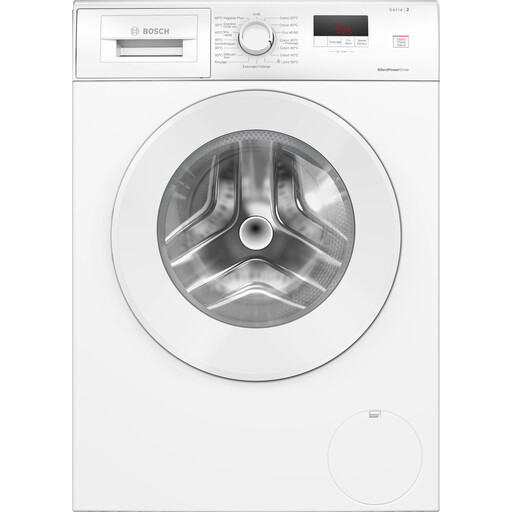 Image unavailable
Bosch WGE02407FR, front-loading, 7 kg
The stated 7 kg capacity matches the guide that ADEME considers sufficient in most cases, depending on your actual loads.
The product name lists a spin speed of 1,400 rpm and an A energy class. Check the model’s instructions to confirm the installation and connection requirements for your home.
View on Joybuy
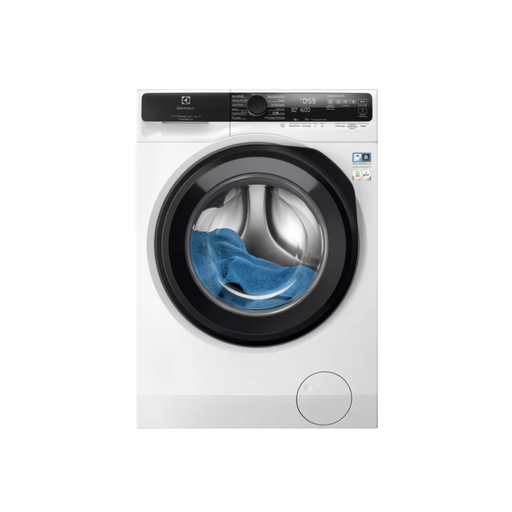 Image unavailable
Electrolux EW7FI259160V, front-loading, 9 kg
Consider the stated 9 kg capacity if you can regularly put together loads that make the most of it.
The product name lists a spin speed of 1,600 rpm, as well as SteamCare, SmartSelect and connectivity features. Check the spin efficiency class on the energy label: maximum speed alone isn’t enough to compare results.
View on Joybuy
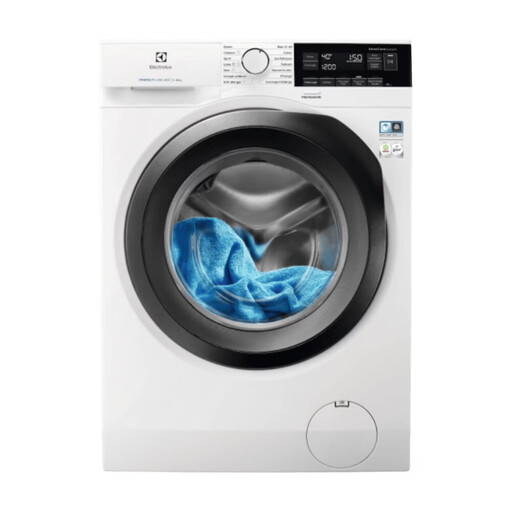 Image unavailable
Electrolux EW6F3811RC, front-loading, 8 kg
Compare the stated 8 kg capacity with the amount of washing your household actually does in each cycle.
The product name lists a spin speed of 1,400 rpm and a C energy class. If the machine is near your living areas, bear in mind its stated spin noise level of 78 dB and compare the label for the exact model.
View on Joybuy
Frequently asked questions
What capacity should I choose to avoid doing lots of small loads?
According to ADEME, a 7 kg washing machine is enough in most cases, but your usual laundry volume is what matters most. If you regularly combine larger amounts of washing or wash bulky items, compare larger capacities after checking the dimensions.
What should I compare on a washing machine energy label?
Compare the A to G energy class, energy use per 100 cycles, water use per cycle, cycle duration, spin performance and noise. The European Commission lists these indicators for washing machines; use the figures for the exact model rather than relying on its energy class alone.
What is the purpose of a washing machine durability index in France?
It adds a score out of 10 to help you compare models, based in particular on repairability and reliability, without replacing capacity or installation criteria. According to the French Ministry for Ecological Transition, this index has been gradually replacing the repairability index for washing machines since 8 April 2025; check the information displayed for the model you’re considering.
What should I check before installing a washing machine?
Check the route to the installation spot, the appliance’s dimensions and door clearance, then make sure there’s an electrical socket, water supply and waste outlet. UFC-Que Choisir also recommends checking the available installation space; the specific requirements are set out in the model’s instructions.
Can a washer-dryer dry all the washing it has just washed?
Not necessarily: UFC-Que Choisir says that drying capacity is lower than washing capacity. Compare the two figures for the model and be prepared to remove some of the washing if the load is larger than its drying capacity.


