Which criteria should you prioritise?
Start with your usual loads, then check what the programmes can handle and the conditions for using the model you’ve chosen.
| What matters |
What to check |
Who is it for? |
| Capacity and combining loads |
Compare the capacity in kg of dry laundry with the amount you actually accumulate, especially sheets and towels. Que Choisir’s guide is 5 to 7 kg for one person or a couple, and 8 to 9 kg for three or four people. |
When my laundry baskets fill up quickly, I want to wash everything together without needing to run an extra cycle. Around 36% of consumers put the match between capacity and their usual loads at the heart of their decision. |
| Load limits for each programme |
Check the manual for the load limits of the synthetic, wool, delicates and quick programmes you plan to use. |
If I often wash different fabrics separately, the stated capacity doesn’t tell me how much I can put in each load. For around 29% of consumers, the priority is finding programmes suited to these separate loads. |
| Noise, spin performance and cycle time |
Compare spin noise in dB, the spin-drying efficiency class and the duration of the Eco 40-60 programme for each model. |
I need to be able to run a wash without the spin cycle being too disruptive, while also considering how much laundry will need to dry afterwards. For around 21% of consumers, the main priority is finding the right balance between noise, spin performance and cycle time. |
| Access to the drum |
Once you’ve chosen a capacity, check the clearance in front of a front-loader or above a top-loader, as well as the dimensions of the exact model. |
If access through the door or from above affects how I load the laundry, I want a practical design without compromising on the capacity I need. Around 14% of consumers make ease of access their top priority. |
Choose the style after you’ve settled on the capacity: according to Que Choisir, top-loading washing machines generally don’t exceed 8 kg. If you’re considering a washer-dryer because you’ll find the built-in drying function useful, compare its washing and drying capacities separately, along with the figures for the complete cycle.
Washing machines to compare on Joybuy
These front-loading and top-loading models cover capacities of 7, 8 and 10 kg. Compare them with the amount you wash regularly: the 10 kg model is mainly suited to frequent large loads, while a top-loader may help you choose between more moderate capacities.
 Image unavailable
Haier T Series 7 THASN276TM6-S, 7 kg top-loader
Consider this model if a 7 kg capacity suits your loads and you prefer loading laundry from above. The model name indicates a maximum spin speed of 1 200 tr/min and an A energy class. Check the manual for the load limits of the programmes you use most. If noise matters to you, also compare its stated spin noise level of 77 dB(A) with that of other models.
View on Joybuy
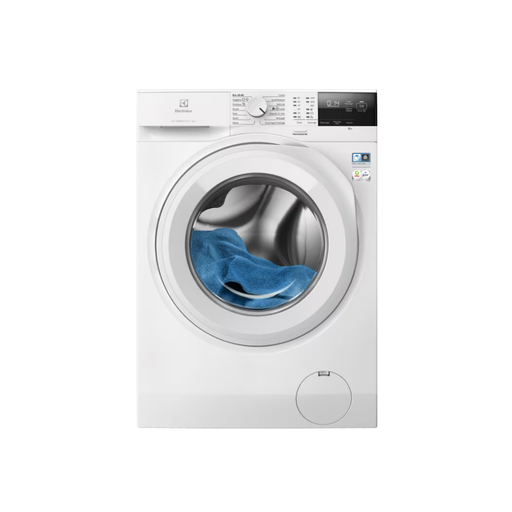 Image unavailable
Electrolux EW6FI4805AW, 8 kg front-loader
Compare this model if your regular loads are close to 8 kg and a front-loader suits you. The model name indicates SensiCare and a maximum spin speed of 1 400 tr/min. If you wash different fabrics separately, check the manual for the permitted loads. Also check the model’s Eco 40-60 cycle time if that’s part of your decision.
View on Joybuy
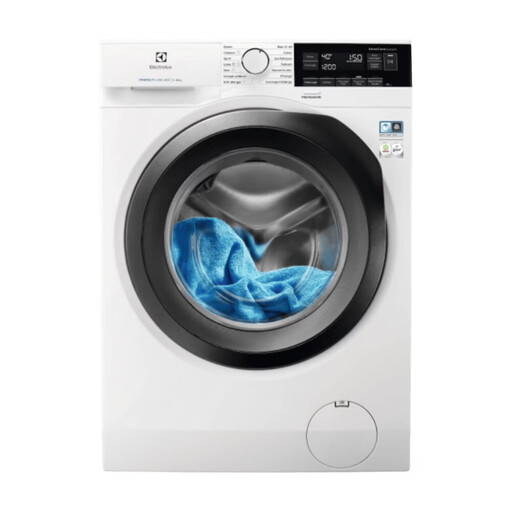 Image unavailable
Electrolux EW6F3811RC, 8 kg front-loader
Another 8 kg option to consider if you regularly sort your laundry into separate loads. The model name indicates a maximum spin speed of 1 400 tr/min and a C energy class. Check the load limits for the programmes you plan to use. For a better picture of everyday running costs, also check the water per cycle, kWh per 100 cycles and Eco 40-60 cycle time on the model’s label.
View on Joybuy
 Image unavailable
Haier X Series 11 HW100-BD14397PGU1, 10 kg
Consider this model if you regularly wash large loads, rather than just the occasional bulky item. Its name indicates a 10 kg capacity, a maximum spin speed of 1 400 tr/min and an A energy class. Before choosing this capacity, compare it with your usual loads and check the maximum loads for the programmes you use when washing different fabrics separately.
View on Joybuy
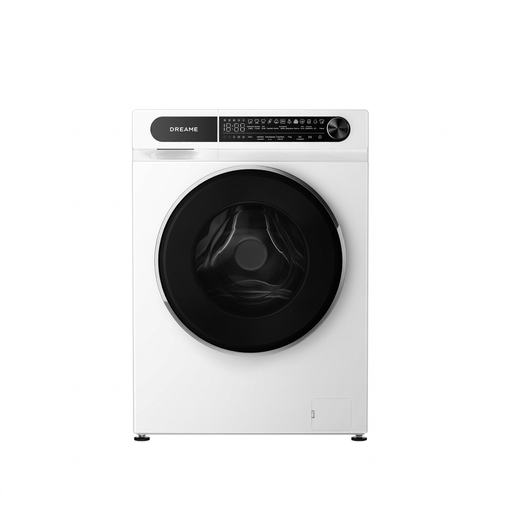 Image unavailable
Dreame DRWASHS8KG Washing Machine S, 8 kg
Compare this model with other 8 kg options if that capacity suits your usual loads. To check whether your cycles will be sufficiently full, look up the load limits for the programmes you use most. Also check the Eco 40-60 cycle time and, if you want automatic load adjustment, the features specified for this model.
View on Joybuy
Frequently asked questions
Does the capacity in kilograms refer to wet laundry?
No. The stated capacity refers to the weight of dry laundry for the relevant reference cycle. To plan your washes, compare this figure with your usual loads and check the manual for the limits of other programmes.
Can you put 8 kg of laundry in every programme on an 8 kg model?
No. Que Choisir gives the example of an 8 kg model with limits of 3.5 kg for synthetics, 3 kg for jeans and 2 kg for wool. These limits vary by model, so check the manual for the fabrics you wash most often.
What should you compare on the energy labels of two washing machines?
Compare the figures for the exact models, including kWh per 100 cycles, water per cycle, the Eco 40-60 cycle time and spin noise. These details complement the capacity figures, but they can’t tell you on their own whether your laundry baskets will fill the drum.
Should you check the durability index in France?
Yes, when you’re choosing between comparable models. ADEME says the requirement to display this index has also applied to washing machines in France since April 2025. Consider it alongside capacity, programmes and the energy label, rather than as a replacement for these practical factors.
Is washing capacity enough to choose a washer-dryer?
No, if you also plan to use the built-in drying function. Check the drying capacity separately, along with the information for the complete wash-and-dry cycle. These address a different need from reducing the number of half-load washes you run.


