For regular laundry, start by considering the loads you need to wash and whether you can install an appliance at home. A front-loading or top-loading machine may suit you, depending on the space available and how you prefer to load it. Check the washing and drying specifications separately for a washer-dryer, and consider a laundrette if installing a machine at home isn’t possible. To compare specific appliances, check the energy label, spin-cycle noise level and, in France, the durability index.
Who is this choice for?
Households that regularly wash large loads
The capacity should match the laundry you actually wash, so you don’t need to run unnecessary extra cycles or choose an oversized drum. ADEME says a 7 kg washing machine is enough for most households, while recommending that you choose a capacity to suit your needs.
People in small homes or who are sensitive to noise
Width isn’t the only thing to consider: measure the depth, the space needed to open the machine and the position of the connections too. If the machine is near a living space, compare its spin-cycle noise level and make sure the floor provides a stable surface for installation.
Shoppers thinking about how long they’ll use their appliance
To compare specific models in France, check the durability index and its criteria, then look at the information provided about repairs and after-sales service. According to the French Ministry of the Economy, the index has applied to front-loading and top-loading washing machines since 8 April 2025.
What should you check?
Front-loading washing machine
Consider it: if the space available and a front-opening door suit the capacity you’re looking for.
Bear in mind: measure the depth and clearance needed, not just the width.
Top-loading washing machine
Consider it: if space is limited widthways and you’re happy to load your laundry from the top.
Bear in mind: leave enough room above the machine to open the lid. Capacity varies by model.
Washer-dryer
Consider it: if having one appliance that washes and dries is your priority.
Check: the capacities and energy-use figures for washing and for a complete wash-and-dry cycle on the model you’re considering.
Laundrette
Consider it: if your home doesn’t allow you to install an appliance in line with its instructions.
Bear in mind: you’ll need to do your laundry away from home instead of having a machine on site.
| Criterion |
What to check |
Who should prioritise it? |
| Capacity |
Compare the stated capacity in kg with your usual loads, including any bulky items you actually wash. |
If I do laundry regularly, I want to avoid running extra cycles without choosing an unnecessarily large drum. Around 29% of consumers would prioritise getting the capacity right. |
| Installation |
Measure the space and clearance, then check the connections and the model’s instructions. |
If space is limited, the appliance needs to fit in your home and be installed correctly. This would be the main priority for around 29% of consumers. |
| Noise and energy use |
On the model’s energy label, compare spin-cycle noise, energy use per 100 cycles and water use per cycle, using the same basis of measurement. |
If the machine is near a living space, I want to take noise into account while keeping an eye on the water and energy used for laundry. Around 24% of consumers would put these day-to-day considerations first. |
| Durability |
For front-loading or top-loading washing machines covered by the scheme in France, check the durability index and its criteria. Also look at the service information for the specific model. |
If I’m planning to keep my appliance for a long time, I want to understand how easy it is to repair before I choose. This would be the priority for around 18% of consumers. |
Mistakes to avoid
-
Choosing the biggest drum without considering your loads
A large capacity is only useful if it suits the laundry you wash. ADEME recommends starting with your actual needs and says that 7 kg is enough for most households.
Make a note of the size of your usual loads and any bulky items you wash at home before comparing capacities.
-
Relying on the stated noise level alone
A model’s noise rating doesn’t tell you everything about vibrations after installation. Electrolux lists incorrect levelling, transport bolts left in place and an unbalanced load among the possible causes of shaking during the spin cycle.
Follow the instructions to remove the transport bolts and level the machine. Distribute the laundry evenly and don’t overload the drum.
-
Taking the durability index as a promise of a long lifespan
According to the DGCCRF, the index brings together repairability and reliability criteria. Its score doesn’t predict the lifespan of any particular appliance.
Compare the score and its criteria for the exact models you’re considering, then check the service information and applicable warranties separately.
-
Ordering before measuring the space
Washing machines can vary in size and installation requirements. Access to connections and room to open the machine matter just as much as the floor space it takes up.
Measure the available space and check the water inlet, drainage and clearances in the instructions for the model you’re considering.
Brands to compare when looking at specific models
Bosch
Bosch offers a range of front-loading washing machines. The WUU28T18FR provides a useful comparison for an 8 kg model.
- According to Bosch, the WUU28T18FR measures 845 × 598 × 590 mm and has a spin speed of 1 400 rpm.
- These dimensions and this capacity apply to the WUU28T18FR only. Check the specifications for any other model.
Electrolux
The EW6T3264AK is an example of a top-loading model for homes where available width is a key consideration.
- According to Electrolux, this 6 kg model measures 890 × 400 × 600 mm.
- A top-loading design doesn’t determine capacity or noise level on its own. Compare the figures for each model.
Miele
The front-loading WCA120 WCS 8kg Active lets you compare the stated specifications of a specific model.
- Miele lists a capacity of 8 kg, energy rating A, energy use of 43 kWh per 100 cycles and a spin-cycle noise level of 72 dB for this model.
- These figures don’t apply to other Miele models and don’t guarantee how noisy the machine will seem once installed.
Front-loading and top-loading washing machines on Joybuy
These front-loading and top-loading models let you compare capacities and formats for regular laundry. Before choosing, check that each model suits your loads and the installation requirements of your home.
 Image unavailable
Electrolux EW7FI259160V SteamCare SmartSelect, 9 kg
Consider this front-loading model if your usual loads call for a 9 kg capacity and it’s suitable for installation in your home.
Stated spin speed: 1 600 rpm; connected model. Check the clearance and connections in the instructions.
View on Joybuy
 Image unavailable
Bosch WGE02407FR, 7 kg
This front-loading model is worth comparing if a 7 kg capacity suits your regular loads.
Stated spin speed: 1 400 rpm; energy rating A. Check the depth required, including the door and clearances specified in the instructions.
View on Joybuy
 Image unavailable
Haier T Series 7 THASN276TM6-S, 7 kg
Consider this top-loading model if loading from above is a better fit for your space.
Stated spin speed: 1 200 rpm; energy rating A; steam and Wi-Fi functions. Check the space needed to open the lid and the spin-cycle noise level before choosing.
View on Joybuy
 Image unavailable
Candy TCA464TM4-S ProWash 500, 6 kg
This top-loading model may suit you if a 6 kg capacity meets your needs and you have enough room to open the lid.
Stated spin speed: 1 400 rpm; energy rating B; Wi-Fi and 17 programmes. If the machine is near a living space, compare its spin-cycle noise level too.
View on Joybuy
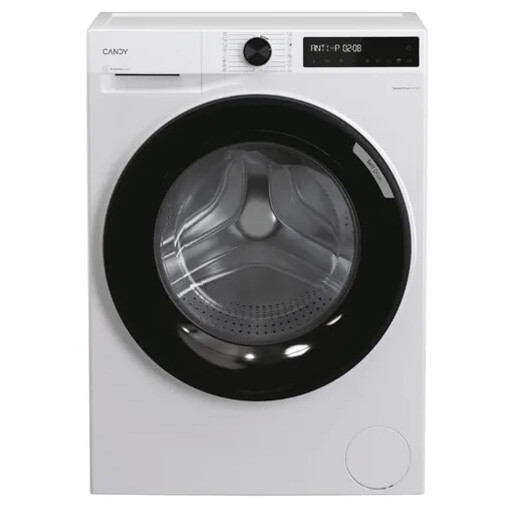 Image unavailable
Candy BR 411BL9-S, 11 kg, white
Compare this 11 kg front-loading machine with the size of your usual loads. Doing laundry regularly doesn’t necessarily mean you need this much capacity.
Energy rating A. Before ordering, check the dimensions and connections in the model’s instructions.
View on Joybuy
Frequently asked questions
Does the repairability index still apply to washing machines in France?
For front-loading and top-loading washing machines, the durability index replaced the repairability index on 8 April 2025, according to the French Ministry of the Economy. It is scored from 0 to 10 and includes repairability and reliability criteria. Check the details for the model you’re considering.
Which connections should you check before buying a washing machine?
Check the water inlet, drainage, power supply and required clearances in the instructions for your chosen model. Also check your existing connections in person: information about another appliance isn’t enough to confirm that the new one will be compatible.
Why might a washing machine vibrate even if its stated noise level is moderate?
The stated noise level doesn’t account for every installation and loading condition. Electrolux lists transport bolts left in place, incorrect levelling and an unbalanced or overloaded drum among the possible causes of vibration. Follow the instructions for your model.
What statutory guarantee applies to a washing machine bought from a trader?
In France, the statutory legal guarantee of conformity applies to goods sold by a trader to a consumer, including new, second-hand and refurbished appliances, under the conditions set out by the French Ministry of the Economy. It covers lack of conformity; don’t confuse it with a commercial warranty offered by the seller or manufacturer.


