Households with a narrow bathroom or kitchen
When width, depth or access is limited, choosing between a top-loader, standard front-loader and slim front-loader directly determines whether the machine will fit your installation.


Start by measuring the available width, depth, height and clearance for opening the door or lid. Then choose a capacity suited to your usual loads rather than occasional use. According to Que Choisir, a top-loading washing machine is particularly suitable when width is limited to around 40 to 46 cm, while a front-loading model generally requires around 60 cm of width and enough clearance for the door. For a household of 3 to 4 people, 8 to 9 kg is usually sufficient.
When width, depth or access is limited, choosing between a top-loader, standard front-loader and slim front-loader directly determines whether the machine will fit your installation.
Sheets, throws, thick duvets and frequent washing help you assess whether a 10 to 12 kg capacity meets your everyday needs rather than an occasional requirement.
A capacity that matches your regular laundry helps you avoid both running too many cycles and leaving the drum only partly filled.
Measure the space first, then choose the capacity and compare the practical specifications of models that can genuinely be installed there.
| Priority | What to check | Your needs |
|---|---|---|
| Size and loading | Measure the width, depth, height, delivery access routes and opening clearance. A top-loader is around 40 to 46 cm wide, while a front-loader generally requires around 60 cm of width. If depth is limited, check slim front-loaders advertised at around 33 to 45 cm deep. | I need to be able to install and load the machine without blocking a passage or preventing the door or lid from opening. |
| Suitable capacity | Compare the capacity with the loads you actually wash each week. Que Choisir states that 8 to 9 kg is generally sufficient for a household of 3 to 4 people. Consider 10 to 12 kg when large loads are frequent. | My laundry is mostly everyday washing, or sheets, throws and bulky textiles are regularly part of the load. |
| Energy, water and noise | For appliances with comparable types and capacities, look at the energy class, kWh per 100 cycles, litres per cycle, the duration of the reference programme, spin noise and spin-drying class. | I want to compare the practical trade-offs, particularly if the machine is near a living area or laundry often dries indoors. |
| Durability and repairability | To distinguish between compatible models, check the displayed durability index and its breakdown. The French ministry responsible for ecology states that this index has applied to washing machines sold in France since 8 April 2025. | I prefer to consider repairability, maintenance and spare parts alongside the dimensions and capacity. |
A front-loader also needs sufficient depth and clearance for the door, while a top-loader requires enough headroom to open its lid. A machine that fits the space may still be difficult to load or maintain.
Measure the width, depth, height, delivery access routes and opening clearance before comparing models. Check the dimensions of the exact product, including the door or lid.
A large capacity is mainly useful when large loads are a regular occurrence. It does not replace a capacity suited to smaller loads, delicate laundry or separate loads.
Monitor the contents of your laundry loads for one or two weeks. Choose 10 to 12 kg when large loads come up often, and 12 to 15 kg for very bulky textiles washed regularly.
An oversized drum that is rarely full may result in higher water and electricity consumption.
The class letter does not tell you everything about water consumption, programme duration, noise or spin performance. Two appliances that fit the same space may offer different practical trade-offs.
For comparable models, consider the kWh per 100 cycles, litres per cycle, the duration of the reference programme, spin noise and spin-drying class together.
Dimensions and capacity alone do not tell you about factors linked to service life, maintenance, spare parts and repairability.
When choosing between two compatible models with similar practical specifications, check the displayed durability index and its breakdown before making your decision.
A brand worth comparing among the models available in France when you are looking for a front-loader or top-loader that fits your measured dimensions.
Worth comparing across front-loading washing machine ranges and other formats that fit your available space.
A brand to compare with other compatible models when the available space and capacity are the same.
A brand worth comparing for French shoppers, particularly in the top-loading washing machine segment suited to narrow spaces.
A brand worth comparing when several top-loaders or front-loaders meet the same space requirements.
These Joybuy options cover 8 to 10 kg front-loading washing machines, including several reduced-depth models for homes with around 60 cm of available width.
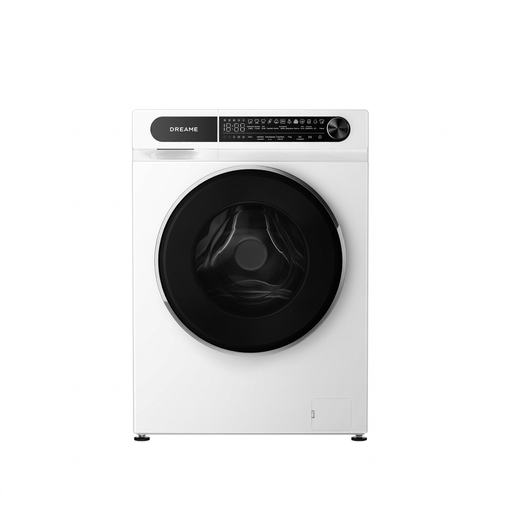 Image unavailable
An 8 kg front-loader for a 60 cm-wide space with limited depth.
Advertised dimensions: 600 × 450 × 840 mm. Class A, 47 kWh/100 cycles, 43 L/cycle, 74 dB during spinning, spin-drying class C and durability index 8/10.
Check the clearance needed in front of the door; the capacity may be limiting if thick duvets are a frequent part of your laundry.
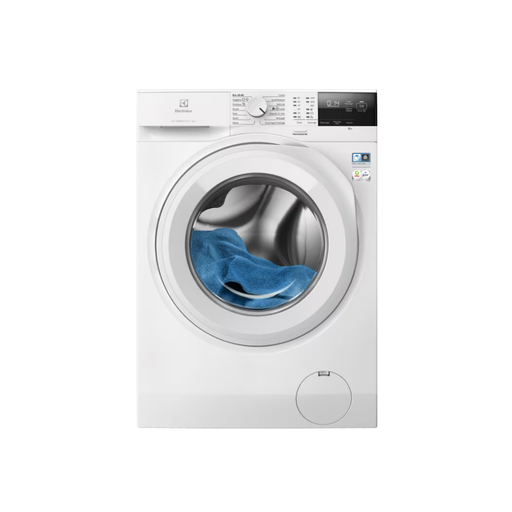 Image unavailable
An 8 kg option for the regular laundry needs of a household with a standard front-loader space.
Advertised dimensions: 847 × 596 × 576 mm. Class A, 47 kWh/100 cycles, 43 L/cycle, 75 dB during spinning, spin-drying class B and durability index 8.4/10.
Measure the depth including the connections and allow enough clearance in front of the door.
 Image unavailable
This 8 kg model combines a width of 595 mm with an advertised depth of 470 mm.
Advertised dimensions: 595 × 470 × 845 mm. Class A, 33 kWh/100 cycles, 38 L/cycle, 72 dB during spinning and spin-drying class B.
Check the space needed for the door and connections, as well as the durability index displayed for sale in France.
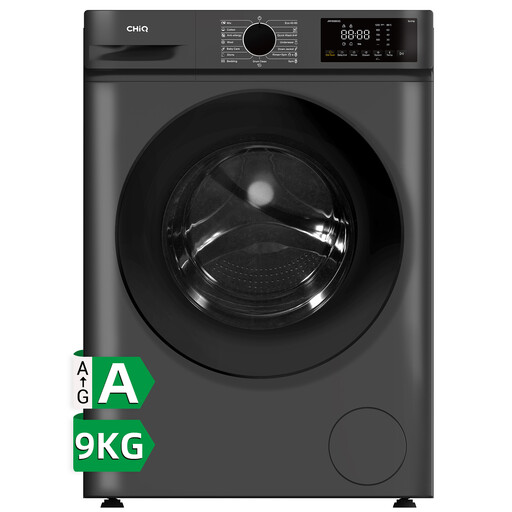 Image unavailable
A 9 kg front-loader advertised with a depth of 465 mm for regular, substantial loads.
The product sheet specifies energy class A, a spin speed of 1400 rpm, a BLDC motor and 16 programmes.
Check the width, height, space in front of the machine, full energy label and durability index before installation.
 Image unavailable
A 10 kg capacity to consider when large loads genuinely come up often.
Advertised width: 595 mm; advertised depth: 611 mm. Class A, 41 kWh/100 cycles, 48 L/cycle, 68 dB during spinning and spin-drying class B.
Its depth requires a sufficiently deep space. Also check the durability index and the clearance needed in front of the door.
No. According to Que Choisir, a top-loader is particularly suitable when the available width is around 40 to 46 cm or when there is not enough room to leave clearance in front of a door. With 60 cm of width but limited depth, a slim front-loader measuring 33 to 45 cm deep may be another solution, provided its capacity, often around 4 to 6 kg, is sufficient.
A capacity of 8 to 9 kg is generally sufficient for this household size, according to Que Choisir. Move up to 10 to 12 kg when large loads are frequent and laundry cycles follow one another. A capacity of 12 to 15 kg is mainly justified for bulky textiles washed regularly.
No. A large drum that is only partly filled can result in unnecessary consumption. Compare the energy label information for compatible models, particularly kWh per 100 cycles, litres per cycle, programme duration, noise and spin performance, then choose a capacity based on your usual loads.
Compare the energy class, energy consumption per 100 cycles, water consumption per cycle, programme duration, noise and spin-drying information. The European Commission explains that efficiency, duration and water requirements for washing machines relate in particular to the eco 40-60 programme.
Yes. The French ministry responsible for ecology states that the durability index has applied to washing machines in France since 8 April 2025. Presented on a scale of 10, it provides information relating in particular to repairability, reliability, spare parts, maintenance and resistance to wear.