Which criteria should you check first?
First decide which loading style will work in your space. Then compare capacity, noise and consumption information across the models that can actually be installed there.
Top-loading
Consider it: if width is limited or opening a front-loader’s door would block the way.
Bear in mind: the lid needs enough clear space above it, and the capacity must suit your laundry needs.
Front-loading
Consider it: if there’s enough room and access in front of the door, particularly if the machine will go beneath a worktop.
Bear in mind: if depth is limited, a slimline front-loader may be an option, but check its capacity and make sure you can still open the door.
| Criteria |
What to check before buying |
Who this matters to |
| Size and loading access |
Measure the available width, depth and height, then check how the door or lid opens and how much room the connections need in the model’s manual. |
In a narrow kitchen, I need to be able to load the laundry without blocking the way. Around 36% of consumers are said to prioritise size and access. |
| Noise and stability |
Compare the stated spin-cycle noise level in dB and check the model’s installation and levelling instructions. |
Near a bedroom, I want to minimise disruption during the spin cycle without assuming that a dB figure predicts how it will sound in my home. Around 29% of consumers are said to prioritise noise and stability. |
| Washing capacity |
Match the capacity in kg to your usual loads and check the limits for the programmes you use. |
If I often wash sheets and towels, I want to avoid splitting every load. Capacity is said to be the main concern for around 21% of consumers. |
| Consumption and durability |
Once you’ve found a suitable format, check the energy label, consumption for the reference programme and the durability index, where applicable. |
For a machine I use regularly, I want to compare its usage information without overlooking how well it fits in my home. Around 14% of consumers are said to prioritise consumption and durability. |
Washing machines to explore on Joybuy
These models give you a top-loader to consider if access in front of the machine is restricted, plus two front-loaders for larger laundry loads. Their inclusion here doesn’t replace checking the dimensions, door clearance and installation requirements for each model.
 Image unavailable
Candy TCA464TM4-S ProWash 500, 6 kg top-loading washing machine
Consider a top-loader if access in front of the machine is limited and a 6 kg capacity suits your laundry needs.
The product title lists a spin speed of 1,400 rpm and a B energy rating. Check the depth with the connections in place and allow enough height to open the lid. Its stated spin-cycle noise level of 79 dB doesn’t predict how noisy it will be in your home.
View on Joybuy
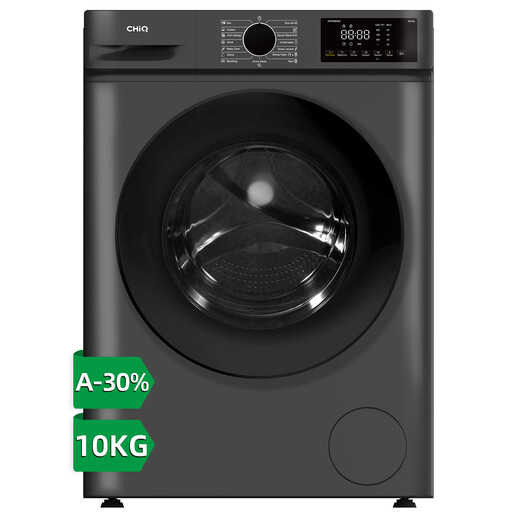 Image unavailable
CHiQ JW105883G, 10 kg front-loading washing machine, dark grey
Its stated 10 kg capacity may suit a household that regularly washes large loads, provided the machine fits and there’s enough room to open the door.
The title lists a spin speed of 1,400 rpm. Before choosing this model for a kitchen or a room near a bedroom, check its external dimensions, installation instructions and spin-cycle noise level.
View on Joybuy
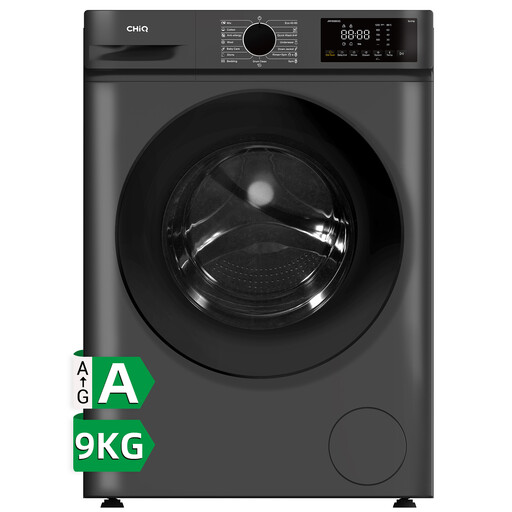 Image unavailable
CHiQ JW95883G, 9 kg front-loading washing machine, dark grey
Consider this 9 kg front-loader if you regularly wash loads of this size and have convenient access to the door.
The title lists a spin speed of 1,400 rpm. Before planning an alcove, confirm the exact external dimensions in the technical details: the information associated with 465 mm doesn’t refer to the same measurement. Also check the spin-cycle noise level and installation requirements for your space.
View on Joybuy
Frequently asked questions
Is a top-loading washing machine always suitable for a narrow bathroom?
No. A top-loader can solve a problem with limited width or access in front of the machine, but you still need enough room to open the lid. UFC-Que Choisir says this format is commonly around 40 to 46 cm wide. If you have enough width but not much depth, consider a slimline front-loader too, and check its exact dimensions.
What should you check before your washing machine is delivered?
Check the route into the room, the machine’s dimensions and door clearance, the connections and the installation requirements in its manual. Bosch’s installation instructions cover the installation location, removing the transit bolts, connecting the machine and levelling it. Follow the instructions for the model you buy.
How should you compare the noise of two models near a bedroom?
Compare their stated spin-cycle noise emissions in dB and their noise classes, but don’t assume these figures predict how disruptive they’ll be in your home. Also check the installation and levelling instructions for your chosen model.
Is the energy label enough to choose between two washing machines?
No. It helps you compare consumption, but it doesn’t confirm whether you’ll have easy access to load the machine or whether the capacity is right for you. The Ministry for the Ecological Transition describes an energy rating from A to G. Check this, and the durability index where applicable, once you’ve found models that can be installed in your home.
Will a larger capacity necessarily mean fewer cycles?
No. A larger capacity is only useful if it suits your usual loads and the machine fits the room. UFC-Que Choisir notes that the wrong capacity can mean running more cycles or underusing the drum. Also check the load limits for the programmes you use.


