First, choose a washing machine that will fit and open in the space available, then match its capacity to the size of your usual loads. A slim front-loader is best when depth is limited, while a top-loader keeps the space in front of the machine clear. A mini washing machine is a back-up option if a standard model cannot be installed. If your laundry baskets are often full, a small-capacity machine may mean running more cycles. But a large drum that is rarely full is not necessarily a better choice.
Who are these options for?
Households short on depth or clearance
In a kitchen, bathroom or narrow hallway, you need to check not only that the machine fits, but also that its door can open and there is still enough room to get past. UFC-Que Choisir distinguishes between front-loaders with reduced depth and top-loading models.
Households that regularly wash large loads
Bedding, towels and clothes can quickly fill the laundry basket. The machine’s capacity should help you avoid extra cycles without pushing you towards a drum that is much larger than your usual loads require. UFC-Que Choisir and ADEME recommend basing your choice on the laundry you actually wash.
Renters who have yet to confirm where the machine will go
An empty space is not necessarily suitable for a washing machine. Check the water supply, drainage, power supply and the model’s installation instructions. If installation involves altering the property or its fittings, ANIL advises getting the landlord’s written consent.
How do the different formats compare?
Choose a format based on the space available, the clearance needed to open it and whether it can be connected. Then choose the capacity that suits your most frequent laundry loads.
Standard front-loader
Consider it: if the width, depth and space in front of the door allow for installation, especially if you regularly wash large loads.
The trade-off: the door needs to open without blocking the way.
Slim front-loader
Consider it: if there is room for a front-loader but not enough depth. UFC-Que Choisir describes slim models as around 33 to 45 cm deep.
The trade-off: they generally have a smaller capacity, and the door still needs space to open in front of the machine.
Top-loader
Consider it: if width or clearance in front of the machine is the main constraint. UFC-Que Choisir puts the width of this format at around 40 cm.
The trade-off: the lid needs room above it to open, and the capacity may not be enough for very large, regular loads.
Mini washing machine
Reserve it for: situations where it is impossible to install a standard washing machine.
The trade-off: capacities of around 2 to 3 kg, as described by UFC-Que Choisir, make these machines a back-up option. They are not well suited to large laundry baskets or bulky items.
| Factor |
What to check |
Who is it for? |
| Size |
Measure the alcove and the route to get the machine into place, then allow for the installation clearances and opening space specified for the model. |
When every centimetre counts, I want the machine to fit without blocking the way or preventing it from opening; around 31% of consumers would prioritise its size. |
| Capacity |
Compare the capacity in kg with your usual loads, rather than with an occasional oversized wash. |
If my laundry baskets are often full, I want to avoid running repeat cycles without choosing a drum I’ll rarely fill; capacity would be the top consideration for around 31% of consumers. |
| Access to the drum |
Check the clearance needed for the door on a front-loader or the space above the lid on a top-loader. |
In a narrow room, I need to be able to load the washing while keeping the way through clear; around 23% of consumers would prioritise easy access. |
| Installation options |
Before considering a back-up appliance, make sure the space is suitable for the connections and follow the installation instructions. |
If no standard space is suitable, I want a way to wash small loads despite the extra cycles; around 15% of consumers would put the possibility of installation ahead of other factors. |
What should you look out for before buying?
-
Measuring the space, but not the opening
A front-loader may fit in its space but be awkward to use if its door blocks the way. A top-loader avoids a door opening outwards, but its lid needs room above it.
Measure the delivery route and check the instructions for installation clearances and the space needed for the door or lid to open.
-
Assuming a bigger drum always means fewer washes
A high capacity can be useful if you regularly wash large loads. But if most of your loads are small, that advantage may disappear. UFC-Que Choisir and ADEME recommend matching capacity to the laundry you usually wash.
Think about the size of your usual loads before choosing a capacity mainly intended for occasional oversized washes.
A drum that is too large and rarely full can lead to unnecessary water and electricity use.
-
Assuming the stated capacity applies to every programme
The maximum load varies by programme. The figure shown for the standard wash does not mean you can wash the same amount of wool or synthetic fabrics.
If you often separate different fabrics, check the instructions for the permitted load sizes on the programmes you will actually use.
-
Planning work in a rented home without written consent
Having water and electricity in the property does not necessarily mean a particular space can take a washing machine without alterations.
Check the existing installation first. If the property or its fittings need to be altered, ask the landlord for written consent, as advised by ANIL.
Brands to know
There are no brand profiles to display in this section.
Washing machines to consider for your space and laundry loads
These Joybuy models include front-loaders for different laundry volumes, as well as top-loaders for when you need to keep the space in front of the machine clear. Compare their capacity with your usual loads, then check the full dimensions and required clearances before choosing.
 Image unavailable
Hisense WF5I8043BWF, 8 kg front-loader
Worth considering for regular loads if the door can open without blocking the way.
8 kg capacity, 1400 RPM spin speed, Inverter motor and white finish.
Check the full dimensions, installation clearances and space in front of the door.
View on Joybuy
 Image unavailable
Haier T Series 7 THASN276TM6-S, 7 kg top-loader
A top-loader is worth considering if you need to keep the space in front of the machine clear.
7 kg capacity, 1200rpm spin speed, A energy rating, steam function, Inverter motor and Wi-Fi.
Check how much clearance is needed to open the lid and the load sizes allowed by the programmes you use most often.
View on Joybuy
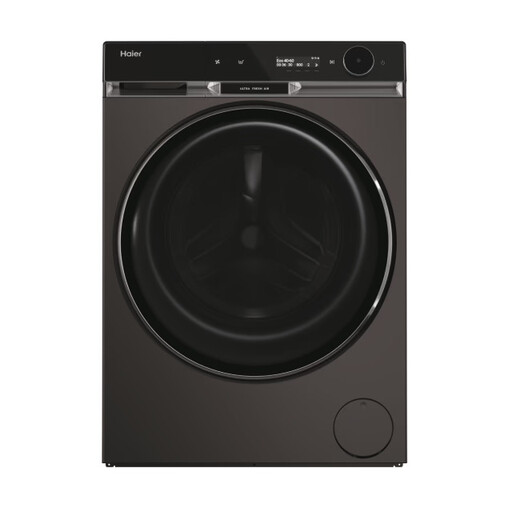 Image unavailable
Haier X Series 11 HW100-BD14397PGU1, 10 kg front-loader
Its 10 kg capacity is worth considering if you regularly wash large loads and have room for a front-loader.
1400rpm spin speed, A energy rating, Direct Motion, AutoDose, steam and Wi-Fi.
Check the space needed for the machine, its installation and the door to open. A 10 kg capacity is less useful if your loads are usually small.
View on Joybuy
 Image unavailable
Candy TCA464TM4-S ProWash 500, 6 kg top-loader
Top-loading suits spaces where there is limited room in front of the machine, provided the lid can open.
6 kg capacity, 1400 RPM spin speed, B energy rating, Inverter motor, Wi-Fi and 17 programmes.
If your laundry baskets are often full, check whether this capacity will really help you avoid running extra cycles.
View on Joybuy
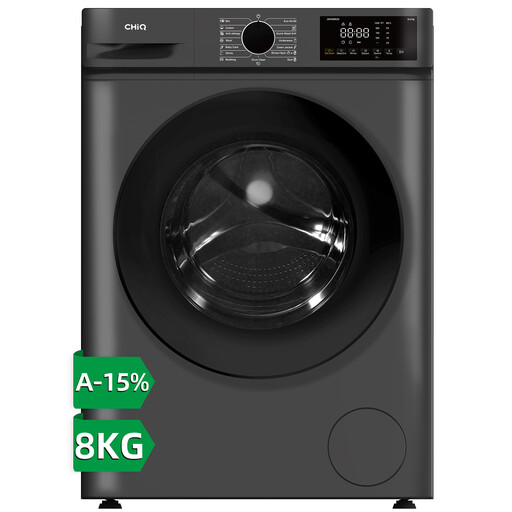 Image unavailable
CHiQ JW85883G, 8 kg dark grey front-loader
Worth considering for regular loads if a front-loader can be installed.
8 kg capacity, 1400RPM spin speed, stated 530mm drum, 16 programmes and steam function.
The drum measurement does not replace the external dimensions: check these, along with installation clearances and the space needed for the door to open.
View on Joybuy
Frequently asked questions
Does the capacity in kg apply to every programme?
No. The maximum load depends on the programme and fabric. If you often wash wool or synthetic fabrics, check the load sizes in the instructions rather than relying only on the capacity shown for the standard programme.
Is a top-loader always suitable for a narrow room?
A top-loader may be suitable if width or clearance in front of the machine is limited, but its lid must be able to open fully. UFC-Que Choisir puts this format at around 40 cm wide and points out that its capacity may not always be enough for very large, regular loads.
Can I alter a connection to install a washing machine in a rented home?
If installation requires alterations to the property or its fittings, first ask the landlord for written consent, in line with ANIL’s guidance. Also check that the planned location and existing connections meet the instructions for your chosen model.
How can I compare the energy labels of two different capacities?
Compare the energy class, electricity use per 100 cycles and water use per cycle, as shown by the European Commission. Then relate these figures to the loads you actually wash: a large drum that is only partly filled does not, by itself, reduce the number of cycles.


