A shallow alcove
If the machine could stick out into a walkway, a slim front-loader is worth considering. Its reduced depth doesn’t mean you can overlook the space needed in front for the door to open or behind the machine for the connections.


Start by identifying the measurement that really limits where you can install your machine: a slim front-loader mainly reduces depth, while a top-loader mainly reduces width, provided you have enough clearance to open the lid. If the space can accommodate a standard front-loader, compare its capacity with the size of your usual loads. A mini washing machine may work for small loads, but it won’t necessarily replace a full-size machine if you do all your laundry with it regularly.
If the machine could stick out into a walkway, a slim front-loader is worth considering. Its reduced depth doesn’t mean you can overlook the space needed in front for the door to open or behind the machine for the connections.
A top-loader may be a good option if width is an issue. The Electrolux and Whirlpool models reviewed are 40 cm wide, but you’ll also need enough clearance to open their lids fully.
A mini washing machine may be suitable as a secondary appliance if its smaller capacity meets your needs. Before relying on one for your regular laundry, check how it drains and spins, and whether there’s room for bulkier items.
To choose between a standard front-loader, a slim model, a top-loader and a mini washing machine, start with the measurement that limits your installation, then check access to the drum and the capacity you need. The space a machine takes up when closed isn’t always the same as the space you’ll need to use it.
Consider it: if the space can accommodate the machine, its connections and the open door, and its capacity suits your laundry loads.
Bear in mind: it may still be quite wide and deep. For example, the Bosch WGE02408FR measures 848 × 598 × 588 mm, according to Bosch.
Consider it: if depth is your main constraint and there’s enough clear space in front to load the machine.
Bear in mind: ‘slim’ doesn’t refer to one standard size. Candy describes a range with depths of 33 to 46 cm, depending on the model. Check the exact model, its door and its connections.
Consider it: if width is limited and the top of the machine will remain accessible.
Bear in mind: a narrow top-loader isn’t necessarily shallower. The Electrolux EW8T3632AA and Whirlpool TDLR 65210 models are each 40 cm wide and 60 cm deep, according to their respective product specifications.
Consider it: if you mainly wash small loads and are happy to check the washing and spinning options separately.
Bear in mind: its capacity may mean running several cycles for bulky laundry. HAVA states that its T02 has a capacity of 3 kg; drainage requirements and suitable load sizes depend on the mini model you choose.
| Criterion | What to check | What matters to shoppers |
|---|---|---|
| Dimensions and access | Measure the overall height, width and depth, then check the space needed for the hoses and the remaining clearance. | If the machine sticks out into my walkway or gets in the way of a door, I need to deal with that before comparing programmes. Around 36% of shoppers would prioritise dimensions and access. |
| Access to the laundry | Check the door clearance in front of a front-loader or the headroom above a top-loader, using the model’s diagram. | I want to load the laundry without moving furniture or having a door in the way. Everyday access would be the main concern for around 29% of shoppers. |
| Capacity | Compare the stated capacity with your usual loads, including bedding and towels, and check any programme limits. | If my regular loads include bulky items, I’d rather not have to split them across too many cycles. Capacity would come first for around 21% of shoppers. |
| Noise and stability | Check the model’s noise figures and follow the instructions for installation, removing the transit bolts and adjusting the feet. | In a home where you can hear the spin cycle from the living room or neighbouring flats, noise and vibration matter more to me. Around 14% of shoppers would make them a priority. |
A machine may fit in its space but still block a walkway, an internal door or its own door when opened.
Mark out the machine’s footprint on the floor with the door both closed and open, allow for the hoses, and compare your measurements with the installation diagram for the model you’ve chosen.
A slim front-loader is mainly designed to reduce depth. A top-loader is more likely to help when width is limited, but it may not be any less deep.
Identify the measurement that’s actually preventing installation, then compare the height, width, depth and opening method.
Que Choisir points out that a drum that’s too small can mean running more cycles. A mini model with a stated capacity of 3 kg won’t give you the same room for bedding as a 6 or 7 kg machine.
Make a list of the bulkiest items you wash and check the model’s load limits before deciding whether it can be your main washing machine.
Extra cycles can also take more time and, depending on how you use the machine, more water and electricity.
In France, the DGCCRF distinguishes between an optional commercial warranty and the statutory guarantees that apply in addition to it. Buying an extended warranty doesn’t replace your statutory rights.
Read the cover and exclusions for any extended warranty on offer, and keep your proof of purchase and delivery.
These examples are here to help you compare specific formats and models, not to suggest that every machine from a brand has the same dimensions or features.
A model to consider if your space can accommodate a standard front-loader.
A range to consider if limited depth makes a slim front-loader a good option.
A top-loader to consider when width is limited and there’s clear space above.
Another top-loader to consider for a space with limited width.
This selection includes a front-loader with reduced depth, a top-loader and two other front-loaders. Compare their capacities with your usual laundry loads, then check the installation dimensions and loading clearance in the instructions for each model.
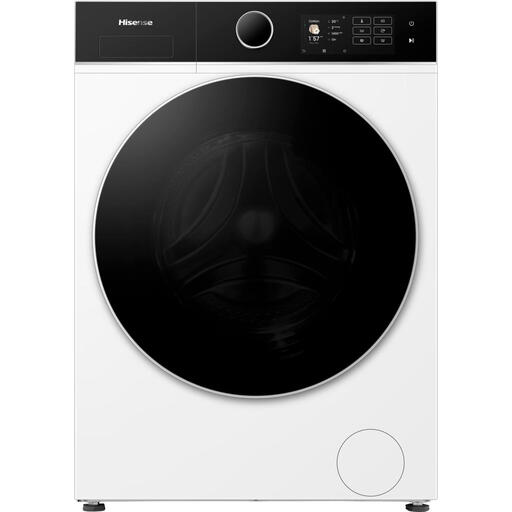 Image unavailable
Worth considering if depth is a key factor, provided you have enough room to open the door and connect the machine.
Stated capacity: 8 kg; stated maximum spin speed: 1,400 rpm. The product title mentions an inverter motor.
 Image unavailable
Worth considering if width is your main constraint, provided there’s enough headroom to open the lid.
Stated capacity: 6 kg; stated maximum spin speed: 1,400 rpm. The product title mentions 17 programmes and a Wi-Fi connection.
Also check the depth and space needed for the connections before installation.
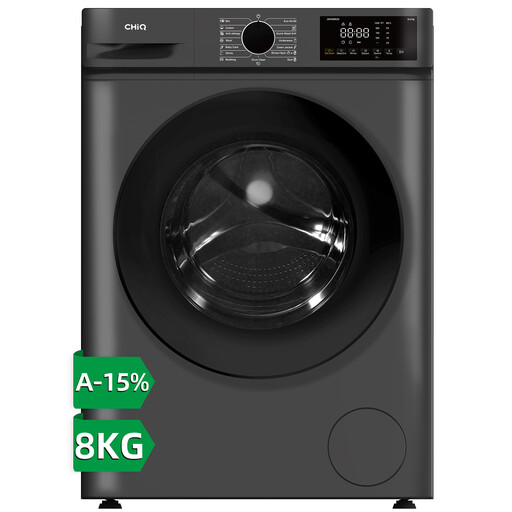 Image unavailable
Worth comparing if you’d prefer a front-loader. Check the overall dimensions and door clearance before deciding whether it will fit your space.
Stated capacity: 8 kg; stated maximum spin speed: 1,400 rpm; the product title mentions 16 programmes.
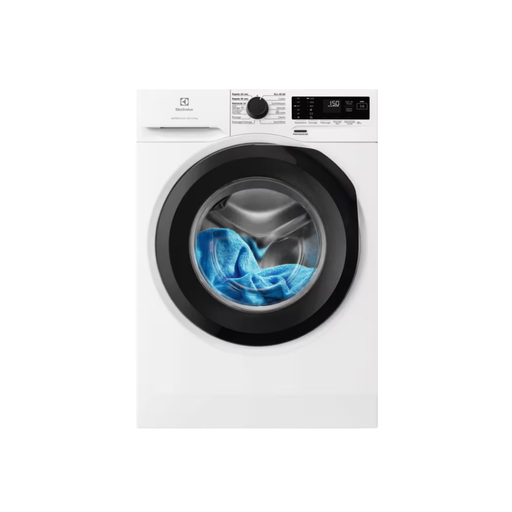 Image unavailable
Consider it if its capacity suits your loads and your space can accommodate its depth, front-opening door and connections.
Stated capacity: 10 kg. Check the installation diagram for this model before choosing it for a narrow space.
Yes, if there’s enough room to connect the machine and open its door without blocking access. For example, Bosch gives the WGE02408FR dimensions of 848 × 598 × 588 mm. Always check the dimensions of the model you’ve chosen against a diagram of your space.
Choose according to the dimension that’s limiting your options: a top-loader may help when width is an issue, while a slim front-loader is designed mainly to reduce depth. According to their manufacturers, the Electrolux EW8T3632AA and Whirlpool TDLR 65210 top-loaders are 40 cm wide but 60 cm deep; Candy describes its slim range as 33 to 46 cm deep. Also check the space needed to open the lid or door.
It may be enough for some small loads, but it won’t necessarily suit all your regular laundry. HAVA states that its T02 has a capacity of 3 kg. Before making it your main machine, check the permitted load sizes, spin function and water inlet and drainage requirements against the laundry you actually need to wash.
No. According to the DGCCRF, a commercial warranty is optional and adds to statutory guarantees without replacing them. Before taking out an extended warranty, check what it covers and any exclusions, and keep your proof of purchase.