People living in a studio flat or narrow room
If width is limited, look at top-loaders; if depth is the issue, consider shallow front-loaders. Either way, allow enough room to open the machine and access the connections.


First, choose a washing machine that you can install, connect and open without blocking the way. A front-loader is a good fit if you have space in front of the door; a top-loader is best when width is limited, while a mini washing machine is a handy option for small loads. Then match the capacity to the laundry you actually wash. The stated kilogram capacity refers to dry laundry and may not apply to every programme.
If width is limited, look at top-loaders; if depth is the issue, consider shallow front-loaders. Either way, allow enough room to open the machine and access the connections.
The size of your usual load, along with the bedding and towels you wash at home, matters more than the number of people in your household alone. If the capacity is too small, you may need to split your laundry across several cycles.
A mini washing machine can handle small loads when there’s no room to install a standard machine. However, check that its capacity, spin cycle and programmes suit the laundry you plan to wash in it.
Consider it: if there’s enough width and clearance in front of the door to use the machine, particularly for regular or bulky loads.
Bear in mind: you’ll need room for the front-opening door and enough depth for the connections.
Consider it: if a front-loader will fit widthways but depth is limited.
Bear in mind: you’ll still need space in front for the door. Check the model’s capacity rather than assuming it from its format.
Consider it: if width is your main constraint or you’d prefer to load laundry from the top.
Bear in mind: the lid needs room to open upwards, so you won’t be able to place a tumble dryer directly above it.
Consider it: if there’s no suitable space for a standard washing machine and you mainly wash small loads.
Bear in mind: bulky fabrics, the spin cycle and the available programmes may limit its suitability as your main machine.
To compare these formats, start with the space you have available, then consider the laundry load you wash most often. Each of the needs below represents the main priority for a particular group of consumers.
| Priority | What to check | Consumers concerned |
|---|---|---|
| Installation and access | Measure the width, depth and height, then check the clearance needed to open the machine and access the connections. Also check the plug socket, water inlet and drain. | In a narrow room, I need to be able to get the machine in, open it and connect it without blocking the space; around 42% of consumers put access first. |
| Practical capacity | Compare the kilograms of dry laundry with your usual loads, and check the maximum load for the programmes you use. | When bedding and everyday laundry pile up, I want to avoid running extra cycles without choosing an unnecessarily large drum; around 33% of consumers prioritise a capacity that suits their needs. |
| Occasional washing | For a mini washing machine, check its capacity, spin cycle and programmes, including the available wash temperature. | With no space for a standard machine, my main aim is to wash small loads; around 25% of consumers prioritise this occasional-use option. |
A front-loader may fit in its space but still not have enough room for the door to open. A top-loader needs clear space above it, while hoses and access to the connections also take up room.
Measure the space, the delivery route and the clearance needed to use the machine. Before choosing a model, check that there’s a suitable plug socket, water inlet and drain.
A drum that’s too small for your usual loads can mean more cycles. On the other hand, a large capacity doesn’t automatically save energy if you often wash small loads.
Think about how much laundry builds up between washes and which bulky items you actually wash at home, then compare those needs with the capacities available.
According to Que Choisir, the stated capacity refers to the weight of dry laundry. The permitted load may be lower for synthetics, wool and other specialist programmes.
Check the programme table for the model you’re considering if you wash these fabrics often.
Que Choisir describes occasional-use machines with capacities of 2 to 3 kg, which are not well suited to bulky items. Some models are also limited to cold washes.
Before relying on one for all your laundry, check which fabrics it can handle, as well as its spin cycle, water heating and programmes.
A low spin speed can also mean your laundry takes longer to dry.
Worth considering among front-loaders if you’re looking for a capacity suited to regular washes.
Worth considering for a top-loader when width is limited.
Worth considering if you’re comparing a shallow front-loader with a top-loader.
These front-loading models let you compare capacities of 8 and 9 kg for regular washes. If space is limited, measure the available depth, connections and clearance in front of the door separately. The right capacity alone doesn’t guarantee that a machine will fit.
 Image unavailable
Worth considering for regular loads if the door and connections will remain accessible in your chosen space.
Stated capacity: 8 kg; spin speed up to 1,400 rpm. Check the permitted load for each programme, especially for the fabrics you wash often.
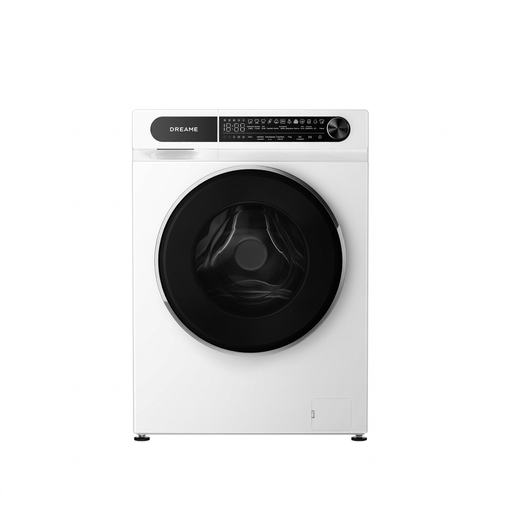 Image unavailable
Worth considering if you’re looking for an 8 kg capacity and have enough room to use the door.
Compare the full dimensions with your available space, including the connections, and check the permitted loads for the programmes you use most often.
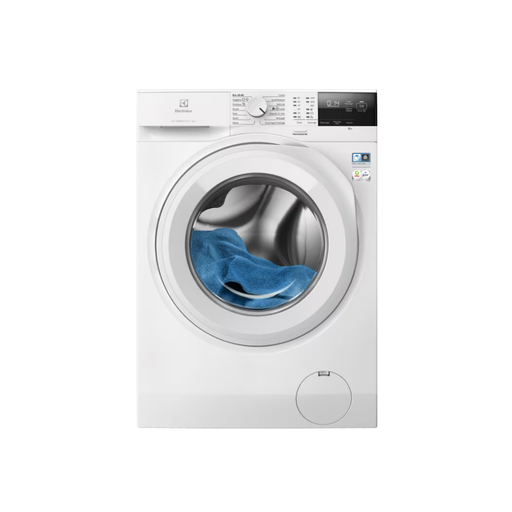 Image unavailable
Compare it with your usual laundry volume if you have enough clearance in front of the door.
Stated capacity: 8 kg; spin speed up to 1,400 rpm. Check the manual for the maximum load on specialist programmes.
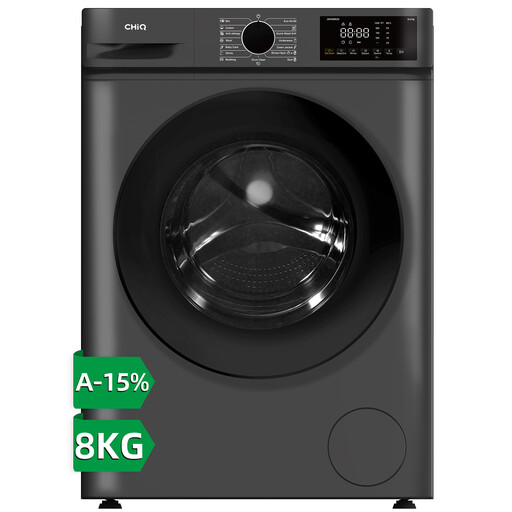 Image unavailable
Worth considering for regular washes if its full dimensions and front access suit your room.
Stated capacity: 8 kg; spin speed up to 1,400 rpm; 16 programmes listed in the product name. Check the permitted load for each programme.
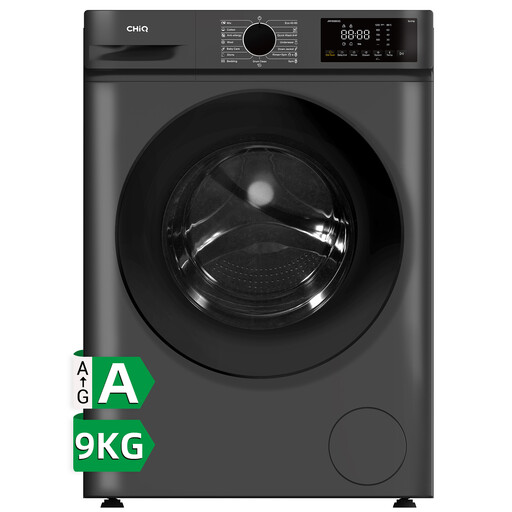 Image unavailable
Worth considering if your usual loads call for 9 kg and you have enough space for a front-loader.
Stated capacity: 9 kg; spin speed up to 1,400 rpm. Confirm the exact depth of this model before choosing a restricted space, as the available specifications are contradictory.
No. It refers to dry laundry, but the permitted load may be lower for some programmes. Check the table for your chosen model if you often wash synthetics, wool or delicate fabrics.
No. Its narrower width may help, but the lid must be able to open fully upwards. Also measure the depth, the route to the space and the room needed for the connections.
Check that the space allows for an electrical installation and connections suitable for the room. You’ll also need a water inlet, a drain and a stable floor. If you’re unsure whether the set-up meets the requirements, ask for it to be checked.
Not necessarily. The occasional-use machines described by Que Choisir generally take small loads and aren’t well suited to bulky fabrics. Before making one your only machine, check its capacity, spin cycle and programmes against your usual laundry needs.