People with a narrow space for their appliance
If space is limited, compare the width and depth, then check that the door or lid can open. Que Choisir Ensemble lists these dimensions as important factors when choosing an appliance for a small space.


First, work out which dimension is actually restricting you and how much room you need to open the appliance. A compact front-loading washing machine mainly saves depth, while a top-loader takes up less width. If you struggle to find space to dry clothes, a washer-dryer avoids the need for a second appliance, but its drying capacity is lower than its washing capacity, and full wash-and-dry cycles can take longer and use more resources. A mini washing machine is better suited to small loads. Before you buy, check the dimensions, opening clearance and connections in the model’s manual.
If space is limited, compare the width and depth, then check that the door or lid can open. Que Choisir Ensemble lists these dimensions as important factors when choosing an appliance for a small space.
Compare drying clothes indoors with choosing a washer-dryer, but don’t assume that every home needs a drying function. ADEME recommends drying clothes in a well-ventilated room or one with an extractor fan.
A mini appliance could be an option if there’s no room for a standard washing machine, provided its capacity and features suit the laundry you need to wash. Check the model’s specifications before making it your main solution.
Start by measuring the space and clearance, then decide whether you need drying built in. Que Choisir Ensemble says compact front-loading washing machines generally retain a width of 60 cm while reducing their depth to 33–45 cm. So measure the dimension that’s actually restricting you.
| What matters | What to check | Who it matters most to |
|---|---|---|
| Size and access | Measure the width and depth, the access route and the clearance needed to open the door or lid; check there’s room for the connections. | If the appliance needs to fit into a narrow space and still be easy to open, size and access are priorities for around 36% of consumers. |
| Drying clothes | Check whether you can dry clothes in a well-ventilated room or one with an extractor fan; compare drying capacity and the duration of a full cycle. | When it’s difficult to dry clothes, avoiding a second appliance can become a priority. Around 29% of consumers put drying first. |
| Usable capacity | Compare the washing capacity with your usual loads and bulky items; for a washer-dryer, check the drying capacity separately. | If you want to wash your usual loads without doing more laundry cycles, usable capacity is a priority for around 21% of consumers. |
| Running costs and convenience | Compare energy and water use, as well as cycle duration, for the same cycles; check the stated spin noise level and the durability index where it applies to the model. | If the appliance is close to a living area, around 14% of consumers prioritise resource use, cycle duration and noise. |
A narrow top-loader may still need plenty of depth, while a compact front-loader needs space in front of its door. Even if the appliance’s external dimensions fit, that doesn’t guarantee you’ll be able to open it or connect it in the space available.
Measure the space, delivery route, door clearance and room for the connections, using the model’s dimensions and manual as a guide.
A washer-dryer may have a lower drying capacity than washing capacity, so a full wash load won’t necessarily fit in the drying programme.
Compare the two capacities separately and check the duration of a full cycle for the loads you plan to dry.
A small capacity and, depending on the model, limited spin or heating functions may restrict the types of laundry it can handle.
Check the capacity and manual, and consider this option mainly if you wash small items.
An old rating and a label covering a different cycle can’t be compared directly. The current EU energy label for washing machines and washer-dryers uses a scale from A to G.
Compare the model’s current label and data for the same type of cycle, distinguishing between washing only and a full wash-and-dry cycle.
The PerfectCare 600 EW6T4613HA top-loader is one option to consider if you’re short on width and can access the top opening.
The TDLR6253BFR top-loader shows that a narrower width doesn’t necessarily mean a shallower appliance.
The F72SJ62WH front-loader is an example of a shallower washing machine, if its width and front-opening door suit your space.
The I-Pro Series 3 HWD80-B14939 washer-dryer is an example of an all-in-one solution if you have limited space to dry clothes.
This selection includes mini washing machines for small loads and washer-dryers for when you need washing and drying in one appliance.
 Image unavailable
Washing and drying are combined in one appliance, making it worth considering if drying clothes is difficult and the appliance fits your space.
Stated capacity: 10 kg for washing and 6 kg for drying. Stated dimensions: 600 × 850 × 590 mm; check the clearance and connections required.
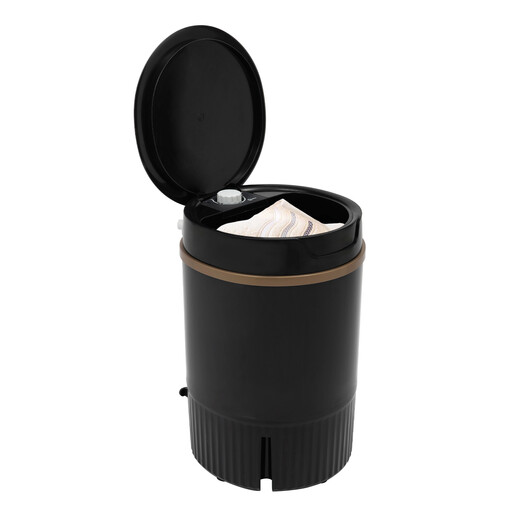 Image unavailable
Its mini size and stated capacity of 0.8 kg make it better suited to small items than bulky loads.
The product name mentions a spin basket. Check the product details and manual to see whether its features suit your laundry.
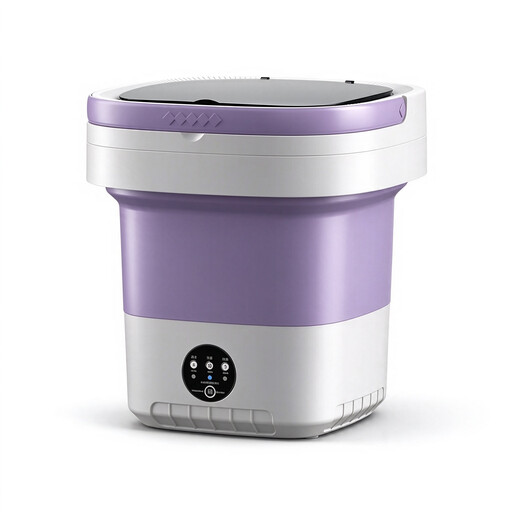 Image unavailable
This model is designed for small items of laundry, especially if you have limited storage space.
The title states a 12 L capacity, three wash modes and a spin function; it’s designed for small garments.
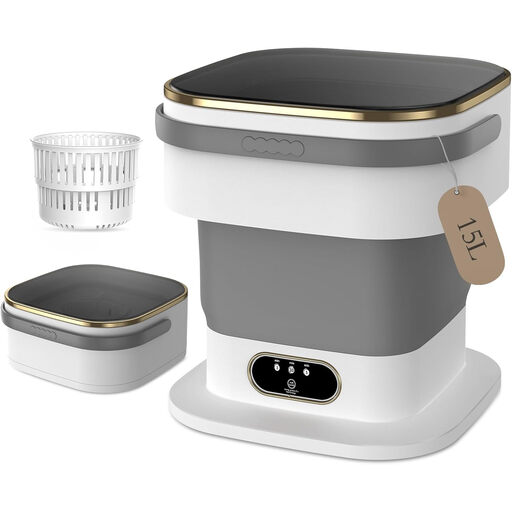 Image unavailable
The foldable design could be handy if you need to put the appliance away after washing small loads.
The title states a 15 L capacity and three wash modes; this model is designed for small items of laundry.
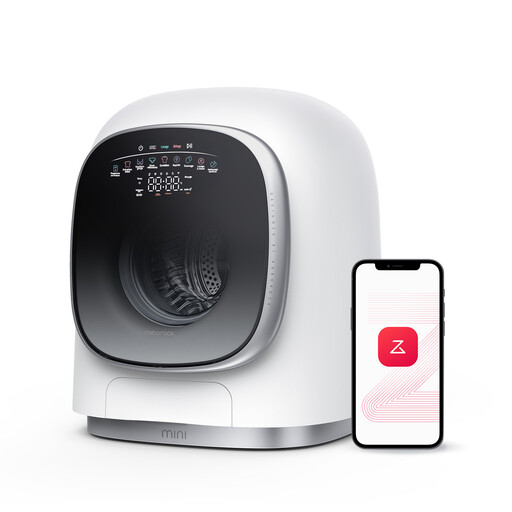 Image unavailable
This mini appliance combines washing and drying for small loads when it’s difficult to dry clothes separately.
Stated capacities: 1 kg for washing and 0.5 kg for drying. Check that these figures suit the amount of laundry you plan to wash.
The size of the room alone isn’t enough to confirm that the installation is suitable. For the location you have in mind, Promotelec says a washing machine must be outside zones 0, 1 and 2, as well as the hidden zone. Ask a professional to check the electrical installation. Also check the model’s manual, water supply and drainage requirements.
Check the installation and ventilation instructions in the model’s manual; you can’t tell from the drying function alone. Also make sure you have the water connections and drainage specified for the appliance.
Yes, as long as the load is also within the model’s drying capacity. This may be lower than its washing capacity, so you may need to remove some of the laundry before drying.
Compare like with like: a wash-only cycle with another wash-only cycle, and a full wash-and-dry cycle with another complete cycle. For the appliances covered, the European Commission says the label includes information such as the energy class, energy use per 100 cycles, water use per cycle and cycle duration. Take into account how often you’ll use the drying function.
Since 8 April 2025, the durability index has replaced the repairability index for washing machines within its scope. Check the rating for your model, and don’t assume the same rules apply to a washer-dryer or mini appliance. The French Ministry of the Economy notes that the statutory guarantee of conformity applies to goods sold by a business to a consumer; it is separate from an optional commercial guarantee.