Your space is too narrow
You’re short on width and can keep the space above the machine clear. Start by comparing the actual width of top-loading washing machines with the width of your alcove.


If width is the main obstacle and you can keep the space above the machine clear, a top-loading washing machine could work for you. If you’re short on depth, compare compact front-loading models instead, making sure there’s enough room in front to open the door. An under-counter front-loader or a stacked setup is only suitable if you’ve confirmed the dimensions, door clearance and installation compatibility of the specific models you’ve chosen. Once you’ve settled on the format, choose a capacity to suit your usual laundry loads rather than automatically going for the highest figure.
You’re short on width and can keep the space above the machine clear. Start by comparing the actual width of top-loading washing machines with the width of your alcove.
You want to reduce the depth or height of the appliance in a small home, while still leaving enough room in front of the door.
You’d like to install the appliance under a worktop or stack a tumble dryer on top. Check the dimensions and make sure your planned setup is compatible.
The French National Consumer Institute distinguishes between top-loading and front-loading washing machines. ADEME recommends choosing a capacity that suits your needs and checking the energy label to compare water and energy use, spin performance and noise.
| Criteria | What to check before buying | Who this matters to |
|---|---|---|
| Width and access to the drum | Compare the machine’s overall width with the width of your alcove, and check that the lid can open. | If my alcove is narrow, I want to be able to load the laundry without a fixed worktop blocking the top of the machine. Around 36% of consumers prioritise width and access from above. |
| Depth and door clearance | Check the overall depth and how much space you’ll need in front of the appliance to open the door. | When the room is shallow, I need to keep a usable walkway clear when the door is open. Around 29% of consumers prioritise depth and clearance in front. |
| Under-counter or stacked installation | Check the dimensions of the alcove and the installation instructions. For a stacked setup, check that the specific appliances and stacking kit are compatible. | If I want to free up floor space or fit the appliance into my kitchen, I need to confirm that my planned setup is compatible. Around 21% of consumers prioritise an under-counter or stacked installation. |
| Capacity and everyday use | Compare the capacity for the programmes you use and check the energy label and the spin-noise rating. | For my usual laundry loads, I’m looking for a suitable capacity rather than simply choosing the highest figure. Around 14% of consumers prioritise finding a capacity that suits their needs and usage. |
A narrow width, a shallow depth and easy access to the drum are different benefits. A top-loader needs space above it, while a front-loader needs clearance in front.
Measure the space separately from the clearance needed to open the machine, and check the delivery route to the room.
A standard front-loader and a model specifically designed for built-in installation may have different installation requirements. A stacking kit also has its own compatibility requirements.
Before planning the installation, check the manuals and exact model numbers for the washing machine, tumble dryer and kit. Don’t remove the top of an appliance unless the model documentation confirms that you can.
A capacity that’s too small may mean running more cycles. A larger capacity than you need doesn’t necessarily suit your usual loads.
Compare your laundry loads with the capacity of the programmes you plan to use, then check the energy label information.
In France, the durability index replaced the repairability index for washing machines from 8 April 2025, according to the Ministry for Ecological Transition.
Check the current durability index, but don’t assume on that basis alone that the appliance will suit your space or installation.
The PerfectCare 600 EW6T4376BZ is an example of a narrow top-loading model.
Candy’s documented French models include a compact freestanding front-loader and a front-loader specifically designed for built-in installation.
The Series 4 WAN2827FFR front-loader and the documented stacking kits can help you explore under-counter or stacked setups, depending on the models you choose.
Beko’s dimensions guide helps you distinguish between front-loaders of standard depth and shallower models.
The products below include all-in-one washer-dryers and portable mini washing machines. Check their dimensions and the types of laundry they’re designed for before comparing them with a standard top- or front-loading washing machine.
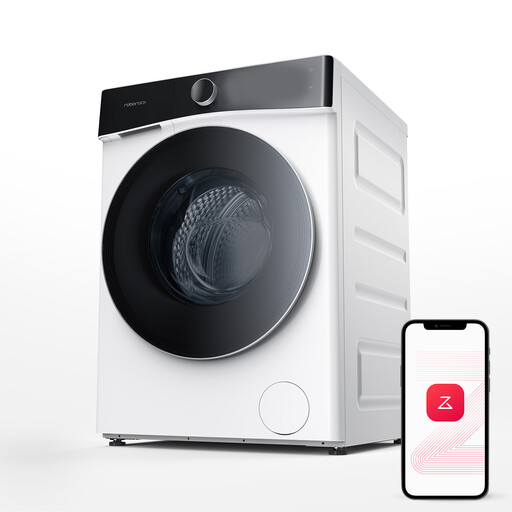 Image unavailable
This all-in-one format is presented as a space-saving solution. Check that its dimensions suit your space.
Stated capacity: 10 kg for washing and 6 kg for drying. The description mentions 27 programmes and the LintClear system.
 Image unavailable
Worth considering if you’re looking for a front-loading appliance that combines washing and drying. Check there’s enough room around it.
Stated capacity: 11 kg for washing and 6 kg for drying. Stated dimensions: 60 × 85 × 60 cm. Class D is stated in the product name.
 Image unavailable
This freestanding front-loader combines washing and drying. Check its stated depth against the space you have available.
Stated capacity: 10 kg for washing and 6 kg for drying. Stated dimensions: 600 × 850 × 590 mm. Class D is stated in the product name.
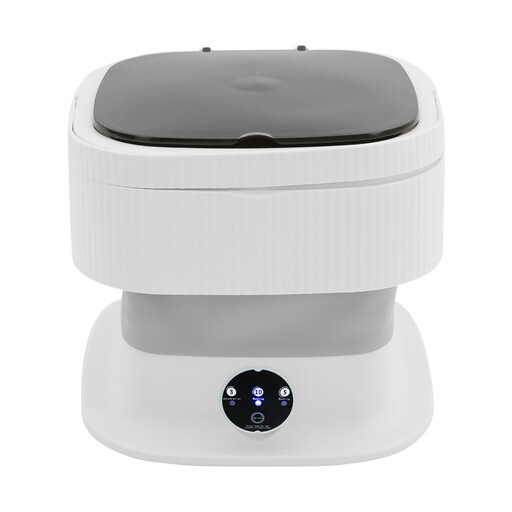 Image unavailable
The description says it’s designed for small items and isn’t suitable for bulky clothes.
Stated volume: 10 L. Semi-automatic washing machine with three stated wash durations: 2, 5 and 10 minutes. This is not a tumble dryer.
 Image unavailable
Consider it for small laundry items, in line with the stated intended use of this appliance.
Stated volume: 15 L. The title mentions three wash modes and a spin basket.
Measure the space and the delivery route to it, allowing for the clearance needed to use the appliance. The French Ministry for the Economy and Finance states that delivery charges and, where offered, paid installation must be confirmed in writing before you buy. Also ask what terms apply to your home.
Follow the instructions for the specific model you’ve received before using it. For its washing machines, Bosch advises removing the transit bolts and levelling the appliance. Keep the spacers if the manual says they should be reused when you move. This guidance doesn’t confirm that your home’s connections are suitable.
Installing an appliance using existing connections doesn’t necessarily count as altering the property. If your plans involve changing the rented premises or equipment, ANIL notes that Article 7 f of the law of 6 July 1989 requires the landlord’s written consent. It depends on the work involved.
Check the durability index. According to the French Ministry for Ecological Transition, it replaced the repairability index for washing machines from 8 April 2025. It doesn’t replace checking the dimensions, access to the drum and installation requirements.
No. Check each service and its terms separately before buying. The French Ministry for the Economy and Finance states that the cost of delivery or paid installation must be confirmed in writing before you buy. Free ‘one-for-one’ take-back applies when you buy a new appliance and return an equivalent used one. The legal guarantee of conformity is covered by a different set of rules.