Which key points should you check first?
First, identify the dimension or constraint that’s actually preventing installation. Then choose a format that leaves enough room to load the machine and a capacity that suits your household’s laundry needs.
| What matters |
What to check |
Who this matters to |
| Space and loading |
Measure the recess and delivery route, then check the clearance needed in front of a door or above a top-loader. According to Que Choisir, top-loaders are generally 40 to 46 cm wide; slim front-loaders are still close to 60 cm wide, despite their reduced depth. |
Even if the appliance only just fits, I still need to be able to open it and load the washing. Around 36% of consumers prioritise being able to install and load the machine. |
| Washing capacity |
Compare the amount of washing you usually do with the load capacity of the programmes you use. Que Choisir points out that the stated capacity refers to dry laundry and that the permitted load can vary by programme. |
If I need to wash bedding and everyday laundry in a reasonable number of cycles, drum size matters just as much as the machine’s overall dimensions. Around 29% of consumers put usable capacity first. |
| Connections and installation spot |
Check the route the pipes will take, access to the water supply and drainage, and the model’s installation instructions. In a bathroom, get the location and electrical supply checked if you’re unsure they’re suitable. |
I might have space on the floor, but still not know whether the pipes and power supply will allow me to install the machine there. Around 21% of consumers put installation feasibility ahead of other factors. |
| Fitting with kitchen units |
Distinguish between installing a front-loader under a worktop and fitting one behind a decorative door. For the latter, check the recess, door, hinges and future access to the connections against the model’s installation diagram. |
In a fitted kitchen, I want the door to close without getting in the way of using or maintaining the appliance. Around 14% of consumers make this their main requirement. |
For a new washing machine covered by French regulations, the durability index is another useful point to check, but it doesn’t replace the checks above. The French ministries responsible for the environment state that it has replaced the repairability index for washing machines since 8 April 2025; the decree of 5 April 2024 provides for a score from 0 to 10.
Brands to consider
There are no brand details to display in this section.
Front-loading washing machines to explore on Joybuy
These two front-loading washing machines suit different layouts: consider one if depth is limited, and the other if you have room for a standard front-loader. Both have a stated capacity of 8 kg. Check the dimensions and installation diagram for each model before making your decision.
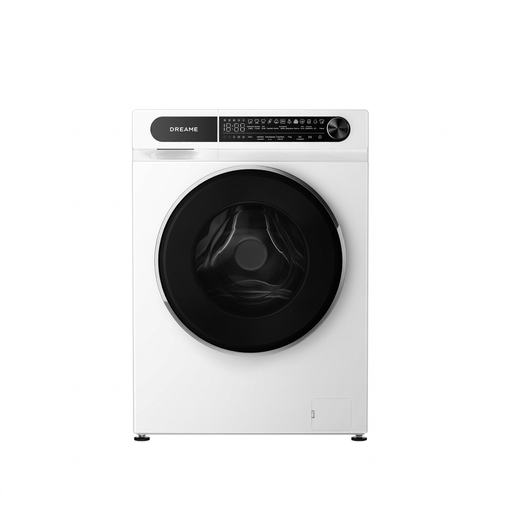 Image unavailable
Dreame DRWASHS8KG, 8 kg, white
Worth considering if depth is your main constraint and you have enough space in front of the door. The stated capacity is 8 kg. Check the dimensions and required clearance for this model against your installation spot and connections.
View on Joybuy
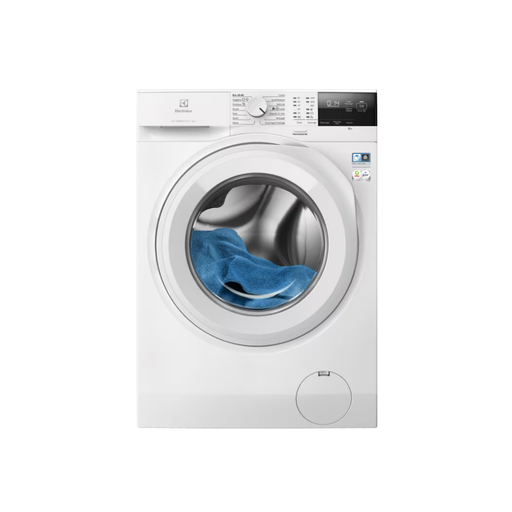 Image unavailable
Electrolux EW6FI4805AW, 8 kg, 1400 rpm, white
Worth considering if your space can accommodate a standard front-loader and leave room for the door to open. The stated capacity is 8 kg and the spin speed is 1400 rpm. Check the required depth, connections and installation requirements for this model.
View on Joybuy
Frequently asked questions
What should you measure before choosing a washing machine for a narrow recess?
Measure the recess’s width, height and depth, then check the delivery route and the space needed to load the machine. Also check where the pipes will go. For clearance around the appliance, follow the installation diagram for your chosen model rather than relying on a measurement that may not suit every machine.
Is a slim washing machine as narrow as a top-loader?
No. According to Que Choisir, slim front-loaders are generally still close to 60 cm wide, while their depth is reduced to around 33 to 45 cm. Top-loaders are generally 40 to 46 cm wide. Choose according to the dimension you’re actually short on, and remember to leave room in front of a door or above a top-loader.
How should you use the durability index when buying a new washing machine in France?
Use the index to compare appliances that already suit your space and laundry needs. According to the French ministries responsible for the environment, it has replaced the repairability index for covered washing machines since 8 April 2025; the decree of 5 April 2024 provides for it to be shown as a score from 0 to 10. The score doesn’t remove the need to check the dimensions, capacity and installation requirements.
Can you put a washing machine in a bathroom?
The location needs to be assessed in relation to the shower or bath and the electrical installation, regardless of the machine’s size. If you’re planning to install or modify a power supply, ask a qualified electrician to confirm that the setup is suitable before choosing a model.
What capacity should you choose if space limits you to a slim or compact model?
Choose a capacity that suits your usual loads, including bedding and bulky laundry, rather than relying only on the number of people in your household. Que Choisir generally puts slim models at around 4 to 6 kg and compact models below 5 kg. Also check the permitted load for each programme you use.


