If depth is your main concern and you have enough width, start by comparing slim front-loading washing machines, allowing room for the door to open. If width or front access is an issue, a top-loading model may be a better fit, provided there’s enough space to open the lid. A portable machine is more suitable when you can’t install a standard model and small loads are all you need. In every case, check the dimensions, including the connections and opening clearance, and choose a capacity that suits your laundry.
Which format is right for you?
Depth is your main concern
A slim front-loader may suit you if its width fits the space and the door can open without blocking the way. Que Choisir Ensemble describes slim front-loaders as around 33 to 45 cm deep, while remaining close to 60 cm wide.
Your space is narrow
A top-loading washing machine is worth comparing if you can keep the space above it clear so you can open the lid and access the drum.
You can’t install a standard model
A portable machine may be suitable for smaller loads, as long as its filling, draining, spin cycle and power supply are compatible with your home.
What should you check before buying?
Start with the constraint that could prevent installation: depth, width, opening clearance or connections. Que Choisir Ensemble distinguishes between formats by their dimensions, while ADEME recommends choosing a capacity that suits your needs to avoid running extra cycles with an underfilled drum.
| What matters |
What to check |
Who should prioritise it |
| Depth and front access |
Measure the machine’s width and depth, allow for the hoses, and check the clearance needed in front of the door. |
If the door might stick out into a walkway, I’d prioritise a shallow machine that can open without obstructing the way. Around 36% of consumers prioritise depth and front access. |
| Width and space above |
Check the width and depth, along with the available height when the lid is open, particularly beneath a fixed worktop. |
If the alcove is narrow but there’s clear space above, I’d compare top-loading models and how far their lids actually open. Around 29% of consumers prioritise a narrow width and the space needed above the machine. |
| Capacity and cycle frequency |
Compare the stated capacity with the amount of laundry you usually wash and any bulky items you need to clean. |
If I regularly do full loads, I’d look for a capacity that suits my laundry rather than the smallest machine at any cost. Around 21% of consumers prioritise everyday capacity and cycle frequency. |
| Installation or a portable machine |
Check the instructions for filling, draining and spinning, then make sure the available connections and power supply are suitable. |
If standard installation isn’t possible, I’d check that a portable machine can genuinely work in my home and handle my smaller loads. Around 14% of consumers prioritise avoiding standard installation over capacity. |
Mistakes to avoid
-
Assuming ‘slim’ also means narrow
For some front-loaders, the term refers to a reduced depth. It doesn’t guarantee a narrower width or enough clearance in front of the door.
Check the width, depth and height separately, along with the door-opening clearance, against the dimensions of the exact model.
A door that blocks a walkway can make the space impractical for everyday use.
-
Choosing a top-loader without checking the space above
Loading from the top avoids the need for front clearance, but the lid still needs to open fully.
Measure the available height and check how far the lid actually opens before choosing this format, especially beneath a fixed worktop.
-
Confusing a compact front-loader with a portable machine
A small front-loading washing machine may still need standard installation. Portable machines, on the other hand, may be limited to smaller loads.
Check the capacity, filling, draining and spin cycle for the specific model, then compare them with your usual laundry needs.
A poorly suited format could mean running more frequent cycles or making connection adjustments that you’ll need to plan for.
Brands to compare by format
Candy
Candy’s product specifications show how the GD 27S7-S and Mini ProWash 700 CW50-BP12307U1-S offer different compromises between depth and height.
- The GD 27S7-S is listed as 595 × 467 × 850 mm with a 7 kg capacity; the CW50-BP12307U1-S is 510 × 488 × 700 mm with a 5 kg capacity.
- The model called ‘Mini’ is a freestanding front-loader. Its name doesn’t mean it works without standard installation.
Electrolux
According to the manufacturer’s product specifications, the EW6T4613HA is a top-loader worth comparing when width is your main constraint.
- The specifications list dimensions of 890 × 400 × 600 mm and a 6 kg capacity.
- Its narrow width doesn’t mean it has a shallow depth. You’ll also need to allow room to open the lid.
- Electrolux states that its pre-installation service doesn’t include any necessary plumbing or electrical work.
AEG
According to AEG’s product specifications, the LTR8C7331A is another top-loader to consider for comparison.
- The specifications list dimensions of 903 × 397 × 599 mm and a 7 kg capacity, which you can compare with your preferred size and capacity.
- These measurements alone don’t confirm that the machine will fit a particular alcove or that its lid can open freely.
Whirlpool
Documented on Whirlpool’s French product page, the TDLR6253BFR is an example of a narrow top-loader.
- The specifications give a width of 40 cm and a capacity of 6 kg.
- Whirlpool says this model is no longer in its range, so it shouldn’t be treated as a product currently sold by the brand.
Haier
According to Haier’s product specifications, the Mini Drum HW50-BP12307U1-S is a compact front-loader to consider if height is limited.
- The specifications list dimensions of 510 × 492 × 700 mm and a 5 kg capacity.
- It’s a freestanding front-loading washing machine. The name ‘Mini Drum’ doesn’t mean it can work without standard connections.
Joybuy products for these needs
This selection includes a top-loader for narrow spaces, portable machines for smaller loads and front-loaders with the width stated in the product name. The dimensions and uses listed don’t replace the need to check whether a machine can be installed in your home.
 Image unavailable
Candy TCA464TM4-S ProWash 500, 6 kg top-loading washing machine
Top-loading may suit you if front clearance is limited and the lid can open freely.
Stated width: 40.5 cm; depth: 60 cm; capacity: 6 kg; stated spin speed: 1,400 rpm.
View on Joybuy
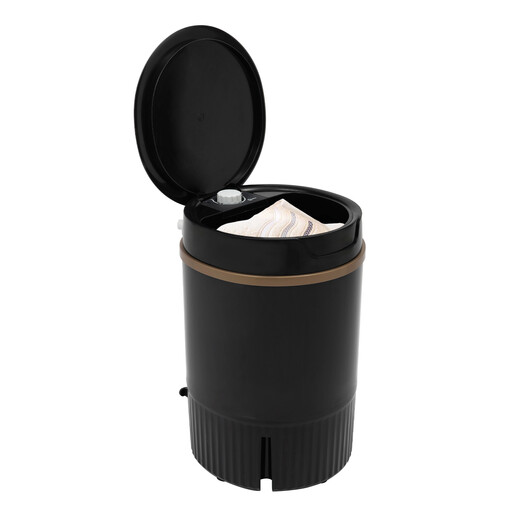 Image unavailable
4.5 L semi-automatic mini washing machine
Consider it for small extra loads, rather than as an automatic equivalent to a washing machine for everyday use.
The product description lists a maximum load of 0.8 kg, a spin-drying basket and wash cycles lasting 1 to 10 minutes.
View on Joybuy
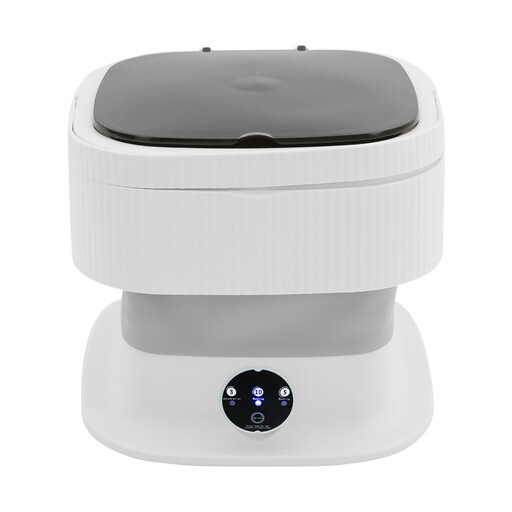 Image unavailable
10 L foldable portable mini washing machine
This model is designed for smaller loads. Check that its dimensions and intended use suit your space and laundry.
The name indicates a 10 L capacity, three wash durations (2, 5 or 10 minutes), 40 W power and a drain basket.
View on Joybuy
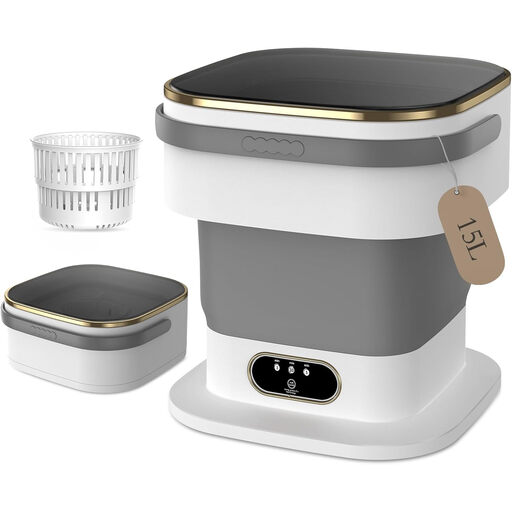 Image unavailable
15 L foldable portable mini washing machine
It’s intended for smaller laundry items, so check this limitation before choosing it for your usual washing.
The name indicates a 15 L capacity, three wash modes and a spin-drying basket.
View on Joybuy
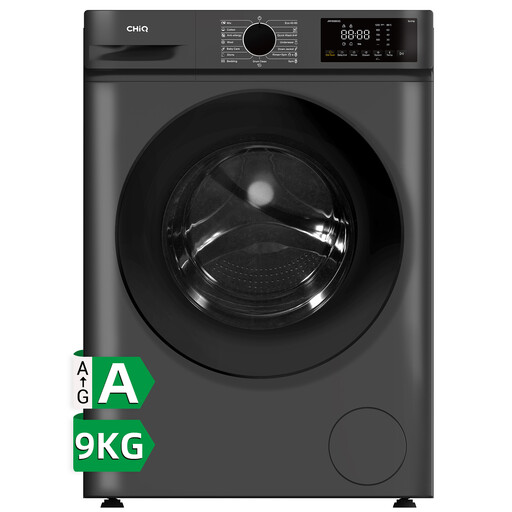 Image unavailable
CHiQ JW95883G, 9 kg front-loading washing machine
Its stated width may suit a restricted space, but remember to allow enough clearance to open the door.
The title gives a width of 465 mm and a capacity of 9 kg. Check the depth before confirming the space is suitable.
View on Joybuy
Frequently asked questions
What measurements and connections should you check before ordering?
Measure the space and the delivery route, then check the instructions for the machine’s dimensions, the clearance needed for the hoses and the door or lid opening. Also locate the water supply, drain and electricity supply. Don’t assume that delivery includes installing new connections.
Can you put a washing machine in a small bathroom?
Not just anywhere: the room layout and electrical installation both matter. For the situation covered in its FAQ, Promotelec specifies installation beyond zone 2, an earth connection and 30 mA residual-current protection. Have the location and installation assessed before making any changes, and don’t apply this guidance without considering its context.
Can you install a top-loader beneath a fixed worktop?
Only if the lid can open far enough to give you access to the drum. A narrow width alone doesn’t confirm that the machine will fit beneath a fixed worktop.
How can you prevent drainage problems?
Follow the instructions for positioning the hose and maintaining the machine. Bosch lists a kinked hose or a blocked pump among the possible causes of poor drainage. The maintenance required depends on the model.
Which warranty and regulatory information should you check in France?
If you buy from a professional retailer, you can claim under the statutory legal guarantee of conformity through the seller. The DGCCRF states that the claim period is two years from delivery of the goods. A commercial warranty is optional and separate. The DGCCRF also states that household washing machines are covered by energy labelling requirements. The ministry responsible for ecology says that the durability index began replacing the repairability index for washing machines on 8 April 2025.


